
Where It All Started
I’ve hunted my whole life. When I was 3-4 years old, I remember trailing my father through old corn rows, trying to find pheasants in Nebraska, and looking for deer on our small family farm in Texas. While those memories are a bit foggy for sure, they always bring me back to the fact that hunting was a meaningful part of my life. The obsession took hold from a very early age, and it bit me much harder than it did my father. He always loved being out there, and I think he always wished he’d had more opportunities to hunt, but I took it to a whole different level. I carved out a life that’s been framed by hunting and the outdoors.
Just like anyone who’s starting out, I didn’t know much about anything, and because my parents divorced when I was super young, I didn’t get to spend as much time with my dad as I would have liked. Still, I wheedled any and everyone to find ways to get me into the field, and I had some successes. The interesting thing is it wasn’t just getting out to hunt and shoot that drove my early obsession. I was enamored with the gear right from the start, and I don’t remember a time when I didn’t obsess about all the rifles, optics, accessories, and ammo that were available. I remember having subscriptions to Field & Stream and Outdoor Life as a young boy, and I pored over those magazines. I internalized them. They helped fuel the fire and imagination of an overeager young hunter.
I remember constantly fiddling with what little bit of gear and ammo I had. I was that kid that wanted to try it all. I was a marketer’s dream if I’d only had the money. When I was 12 or so, I bought my first big game rifle from money I saved mowing lawns. It was a Remington Model 700 30-06 ADL with a Bushnell 4-power scope. That purchase helped the gear obsession that would come to rule my life take another leap forward. I remember spending hours wondering whether I should be using Remington Core-Lokt or Winchester SilverTip ammo. And I never could really wrap my head around which bullet weight I should choose. It usually came down to what was available and on sale at the local sporting goods store. We were just chasing deer here in Texas, so anything would work, but as a young kid, I had a lot of crazy ideas spinning around in my head from the constant diet of the sporting magazines of the day.
Back then, of course, there was no internet. My sole access to gun knowledge was contained in those hallowed magazines, the guys behind the gun counters (and they certainly didn’t want to engage with some eager 12-year-old!), and whatever books on hunting I could find. The sentiment of the time was that when hunting smaller game, you should choose lighter bullets, and as you increased the size of the animals, you should increase your bullet weight. Ok, that seemed to make sense. But as I mentioned, I was still often limited to the ammo a young boy mowing lawns could afford!
I shot my first deer with a Remington 180-grain Core-Lokt bullet. It was a small South Texas doe, and they’re not large deer to begin with. The performance of that bullet was a bit astonishing to a young, burgeoning gun enthusiast. I mean, I had no real idea of what I was looking at, but at the time that bullet seemed to do a bit more damage than I thought was necessary. I don’t want to get all gory here, but the wound that bullet created was a bit much!
There was a long time in between that first kill and any meaningful advancements in my gun knowledge. I still voraciously read outdoor magazines and hunted at every opportunity, but there weren’t any of those epiphany moments where things began to make sense. I was still just an eager young man who loved being outside and experiencing whatever adventures I could.
That started to change when I began working behind a gun counter in Washington state. I met a man named Ed Herb, who became a good friend. Ed did a series of bullet tests using .338-caliber bullets. He shot them into wet newspaper and then retrieved the bullets while seeing what sort of damage they did, how far they penetrated, and what the bullet weighed and looked like after the event. Ed would bring the fired bullets to the store, and we talked about it constantly. When he finished the tests, he gave me those projectiles and let me study them. It was the information from this early experiment that really propelled me down the path of wanting to know how and why bullets work the way they do.
Questioning Conventional Wisdom
This was the first time I could see with my own eyes that bullets had actual families. It was startling to look at them and see how some performed so similarly to each other, even though they were products from different manufacturers. I added this new information to the already internalized knowledge of a voracious reader. I can’t say I started to have a clear idea of how bullets really performed, but now I had real examples of what they actually did when they upset.
It’s here that I began to form some of my own opinions about bullets. I saw what the bullets looked like after they had been shot. I considered the information Ed had given me about penetration depths and destruction in the wet newspaper. Then I thought about what I had read I should expect a bullet to do, and it seemed pretty obvious that I wanted bullets that stayed together and penetrated deeply. Those had to be the most effective projectiles. It’s what everybody of the day said you wanted from a bullet, so it had to be true, right?
So I started using stoutly constructed bullets. I killed a deer with a Speer Grand Slam, and unlike my first doe, the performance was at the complete opposite end of the spectrum. The deer died, but quite unspectacularly. It was neither quick nor definitive. Then just a few days later, I helped my old boss’s daughter kill her first deer, and we used a Nosler Ballistic Tip, a much lighter constructed bullet than the one I had just used, and it killed that deer quite spectacularly. And the internal damage was quite the dichotomy from the buck I had killed a few days before. I found myself starting to question those original assumptions about what a bullet needed to do.
Just like with everything, all of this didn’t just gel one day. It was all these little experiences weighed out over a lifetime of doing. Set that against a still voracious consumption of outdoor writing, and I was beginning to question the “known” best bullets of the day.
I ended up with the rifle we used for my boss’s kids’ hunts. He gave me that rifle as a gift for having helped both his children successfully take their first deer and elk. That little rifle became a mainstay for me for many years, and the load that I had used to kill those animals started racking up an impressive string of one-shot kills. They were the sort of kills where the animal doesn’t take a single step. I went eight deer in a row, where they dropped at the shot. That’s pretty compelling evidence of how something works, right? But it also wasn’t the kind of bullet the industry has claimed is the best hunting projectile. In fact, that 7mm 140-grain Nosler Ballistic Tip bullet I was using had a reputation as a fairly fragile bullet. The crazy thing is, I never saw anything like that. What I saw was convincing kills. I mean, yes, if I didn’t hit that animal perfectly behind the shoulder, I could have some destruction, and maybe more than I would prefer, but that doesn’t seem like a bullet problem to me. It sounds more like a bullet placement problem, which all points back to me, the shooter.
Looking back on all of this, one thing really stands out. I was never shooting any distance because everything was within 150 yards or less, and most shots were closer than that. It was just regular short-range hunting where the projectile in question worked extremely well.
When Long-Range Shooting Changed the Equation
Around 2012, I started shooting long-range. I was working for Leupold at the time, and had also become friends with Ryell Masood, who was also bitten by shooting at longer distances. We started shooting together quite a bit, and in fact, it became about the only thing we did. We shot all the time, and started shooting monthly long-range matches as well. We were afflicted with the long-distance bug.
At the same time I was starting to shoot long-range, I was also starting to play with more precise rifle systems. I also worked for MPA, and their BA Rifle system was really starting to gain some traction. Messing around with the combination of long-range shooting with a very accurate and precise rifle system was pretty eye-opening. I started learning about wind and drops and all the other ballistic gack that builds up in a shooter’s head, as well as just how accurate a proficient rifleman can be with a super precise platform.
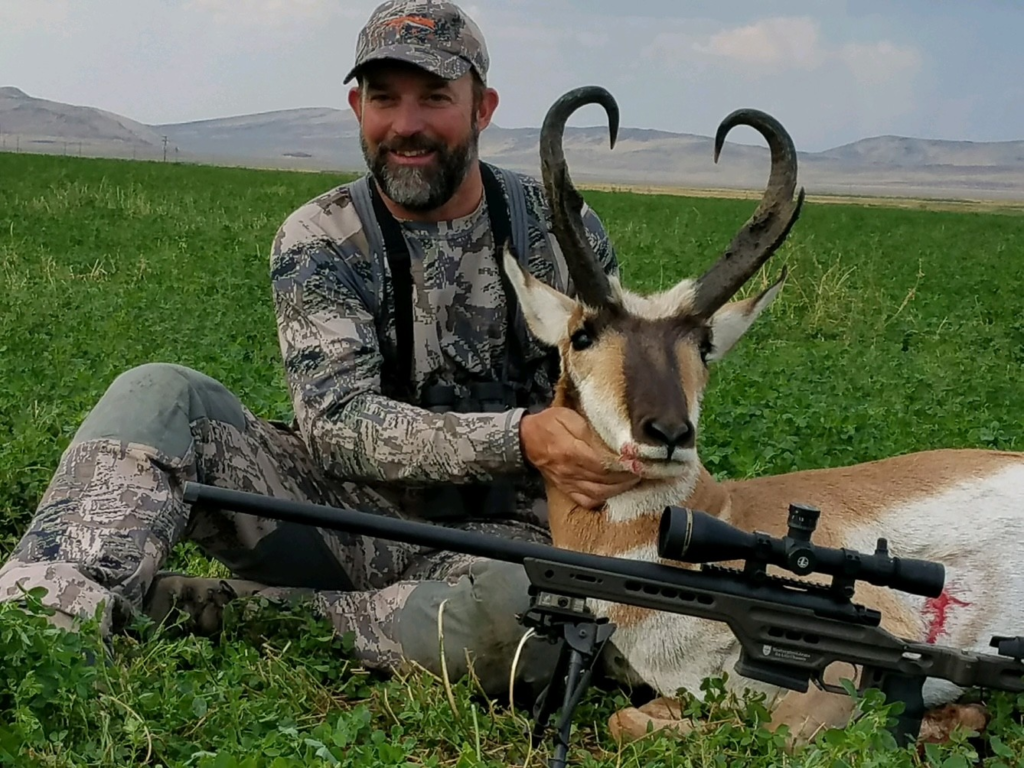
Around this same period of time, I finally drew an antelope tag that I had waited over 20 years to draw. I was lucky enough to finally have a super hard-to-get Oregon tag, and it coincided perfectly with my blooming long-range addiction. It was the first time I had a hunt where there was a very real possibility of having to take a shot at an extended range. It had me agonizing over the rifle and bullet I was going to hunt with. I really didn’t know what to do. I knew my old hunting rigs would work, but I was worried about having to take a longer shot, especially on a potentially windy desert flat.
I finally settled into taking one of my lighter long-range rigs, a 6.5 Creedmoor in an MPA hybrid chassis with a dialable Leupold LRP scope and 130-grain Berger Hybrid bullets. I’d read a lot about how effective Bergers could be on game, and I already knew how damn good they’d shoot because I’d been competing in long-range matches with this exact combo.
When we got down to the area we were going to be hunting, I took that rifle, and I shot some steel plates I’d brought with me out to about 600 yards. I wanted to make sure everything was matching up to my ballistic profile. I wasn’t very seasoned back then in how to use my Kestrel, and I didn’t have the level of trust I do today in getting my dope to work from one location to another. It ended up working great though, and after having verified the dope, I had confidence that when a shot presented itself, I’d be ready.
As luck would have it, we’d found a great buck before the season opened, but we didn’t have access to that ground. It’s kind of its own story, so I won’t belabor it here, but we didn’t gain access to this piece of private land until the 5th day of the hunt, so we spent a lot of time looking for another animal. I kept holding out, hoping we’d gain access, and it finally came together. I didn’t have to shoot very far either. After all that prep, the shot ended up being an easy 190 yards, and I made it so fast it was pretty comical. What’s really interesting, though, is how decidedly perfect that bullet worked. The antelope ran about 40 yards after the shot, but he was dead on his feet. The bullet had done its job exceptionally well. I also had another data point, using a match bullet for the first time in a hunting scenario, and it had been amazingly effective.
Jump forward a few years, and I had another experience that’s the polar opposite of using match bullets. I’ve always been a tinkerer at heart, and I hardly stay with one thing for long. I’m always in constant test-and-evaluation mode. But with my main hunting rifle, I’d for once whittled things down to a single consistent load. For a while, I’d consistently been using a 130 grain AccuBond. It was super accurate, and I also loved how it had been killing things. It had enough fragility upon upset to make fantastic wound channels, but it also had enough integrity that I was getting plenty of penetration, and in hindsight, probably more than I needed. It honestly worked a lot like the 140 grain Ballistic Tip load I had used in my 7-08 for years, with maybe just a bit more penetration.
In 2020 I went on a South Dakota deer hunt where I used that rifle/bullet combination, and it really opened my eyes to another perspective. If you’ve hunted open western country before, you know how open and expansive it can be, and how, with those sprawling spaces, a pretty ferocious wind can show up at any time. There’s also not really any topography or trees to slow it down or divert it! It can just plain scream across those open vistas.
One cold morning, I was sitting in a blind overlooking a pretty good swath of ground, and I was surrounded by deer. I kept seeing this really good buck pop up now and again about 600-800 yards away, and as I watched, he kept getting closer. Then I noticed his head popping up once in a while in this irrigation ditch that was angled toward me. I’d seen a ton of good deer on this hunt, but he was right up there as far as the upper limit of what I’d been seeing, so I had decided that if he got close enough for a shot, I was going to take him.
I’d been sitting in this hard-sided blind with all the windows closed because it was cold. And I mean bitter cold! It hadn’t been super windy when I got in the blind, and sitting in there, I didn’t really know what the wind was doing. I could see the grass and trees moving, but I didn’t have a great concept of what was happening out there. That buck did keep moving my way until he got to a point about 425 yards away, and it didn’t appear as if he was going to get any closer. He was, in fact, in a spot that was shortly going to take him further away. That was exacerbated by the fact that I could see he was working towards a bunch of deer further away from me. The rut was in full swing, and most of these bucks were cruising looking for does, and it appeared he was on the hunt himself.
I figured it was time to shoot if I was going to, so I ranged him a final time, dialed the elevation on my scope, and sent a 130 AccuBond on its way. He dropped at the shot, but popped right back up and started heading back towards the irrigation ditch at a dead run. I gave him a good amount of lead on the second shot, and thankfully dropped him again. After the second shot, I was pretty vigilant, watching the area I saw him go down to make sure he wasn’t going to get up again.
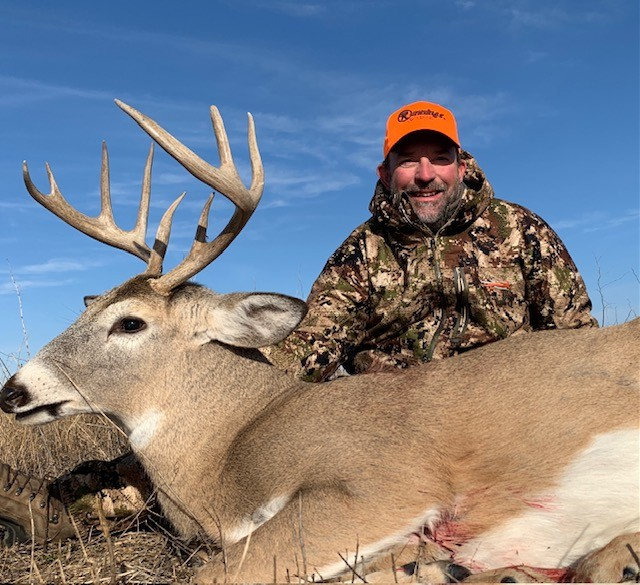
After waiting a few minutes, I decided he was probably down for good, so I got out of the blind to go find him. When I opened the door and stepped into the open, I realized I had been shooting in a much bigger wind than I had thought was blowing. Because of that, I had experienced more wind drift than I thought I would. Luckily, I had led him enough with the second shot that I anchored him for good. The whole experience gave me another data point, and this time not from a terminal perspective. It made me realize how much bullets can really get pushed around by the wind, and that was concerning.
The Wind Changes Everything
Today, my perspective has shifted again. I’ve shot long-range matches for years, but in the last few years, I’ve been bitten by the Precision Rifle Series and NRL Hunter series matches. It’s gotten to a point that I now usually shoot some sort of match 2-3 times a month. The interesting part of shooting all those competitions is what it has done to my view of bullets and what I want them to do.
I’ve given a bunch of hunting examples about the way bullets work in the field, both terminally and also in flight. PRS and NRL Hunter have added a lot of perspective to what I think about how a bullet flies. I always knew the wind was something I needed to pay attention to, and that it could have an enormous effect on bullet flight, but shooting these matches has driven that point home in a very concrete way. I’ve learned to recognize the fact that the wind is the equalizer. If I need any help from a bullet, the wind is where I want it most.
That difference in perspective has really started to show up on the hunting side of the equation. As I’ve become extremely comfortable with shooting at much longer ranges, I’ve also learned that wind is really what determines the outside parameters of where I’m willing to shoot. I know I can hit an animal farther than I’ll shoot. I just don’t always know where I’ll hit them, and that’s when I hit full pause and won’t take the shot.
As that concept has matured, it’s also changed the way I look at my hunting rifles and bullet choices too. Even if I know I won’t be shooting at an animal at 500, 600, or 700 yards, I still know the wind can be the deciding factor. So now I’m choosing high BC bullets even for regular hunts. The thing is, I know a high BC bullet will help me on the external ballistics side, but what about the terminal effects?
What Really Matters in a Hunting Bullet?
And that brings us full circle. Remember my talk about loving the way that 7-08 with the 140-grain Ballistic Tips killed? Today, that’s still the yardstick I measure everything else against. The thing is, I don’t love how that bullet flies. I mean, it’s as accurate as can be, and it’s never left me wanting terminally. It’s just not a great projectile if you’re having to shoot in windy conditions at anything more than modest distances.
So if that’s the terminal result I’m looking for, but I want a wind-friendly bullet, what should I use? Well, that concept just naturally points back to match bullets, and there are a few standouts that perform much like the Ballistic Tip terminally, but show all the wonderful wind-defying attributes I’ve come to desire. That gives me the best of both worlds: a bullet that performs the way I want terminally, with the flight characteristics I’ve come to value.
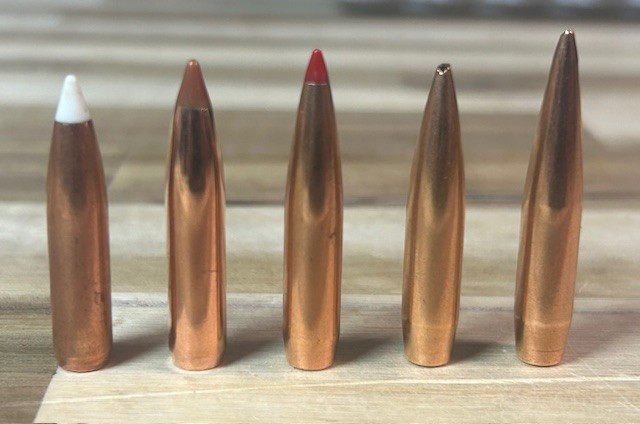
Some great examples of match bullets that are also great hunting projectiles are the Sierra Tipped MatchKings, MatchKing-Xs, Hornady’s ELD-M & ELD-X, and the Berger VLDs. All these bullets can be wonderfully successful in hunting scenarios and will generally deliver both that perfect terminal behavior along with how they fly, giving me that wind forgiveness I’m so actively looking for.
I should make some qualifications here, though, because all those bullets don’t perform exactly alike. We should especially separate the Bergers, just because they have a completely different upset mechanism than the other bullets. Open-tip match bullets don’t always work incredibly well terminally, but the Berger Hunting VLDs and some of their other bullets show pretty reliable upset. They just upset differently than the Sierra and Hornady bullets I named. The Bergers almost always penetrate about 2-4 inches, and then the nose collapses on itself, and the bullet begins rapidly fragmenting, which creates a devastating wound.
Conversely, the Sierra and Hornady offerings all pretty much begin to upset immediately upon impact, and have done the majority of their upset within one and a half to two times the length of the projectile itself. Both are very effective on game, just with slightly different mechanisms in how they work.
I should also mention that the ELD-X bullet isn’t really a match bullet. It’s a full-on hunting design from Hornady that uses the same profile as their match bullets, but with the internals featuring a tapered jacket and interlock ring. The MatchKing-X from Sierra is also designed as a hunting projectile. It is a match bullet that can be used as a hunting bullet because of some changes Sierra made to the overall design, so it ensures the bullet upsets every time. Both are designed to bridge that gap between match and hunting projectiles, and do their job amazingly well.
So with all those stories and data, you want to know what’s interesting? I don’t just use match bullets! I still hunt with hunting bullets too, and I think they all have their place. It really comes down to a simple formula. Look at what you want the terminal performance to look like, and then look at where and how you’re going to use the bullet so you know what the bullet needs to fly like, and then decide. I do that myself every year, and you should check out my article on selecting this year’s hunting rifles. It does exactly that. It explores my thought process around 7 different hunting rifles and how I choose which bullet goes with each one.
Lots of that is me being a tinkerer, and maybe being somewhat nostalgic too. But it also comes down to the fact that I just love having choices! In this year’s lineup, I have 7 rifles ready to go with ammo loaded, rifles zeroed, and ballistic profiles built and trued for distance. They’re sitting in my safe, so each morning I can pick the one that best suits my mood of the day. The part I find most interesting is that there are 4 rifles using match bullets and 3 with hunting bullets, and those aren’t arbitrary choices either. Their selection was very purposeful, and I actually wish I had enough hunts and time to make sure every one of them got their day in the sun.
I guess to sum it all up, both match and hunting bullets can be perfectly acceptable choices. You don’t have to be boxed in a corner with either one of them. What you really should do is map out what you expect, and then pick the projectile that gives you the performance you desire. For me, that’s often a match bullet, but you can bet there are still going to be times when I’m hunting with my old trusty hunting bullets.
Related Reading
- Understanding Bullet Design: How Construction Determines Terminal Performance — Why the terminal result you want should guide your choice of hunting bullet.
- Understanding Bullet Design, Part 2: Bullet Construction — How cup-and-core, bonded, partitioned, monolithic, and match bullets differ in construction and performance.
- Understanding Bullet Design, Part 3 – Terminal Ballistics — How bullets upset, fragment, penetrate, and create wound channels, and why those differences matter in the field.
- What Is Ballistic Coefficient? A Simple Explanation — How bullet shape and drag influence velocity retention and wind performance at longer distances.