
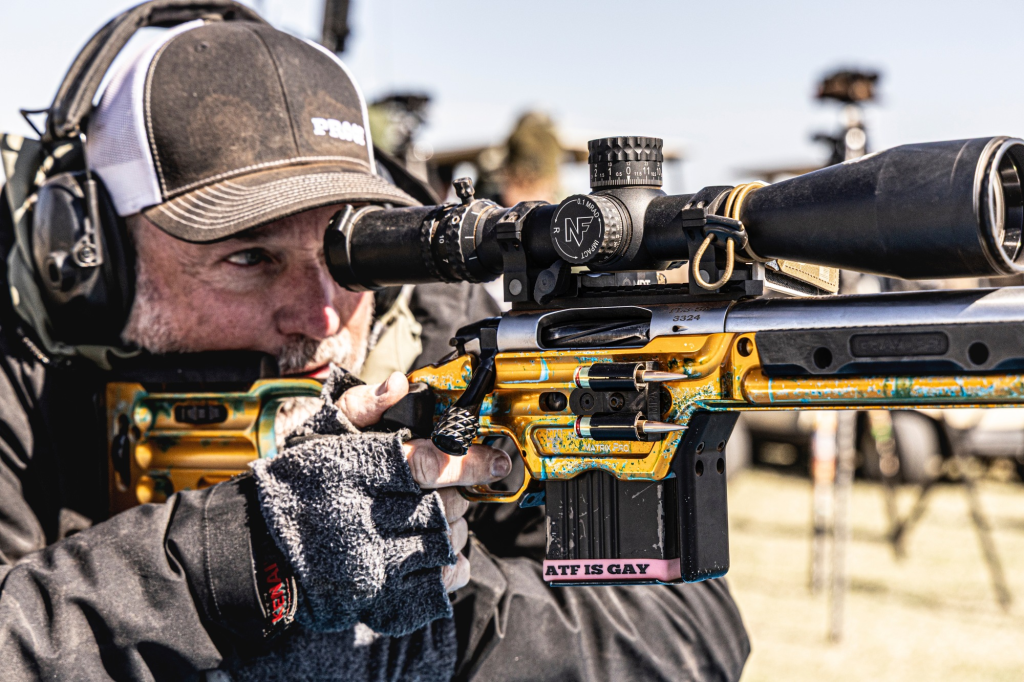
Before we dig into the specifics of MOA vs. MIL optics, I’d like to dispel the biggest thing I think people get wrong right from the start. Everyone tries to equate a linear measurement with an angular measurement. They aren’t the same! There may be a linear distance between two points on a target, but through our optic, we’re measuring the angle between them. We’re working in MOA or MIL, not inches or millimeters. In fact, if you take nothing else away from this article but that one fact, you’re going to be miles ahead.
I should also add right here that both MOA and MIL are simply measurement tools. Since we’re talking in terms of measurements, that gives us some common ground for what this is all about. So what are we measuring? The simple answer is an angle, expressed in either MOA or MIL. The easiest way to conceptualize this is to think of a circle. An MOA or MIL represents a very small slice of that circle—think of an extremely thin slice of pie. The angle of that slice never changes, but the distance between its two sides gets larger as you move farther from the center.
What Is MOA?
To understand what an MOA is, we have to start with a full circle. A complete circle is 360 degrees, and each individual degree is 60 minutes. An MOA is 1/60 of one degree. Again, the key point is that this is an angular measurement.
True MOA vs Shooter’s MOA
At this point, we need to address the difference between Shooter-MOA and True-MOA. I’ll refer to these as SMOA and TMOA from here on. TMOA is exactly what I described above: an angular measurement. But as humans, we want to know the linear distance between those two lines when that angle intersects a target. At 100 yards, one TMOA measures 1.047 inches. So it’s not the perfect one-inch at 100 yards, as most shooters have been taught. That one-inch approximation is what we call SMOA. It’s easy to see why it became popular: “Hey, look, that’s almost exactly one inch, so it’s easy to remember.” The problem is that the difference grows with distance. At 1,000 yards, one TMOA measures 10.47 inches, while one SMOA measures exactly 10 inches.
Yes, that’s not much of a difference, but it is there. There’s a rub, though: your optic is almost always set up with a measuring tape inside it. That’s the reticle. The reticle is just like a ruler or meter stick inside your scope. It’s a calibrated instrument, and if it’s measuring in TMOA, why would you convert that measurement to something else when you don’t need to? If I were handed an imperial ruler and measured something, I wouldn’t then give that measurement back in millimeters. But that’s essentially what people are doing when they convert TMOA to SMOA. The conversion gets you close, but it introduces unnecessary error into a measurement you already had.
What Is a MIL?
A MIL is essentially just another way to measure angles within that same circle. It seems a little more complex mathematically, but the concept is exactly the same. A MIL is actually a milliradian, which is 1/1000 of a radian. I’m not going to explain radians here because that would be going full-on math-nerd, and I think it bogs down this article. Just know that a MIL is another angular measurement, and we can move forward. I’ll add an addendum at the bottom if you want to better understand the math behind the system.
Think of Your Reticle as a Ruler
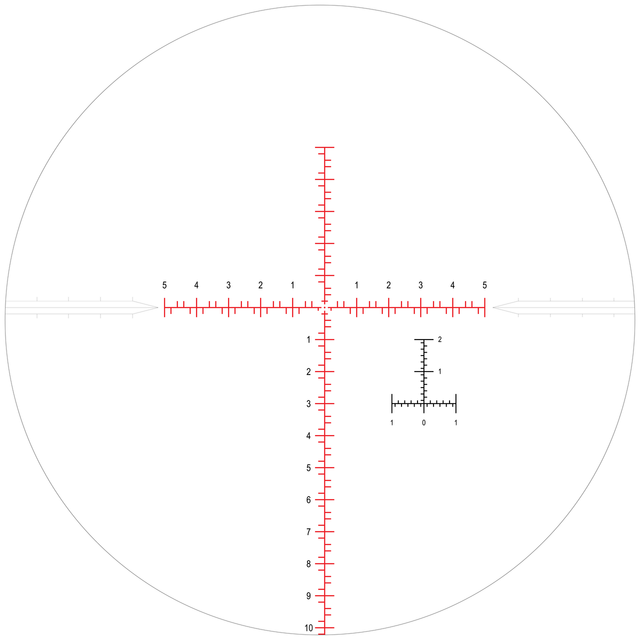
We’re going to come back to my ruler analogy here, and it’s really important to understand this concept. Think of the reticle inside your scope as a ruler. Some reticles have many more measurement graduations than others, but the concept is the same: they’re calibrated to measure angles. In the optics we’re discussing, those measurements will commonly be in TMOA, SMOA, or MIL. This is the second most important concept in this article, aside from the fact that we’re working with angles. If you view your reticle as a measuring tape, and you think and speak in terms of the measurement system your reticle represents, this becomes incredibly difficult to confuse.
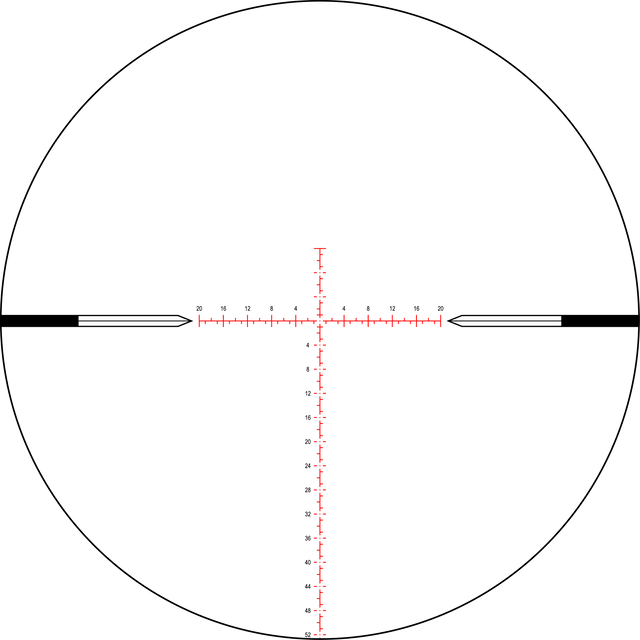
I also want to add a small aside right here. There are some extremely simple reticles that aren’t designed as a true measuring system. These include basic duplex reticles. They still have subtensions, such as the distance from the center crosshair to where the heavy post begins, but the important distinction is that they aren’t designed with a series of graduations for taking measurements the way the MOA and MIL reticles we’re discussing are.
Here’s the rub, and where I think people get confused between MOA and MIL. They’re trying to do unnecessary conversions from an angular measurement to a linear measurement when they already have the measurement they need inside their scope. Why do you need to convert a MIL to inches, and what have you accomplished by making that conversion? Has it given you any more useful information? Do you know how to adjust your optic from that conversion? That’s the trap people get into. If you stay within the system you’re shooting, it becomes ridiculously easy, because the measurement you just took with the ruler inside your scope is the adjustment you need to make in that same system. Stay within the system, and the whole thing becomes fundamentally easy.
What Is Reticle Subtension?
We’re going to need to take one small detour here. I need to explain what a subtension in a scope is so you can understand how we’re going to use the reticle to measure. A subtension is simply the angular measurement represented by the spacing between marks in your reticle. It doesn’t matter whether you’re shooting MOA or MIL; those marks represent known angular measurements within that system. Commonly, the spacing might represent something like .5 MOA or .2 MIL, but reticle designs vary considerably. Look in your owner’s manual; it will show you exactly what each of the marks and spaces in your reticle represents.
If you’re not sure how magnification and focal plane affect those subtensions, read our guide to First Focal Plane vs. Second Focal Plane optics.
How to Use MOA and MIL Corrections
So how do we use these systems? In an MOA or MIL optic, when you shoot a target, simply look at the impact and use the subtensions in your reticle to measure the angular correction back to your aim point. If you measure a .5 MOA correction, make a .5 MOA correction. If you measure a .3 MIL correction, make a .3 MIL correction. You can either dial that correction with your scope or hold it using the subtensions in your reticle. Either way, you’re using the measurement you just took directly, without converting it to anything else.
Check the owner’s manual for your scope, or look at the reticle itself; the markings are often numbered, making it easy to read those measurements while looking through the optic. Once you understand your reticle, either system works exactly the same way.
Why Shooters Get MOA vs MIL Confused
For that reason, I’m often confused when people argue endlessly between the two systems. They count differently for sure, but if you’re using the ruler inside your scope, there really is no meaningful difference in how you use them. They’re simply two different ways of measuring an angle. Where I think the rub comes in is that people equate the linear distance on the target with THE measurement they need to make. There absolutely is a linear distance between those two points, but through the optic we’re measuring the angle between them. Think back to our pie analogy. A piece of pie starts at a single point, but the lines on each side move farther apart the farther they get from the origin. That’s what you’re measuring with your reticle, using the measurement system built into your optic. Don’t convert that angular measurement into a linear one when you don’t need to, and you’ll be miles ahead.
It’s also important to think of this as a system for discussing a measurement or a shot with whoever you shoot with. Again, I think this is where people get messed up. When they start talking about hits or misses, they often start applying linear guesstimates, which moves us away from useful information. If everyone in your group discusses hits, misses, and corrections in the system you’re shooting in, it becomes elegantly simple. Just go to a long-range shooting match and listen to the discussions. You’ll rarely hear experienced competitors talking about how many inches or feet a shot missed by. They’ll usually communicate those corrections in MOA or MIL.
If both systems work essentially the same way, why do people get so hung up on what they’re using? I think much of it comes from the idea that they need to convert the measurement on the target into something familiar instead of simply using the angular measurement in their optic. If you’re determined to make that conversion, MOA makes it incredibly easy because of its familiar relationship to inches at 100 yards, and I think that makes a lot of people comfortable. That’s completely understandable. Even though there is a true linear separation between two points on the target, it’s the angular measurement we’ve taken with our optic that really counts. I know that can be a little mind-bending, but it always comes back to the same thing: don’t convert the angular measurement in your optic to a linear one when you don’t need to, and we’ve just made either system incredibly easy.
MOA or MIL: Which Should You Choose?
So how do you choose which system is right for you? That can seem like a tough question, but there is often a deceptively easy answer: what are the people you shoot with using? If you’re shooting with the same people regularly, using the same system they do makes discussing angular measurements incredibly simple. Nobody has to make conversions; you can just discuss what’s happening in the same language, whether that’s MOA or MIL. I really don’t think it needs to be any harder than that.
Addendum: What the Heck Is a Radian?
I’m going to try and make this simple. There’s some math here, but I’m going to try and steer away from it as much as possible.
Draw a circle and draw one line from its center to the edge. That line is the radius. If I took the length of that radius and laid it along the outside edge of the circle, it would take 6.283 of those lengths to go all the way around the circle. The angle created by each of those lengths is called a radian. A MIL is 1/1000 of a radian, so there are approximately 6,283 MILs in a circle.
Don’t get lost in the technical part, though. I want to reinforce the thought that we’re discussing an angular measurement. That’s all.