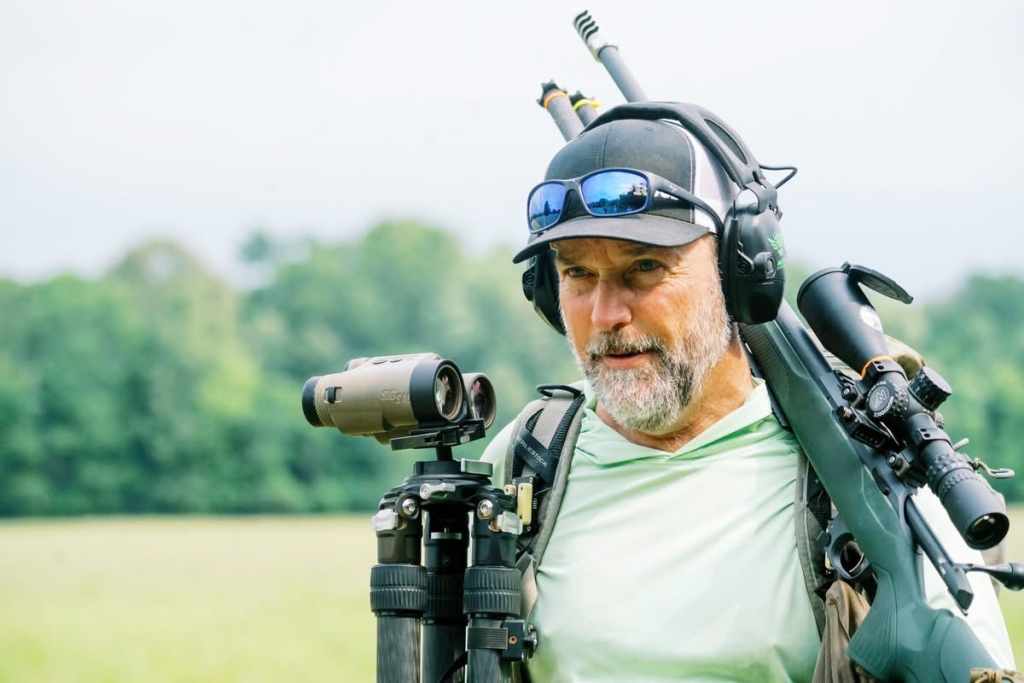
I shot my first precision rifle match thinking I knew how to shoot a rifle.
The morning was warm, but not ridiculously so. My shooting partner Mike Martin and I had arrived at a local range to shoot our first PRS match. We were excited, while at the same time a little bit intimidated. I remember watching all the competitors putting their gear together with all these fancy gadgets, decked out tripods, with a weather station, a working desk-type platform, and their sighting devices. I had instant gear envy, and I felt pretty silly with my meager pile of gear. I watched how everyone prepped for the match, and kinda just tried to be like the locals. After a quick zero check and match brief, we moved to our first stage of the day. Luckily, because we were new shooters, they let us go last most of the day, so we were able to see what happened before we shot. It was incredibly valuable, I thought, right up until the point it was my turn.
I walked up to the stage, where I was supposed to shoot two targets from five different positions from a jumble of big boulders. I’d just watched other guys do it, so I had a rough idea where I needed to go for each position. The guy running the timer asked me if I understood the course of fire. I said I did, and then he said, “Are you ready?” I again nodded that I was, and he said, “Standby, engage.”
At that very moment I lost my mind. Seriously. It drained right out my ear hole. I already had an elevated heart rate because of the uncertainty of what was coming. But at the sound of the buzzer, it started beating furiously. I was breathing hard before I took my first step toward the prop. My vision closed in. Man, I was lost. I stepped up to the first boulder and set my bag down, placed my rifle on it, and tried to find my first target. I couldn’t find it because I stupidly had left my bipod on the rifle, and it was binding on the rock, so I couldn’t move my barrel down to engage the first target. Holy shit… What do I do? I moved a bit and finally found a place I could get the target in my reticle. I lined up and shot. I had no idea if I hit or missed, but hurriedly engaged number two. I did this over and over until I heard the buzzer sound, putting me out of my misery. I think I’d managed to get 6 or 7 shots off from 3 or 4 positions, but had never even come close to hitting one of those targets. Wow… I didn’t know a damn thing!
I had been hunting for most of my life and handloading for almost as long. I had shot a lot by most people’s standards, and a pretty fair amount of that at longer distances. I owned a Kestrel and knew how to get a ballistic solution out of it. I understood dope. I thought I had a pretty good handle on wind. All of that lifetime of shooting experience had suddenly been condensed down to this moment.
Then I went zero-for-30 on my first three stages. Not three misses. Thirty. IN A ROW!
I recently pulled up the scores from that match because I was curious to see just how bad I had been. I finished 23rd out of 32 shooters with 26 impacts and shot 41.27 percent of the winners score. Looking at those numbers today, I honestly can’t believe I did that well. Especially after starting zero-for-30. And here’s the crazy part: I absolutely loved it.
At this match, the targets looked freaking tiny, but in hindsight, they weren’t. Especially compared to some of the other matches I now regularly shoot. I’ve shot that same match many times since, and I’ve finished as high as fourth place, but today I would actually consider most of those targets fairly generous. But they sure as hell didn’t look generous that first day.
That first morning, I didn’t know how to build a position. I was also uncomfortable with how you’re supposed to load the rifle. In PRS, you aren’t supposed to close the bolt until you’re looking at the target through your scope. That was counterintuitive to what I normally did. I struggled mightily with the clock. I got tunnel vision. I lost my mind over and over and had a hard time remembering what I was supposed to do. It was overwhelming.
That day I kind of learned how to build positions, mostly by watching the people who shot ahead of me. Luckily, because I was new, nobody made me go first. I got to stand there and watch somebody else solve the problem, then I attempted to copy enough of what I saw them do to potentially make it through the stage myself.
It was basically little train wreck after little train wreck. The funny thing is, almost everything I was doing was somewhat familiar. I knew how to shoot a rifle and how to use a bipod. I knew how to look at something and find it in an optic. I knew how to use a ballistic solver, and I kind of knew how to read wind, or at least I thought I did.
Competition took everything I thought I knew, everything I thought I was fairly familiar with, and somehow made it all feel brand new. It made me have to admit to myself I had a lot more to learn, and that there was a tremendous amount of blue sky in front of me. And that, more than anything else, is why I think you should shoot a precision rifle competition. Take the journey, because if you allow it to, the game will teach you so much about shooting that you just haven’t had the chance to see yet.
You Will Shoot More
If somebody asks me why they should shoot a precision rifle match, the first answer is really simple:
You’ll shoot more.
Honestly, I know that sounds almost too obvious, but I don’t think I can overstate how important it is. If you want to become a better rifleman, you need to shoot rifles. A lot. The more time you spend behind a rifle, the more familiar you become with the entire system. Manipulating the rifle becomes easier, even to the point of requiring almost zero thought. Finding targets becomes easier. Building positions becomes easier. Running the bolt becomes easier. Managing recoil becomes easier. Staying in the optic becomes easier. And almost all of that proficiency transfers when you move from a heavy competition rifle back to a lightweight hunting rifle. In fact, I can’t really think of something you learn shooting competitions that doesn’t transfer seamlessly over to your hunting rifles.
But I’ve also come to believe that the number of rounds is only part of this learning process. Competition changes what you ask from every round you fire. This is one of those intrinsic keys. Think about a normal range trip where you’re checking zero or shooting groups to test a new load. You may fire five rounds before you really look at the target. How did the group look? Do I need to move my zero? Did the rifle shoot well? You’re getting information back, but you’re often getting it back from the group of shots.
Competition forces a much tighter feedback loop. Predict. Shoot. Observe. Interpret. Correct. Every single shot. Where did that bullet go? Did I see the impact? Did I see the miss? Was my elevation correct? Was my wind call correct? Did the rifle move? Was the position stable? What do I need to change before I fire the next round?
That may be one of the biggest reasons competition accelerates learning so quickly. When you’re getting a feedback loop from every shot you fire, and you’re actually paying attention to that feedback, it’s damn near impossible not to learn at an expedited pace. And as you learn, something else starts happening. Your resolution changes.
Competition Changes Your Resolution
This is probably the biggest thing competition has done for me. I see things now that I simply couldn’t see before. That’s not because everything I knew before competition was wrong. Quite the opposite. I knew how to use a Kestrel. But did I really know how to use a Kestrel? I knew how to read wind. But did I really know how to read wind? I knew what an accurate rifle looked like. I knew how to set up a rifle. I knew triggers, optics, and cartridges. I had handloaded virtually my entire life. I wasn’t starting from zero.
What competition did was create an environment where all of those ideas were constantly being challenged by outcomes. That’s different from simply being tested. If something I believed worked great, that theory was now being tested in real time. If it didn’t work, the target didn’t care what I believed. I missed. Now I had to figure out why.
Shoot enough rounds under those conditions, and your resolution starts to change about darn near everything.
My resolution of how accurate I expect a rifle to be has changed. My understanding of how all the pieces of a rifle system work together has changed. Scope height, length of pull, balance, trigger pull, optic choice, reticle choice, recoil management—all of it. My understanding of cartridges has changed. My handloading has changed. My understanding of wind has changed enormously. And I’m still changing.
And that’s honestly the part that keeps me most interested. I’m still learning today. I changed the way I true my dope relatively recently. The way I train is constantly evolving and getting more refined. I continue finding things I thought I understood and realizing there’s another layer underneath them. If that evolution ever stops, maybe it’s time for me to stop shooting, but I don’t think I’m anywhere close.
Wind Will Absolutely Humble You
Nothing demonstrates this change in resolution better than wind.
At this point, if you took wind completely out of the equation, I have tremendous confidence in my elevation solution at distance. At 1,000 yards, 1,500 yards, or even a mile, if there were magically a zero-wind environment, I’d expect to be extremely close vertically. Add wind and everything changes.
Wind is the great equalizer in this game. I’ve owned and used a Kestrel for probably 12 or 15 years. And before shooting competitions, I thought I knew how to use it.
My old process was pretty simple. I’d put my rifle and ammunition data into it and use a range card in set increments. If I ranged something at 587 yards and my card gave me solutions at 575 and 600, I’d probably choose 575 because it was a bit closer, dial the elevation, make some kind of wind call, and shoot. That worked.
But my resolution today is completely different.
Today at a match, I have every target for every stage entered into my Kestrel ahead of time. When I arrive at the stage, I establish the direction of fire for each target, take a global wind reading, evaluate the actual wind range I’m seeing, and now the Kestrel can give me elevation and wind information for every target on that stage. I carry a separate Calypso wind meter during matches and use its average wind speed as another piece of information for developing my initial call. I use that system to develop a wind bracket that I think should allow a first round impact on the targets, and then I go shoot them. And watch. And correct.
The important point isn’t that everybody needs to use a Kestrel exactly the way I do. That’s almost the opposite of the point. The point is that I had been using one for years and didn’t know how much I didn’t know. Same machine. Different resolution. I had no idea how much usable information I could pull from the little computer. It’s actually awe-inspiring. The same thing happened with targets.
Years ago when I started shooting long range, I shot plenty of big targets at distance. We often shot IPSC-sized targets, which are huge compared to some of the targets we regularly shoot now. Today, when I see something that big in a match, I think, How the hell could I miss that? And then, of course, sometimes I still miss them. Because wind will absolutely humble you.
This increased resolution translates right back to hunting. As I learned so much more about wind through match after match, it made me start to approach my hunting shots in a much different way. The resolution teaches you pretty fast what you know you can get away with in the field, and for once you’re not guessing.
Becoming Better Can Make You More Conservative
This is where competition has probably changed my hunting more than I ever expected.
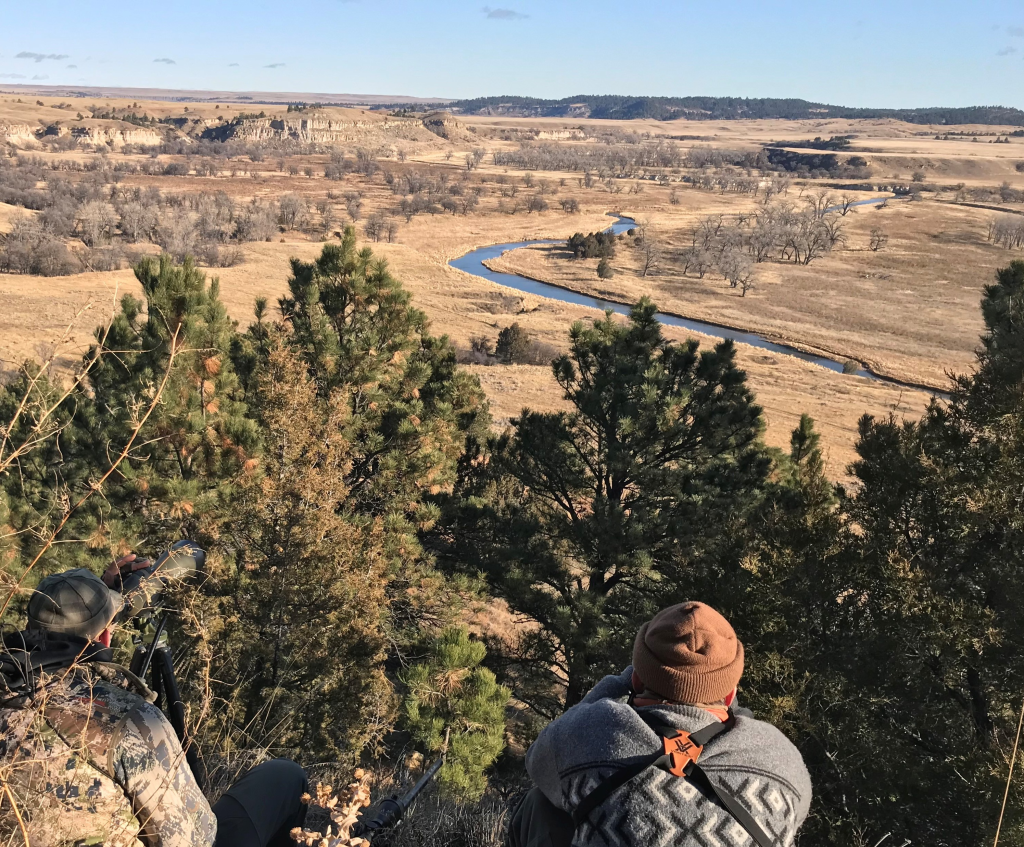
Spend enough time in the hunting community, and you’ll hear somebody say they want to build a rifle that’s capable of 600 or 700 yards (or further). Okay, but that’s not really the question, is it? Can the rifle make that shot? Probably. Can you make that shot, under the conditions you’re standing in, right now? That’s a very different question.
I was hunting in South Dakota last year with an outfitter named Fred Lamphere when we spotted a pretty good buck at 638 yards. Fred asked me if I could make the shot from there. My answer was basically, on the vertical, absolutely. I had complete confidence in the elevation solution. But the wind was gusty. I told him, “Fred, in this wind, I’m not comfortable taking that shot. But you get me to 350, and I’m going to kill him.” That decision comes from resolution.
I’ve shot enough to know that an eight- or nine-inch plate at 350 yards in a switchy 10-mile-an-hour wind can be a son of a bitch to hit consistently. Three hundred and fifty yards doesn’t sound very far anymore. Most people would probably call that an easy shot. But can you hit that target on demand? And how certain are you that you can do it with the very first shot? That’s the part people sometimes miss.
More capability doesn’t necessarily make you willing to shoot farther. Sometimes it does exactly the opposite. It gives you enough information to recognize when you shouldn’t shoot. Competition has taught me much more clearly where the line between “I can make that shot” and “I hope I can make that shot” actually lives. That’s a valuable distinction when the target isn’t steel.
PRS Is Rifle Training. NRL Hunter Is Hunter Training.
Honestly, that’s a completely over-the-top statement, but it gets your attention. PRS and NRL Hunter have taught me different things, and in very different ways, but they are both so important for WHAT they’ve taught me.
PRS gives you an incredible density of rifle training. You shoot more. You build more positions. You make more wind calls. You spot more shots. You make more corrections. You’re getting repetition after repetition after repetition. There’s another layer here too. Not only is there a higher density of shooting, but there’s also the time to really dig down into the weeds and build a plan. Some people consider that much planning a downside of the game. I find it’s the part that allows you to truly push the boundaries of what you know about shooting. It’s how you learn and refine systems, which in turn teaches you where the real boundaries of those systems lie.
From a purely shooting standpoint, I don’t think NRL Hunter teaches you as quickly as PRS. First, you simply don’t get the same density of rounds and repetitions. But one of the real keys is that NRL forces you into the hunter mindset. You don’t have the time to do what I described above about learning to build a wind bracket. (And there are plenty of other little lessons like that in PRS.) So if you don’t ever get to do those things, how do you ever really learn how to dope the wind?
PRS gives you the repetitions to develop individual skills. NRL Hunter forces you to integrate those skills into a complete solution under time pressure.
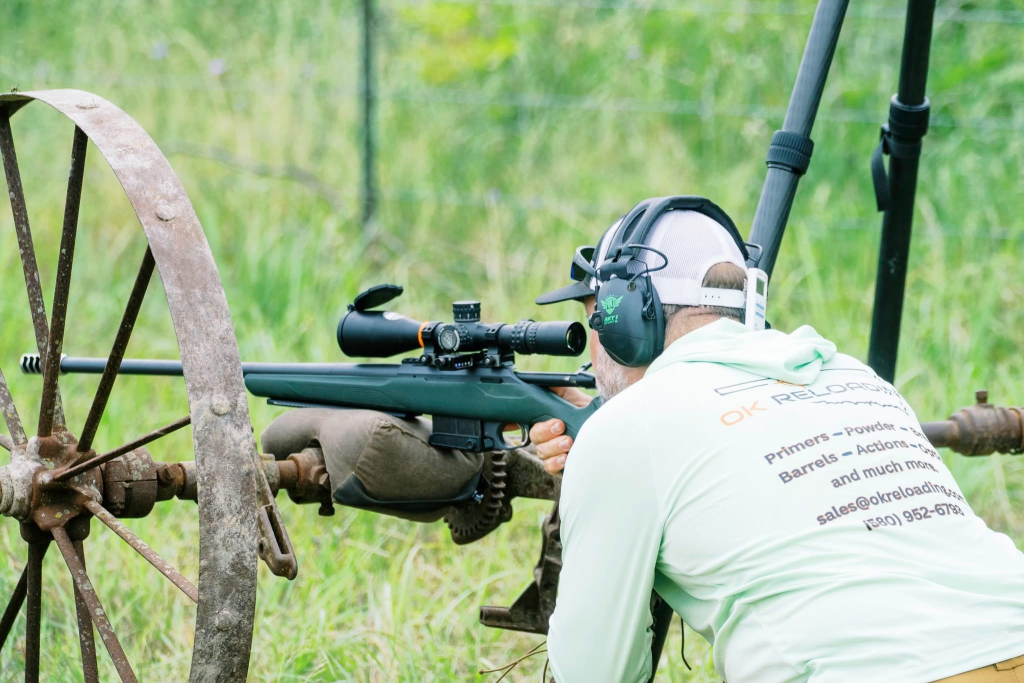
Funny enough, a lot of that gear I was staring at with envy before my first match makes perfect sense to me now. Back then I saw gadgets. Today I see solutions to specific problems, and that’s another way PRS teaches you. PRS rifles are purpose-built race guns, and they’re almost absurdly specialized compared to a normal hunting rifle. An 18- or 20-pound rifle would be considered light today. Most of mine are somewhere around 24 to 28 pounds, and there are guys shooting rifles well into the 30-pound range. We run big optics, heavy bags, tripods, and a whole pile of other purpose-driven gear. But we’re not carrying all that stuff just because we like gear. Almost everything in that pile exists because somebody figured out it solves a particular shooting problem.
That’s another part of the learning process. PRS pushes the limits of what can be done with a rifle when you’re allowed to build the system entirely around making the shot. The gear makes you think differently about positions and stability. A rear tripod is a perfect example. That’s something I never would have incorporated into hunting the way I do today if competition hadn’t shown me what it can do. Now, if I’m setting up for a longer hunting shot and have the time, a bipod up front with a tripod supporting the rear of the rifle is absolutely something I’ll use. Competition taught me that solution, and hunting gave me another place to apply it.
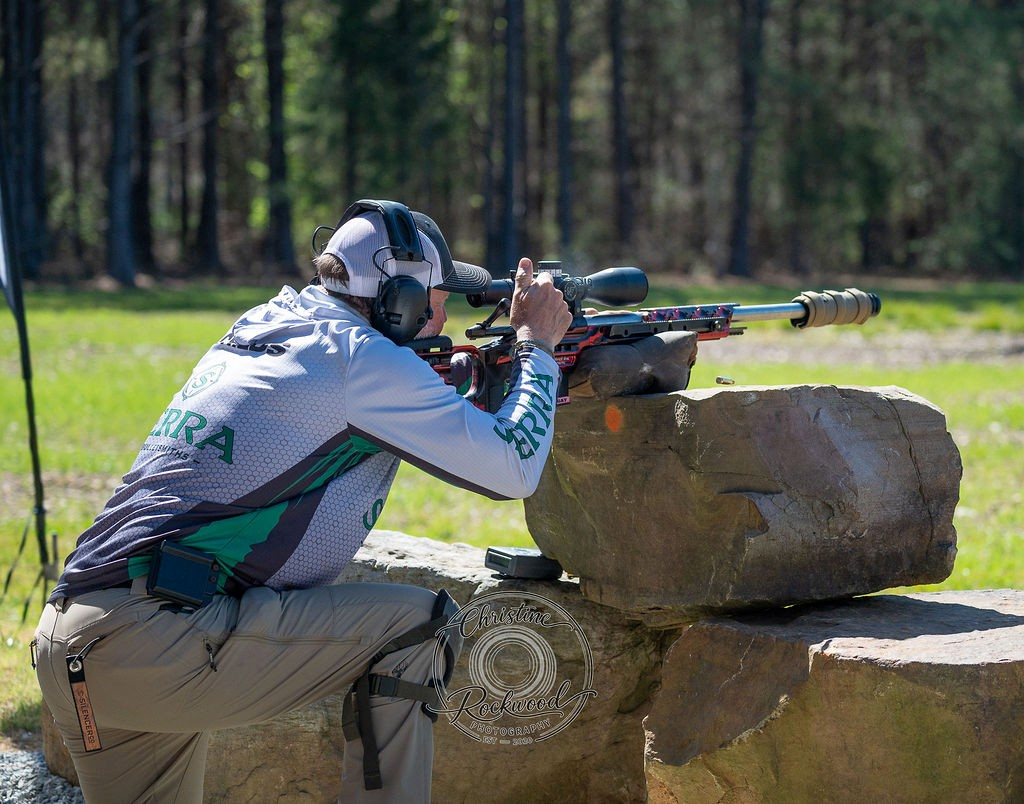
NRL Hunter comes at the problem from almost the opposite direction. You really can pull a hunting rifle out of your safe, grab your hunting pack, and go shoot a match. That’s basically what I did when I started. I’ve since built a purpose-driven NRL Hunter rifle, but I’ve also been very successful with an old Tikka CTR in 6.5 Creedmoor simply by putting a good optic on it and making damn sure the ballistic profile was right. That accessibility is one of the things that makes NRL Hunter so appealing. You don’t need a PRS race gun and a mountain of specialized gear to participate.
But there’s a tradeoff. If you only ever shoot your hunting rifle with the gear you already use hunting, how far outside your existing box are you really forcing yourself to think? You’ll absolutely learn a ton shooting NRL Hunter. But PRS removes many of those hunting constraints and lets you push the rifle, the equipment, and yourself much farther toward the edge of what’s mechanically possible. Then you can take what you learned and decide which parts actually make sense to bring back into the field.
PRS builds the rifleman. NRL Hunter takes that rifleman and asks a different question: Can you solve the whole problem? You walk into an NRL Hunter stage, and you don’t know where the targets are. You don’t know the distances. You have to find them, range them, develop the ballistic solution, figure out the wind, build a position and make the shot. That’s hunting. Except for one very important difference.
When I’m hunting, I can decide not to shoot. If I don’t like the wind, I can pass. If I don’t like the position, I can move. If I don’t think I can make the shot, the correct answer may simply be, don’t shoot. NRL Hunter takes away that luxury. You’re in a match. There’s the target. Figure it out. And oh yeah, you’re on the clock too.
And that’s a wonderful learning environment because steel lets you explore the edges of your capability without the consequences of making a bad decision on an animal. You have to make a wind call. You have to build the position. You have to take the shot. Maybe you hit. Maybe you miss. Either way, you just learned something.
I carry these lessons directly into hunting. I’ll take wind readings periodically throughout a hunting day simply to establish a baseline. I want to know what the wind actually feels like at five miles an hour, ten miles an hour, or whatever it’s doing that day. Then if an opportunity develops quickly and I don’t have time to stand there staring at a Kestrel, I’m not beginning with absolutely nothing. I’ve already developed a wind plan. That’s something I’d never thought to do before shooting competitions.
Then the Buzzer Goes Off, and Your Brain Leaks Out Your Ear
There’s another thing competition teaches you that can be almost impossible to recreate during a normal range session: How to shoot when your brain isn’t cooperating.
I used to get horrible buck fever. My heart rate would go through the roof. I’d breathe hard. My vision would narrow. I’d see a great buck and immediately start thinking: Oh my God, he’s going to get away. And then everything could go to hell in a handbasket. I’ve made some horrible shots in my life because of it.
The first thing that really changed wasn’t a formal competition. It was a drill we ran at the Leupold Optics Academy called “You Forgot Your Ammo.” It was brilliant. We’d put ten rounds 30 or 40 yards behind the firing line. You’d get prone and build your position. Then somebody would start the stopwatch. Go. You jumped up, ran back, grabbed one round, ran back to the rifle, loaded it, fired at a target at 100 yards, opened the bolt, ran back for another round, and did it again. Ten times. And we’d do it with multiple shooters, so it was a race. The winner wasn’t simply the fastest. You needed speed and a small group.
That was the first time outside of hunting that I deliberately had to learn how to shoot through a racing heart and heavy breathing. It was a lesson that I could immediately take to the hunting field.
Shooting matches took that same feeling and put a whole additional layer on top. There’s a timer. There are a bunch of people standing behind you, and they’re watching. They’re going to see you perform, and they’ll know whether you hit or miss. You have positions to remember, targets to engage, dope, wind, movement, rifle manipulation—and then the buzzer goes off. Especially when you’re new, it’s like you tilt your head sideways and let your brain trickle out your ear. It just ain’t in there anymore. It’s gone. That’s why having a plan is so important.
A stage plan isn’t really about remembering what to do. It’s about reducing the number of decisions you’ll have to make when you’re least capable of making them. Where am I going first? Where does my bag go? What’s my first target? What’s my dope? What’s my wind call? Where am I moving next? The more of the mechanics you’ve trained until they’re automatic, the more brainpower you have available for the things that actually require thought.
And this is one of the reasons I tell new shooters something I heard early in my competition career: You can’t miss fast enough. I didn’t coin that. I think Shayne Ward may have been the first person I heard say it, but I’ve heard it from plenty of other shooters since.
The point is simple. Why rush through ten rounds just so you can say you got all ten shots off? And when you hear the buzzer the first time, that’s exactly the thing your brain is going to tell you that you need to do! But the reality is, if you have two minutes and fire five rounds and get five impacts, that’s better than firing ten rounds and getting three. Slow way down. Speed will come later. When you do something enough times, the movements become more efficient. You stop thinking about every little mechanical step, and just let yourself do it. That’s when you begin to speed up.
And all of that has carried directly back into hunting. I still get jacked up when I see a great animal, and if I ever stop getting jacked up when I’m hunting, I’m probably going to stop. But that excitement doesn’t control the shot the way it once did. I’ve been underneath the clock enough times now, with my heart pounding and my brain trying to hurry everything up, that I’ve learned I can shoot through it. I can slow myself down, build the position, settle the reticle, and make a good trigger pull. Competition didn’t cure buck fever. It taught me how to function through it.
A Nine-Ounce Trigger Can Take Five Seconds to Break
I have a natural tendency to slap the trigger. Especially in those high-stress situations where the timer is sitting there counting down, or a great buck is about to sunset over the hill.
We run very light triggers in competition rifles—mine are generally somewhere around eight to ten ounces—and if your position is good, you’re square behind the rifle, your reticle is in the right place, and everything else is working, you can get away with a pretty shitty trigger pull. I certainly did.
Then a very good shooter I train with called me on it. He made me slow down. I mean really slow down. He wanted me to take an eight- or nine-ounce trigger and deliberately make it take five or even ten seconds to break. I know somebody reading that is going to say that’s bullshit. You can’t put pressure on a nine-ounce trigger for five seconds without making it fire. Yes, you can. You CAN learn that level of control. But then you have to take that control into a match. That’s really the hard part.
When the timer is running, it is incredibly easy to revert right back to smacking the trigger because you’re trying to go faster. When I first started deliberately controlling the trigger press during matches, it slowed me down. Sometimes I’d get to the bottom of my respiratory pause and still be adding pressure. Now I’m holding my breath waiting for the shot to break. That can cost two or three seconds. Multiply that over a stage and it’s a lot of time. But I shoot better when I do it. I see more. I hit small targets more consistently. I drop fewer stupid points. And eventually the rest of the process gets faster and more efficient, which buys back the time.
Move fast. Shoot slow. There’s that resolution again. I already knew how to pull a trigger. Competition made me discover there was more to see. But it also taught me what to do when I’m hunting, my heart is racing, and that buck is about to disappear over a rise. I can let my breath out and start squeezing that trigger slowly, even while I’m breathing hard and my brain is screaming, He’s leaving! He’s leaving!
You Get to Learn From Everybody Else’s Rounds Too
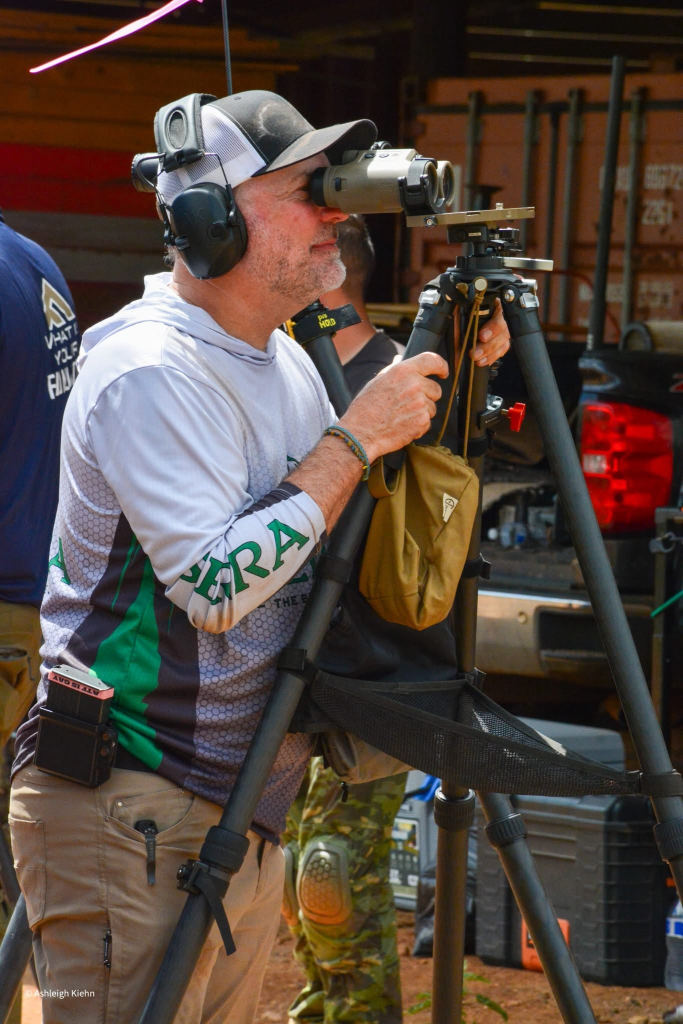
There’s another reason competition accelerates learning that I don’t think gets talked about nearly enough. You aren’t limited to learning from your own shooting. You get to watch everybody else.
During my first match, my squad wasn’t particularly adept at helping new shooters. They were nice guys for sure; they just didn’t know how to help us. One guy named Maxwell was more helpful than the rest and answered a lot of silly questions from my friend Mike and me. But looking backward after somewhere around a hundred matches, I can see something I couldn’t see then. They answered the questions that we knew enough to ask. They didn’t necessarily help us discover the questions we didn’t know we needed to ask. There’s a huge difference.
Today, if there’s a brand-new shooter in my squad and I watch him zero a stage, I’m probably going to find him before the next time he’s up. I’m going to ask him some questions. What’s your plan? How are you building your position? What are you using for your first wind call? Do you want to borrow my bag? If you miss, do you want me to give you a correction? And I always make it clear: if you don’t want my help, tell me to shut up and I’ll happily leave you alone. But if you want help, I’ll help you.
I’ve gone as far as taking people to their first match and offering them one of my rifles, my ammunition, and a Kestrel with the correct trued dope. Literally saying, just show up. We’ll figure the rest out. I do that partly because I remember being the guy who didn’t know what he didn’t know.
During my own journey, I eventually started shooting with people who did exactly that for me. Shayne Ward was probably one of the first people I remember asking me those kinds of questions. What’s your plan? What are you doing for wind? And sometimes, after hearing my answer: “Yeah, that’s not a very good idea.” That’s so valuable when you’re learning that I don’t think I can adequately put it into words. Shayne and Caleb Pulliam eventually trained with Mike and me for a short period of time, and having shooters who were so much better than us willing to challenge what we were doing accelerated our learning enormously.
I’ve continued to be incredibly fortunate in the people I’ve gotten to shoot and train with. And there’s another important piece of resolution here. A shooter operating at a higher level than you can sometimes see something you literally can’t see yet. Maybe you would eventually discover it yourself after a few thousand rounds. Or somebody better than you can stand behind you, watch five rounds and say: There’s your problem. That’s compressed learning. And precision rifle gives you unusual access to it.
You can also stand behind an incredible shooter while he solves the exact same stage you’re about to shoot. Watch the position. Watch the bag placement. Watch how he addresses the rifle. Listen to the wind call. Watch the recoil. Watch the impact. Then a few minutes later: Your turn. Same problem.
I actually try to spend as much of a match as I possibly can behind glass. I see plenty of shooters talking with the guys around them, monkeying with their gear, or just chilling between turns, and to me that’s wasted learning time. If there are eight or ten shooters ahead of me, I have the opportunity to watch eight or ten people solve the exact same problem I’m eventually going to have to solve myself.
And the more time you spend watching, the more you learn how to see. I remember my very first match watching what I now know was clearly an impact. Somebody called, “Impact,” and I remember thinking, How the hell did you see that? The shooter had hit the plate so close to dead center that it barely moved. The bullet simply came apart against the steel in a little starburst. I didn’t recognize that as an impact. Today, that same thing is so obviously an impact that I don’t know how I could see it as anything else.
That resolution keeps increasing. Eventually you’re not just seeing an impact. You’re seeing where on the plate the bullet hit. If I’m directly behind the shooter, I may see the trace of the bullet traveling toward the target. If I already know his wind call—and I frequently ask shooters what they’re planning to hold before they shoot—I can watch the trace, see where the bullet lands on the plate, compare it to the wind bracket I’ve developed, and learn something about the actual wind condition. Sometimes when a shooter comes off the stage, I can say, “You ended up three-tenths left on that wind hold, didn’t you?” I may already have a pretty good idea what happened just from watching the shot.
That’s another multiplier competition gives you. You’re not just learning from the rounds you fire. If you’re paying attention, you’re learning from every round fired by the people around you. And the more of those rounds you watch, the more information you become capable of seeing in each one.
Competition Changed My Handloading Too
I’ve handloaded for virtually my entire life, and long before I ever shot a precision rifle match, I thought I made pretty darn good ammo. I probably did. But then suddenly I needed 200 or 300 rounds for a match, and that changed the problem considerably.
Processes that were perfectly reasonable when I needed 50 rounds became painfully slow when I needed 300. I had to figure out what actually mattered, what didn’t, and where better equipment or a different process could make me faster without sacrificing quality. Loading at that volume forced me to question every step: Is this actually making my ammunition better, or am I doing it because that’s how I’ve always done it?
A lot of that evolution came from simply identifying bottlenecks. I used to throw powder charges a little light with an RCBS ChargeMaster, then trickle them up to final weight on a balance beam scale. It worked, and I made good ammunition that way. But try doing that 300 times when you need ammunition for a match that weekend. Today I use an AutoTrickler V4, and most of the time it’s waiting on me. I can dump a finished charge into a case, seat a bullet, put the completed round in the box, and another charge is ready. Annealing changed for the same reason. Candle annealing 50 cases occasionally was perfectly workable. Processing hundreds of cases repeatedly eventually pushed me toward an AMP annealer and annealing every firing.
Today I make substantially better ammunition than I did five years ago, and I can make it in roughly half the time. Competition didn’t just make me shoot more. It made me load more. And loading more has changed my resolution there too.
Oh, and It’s Fun as Hell
After everything I’ve written so far about learning, wind, pressure, hunting, positional shooting and becoming a better rifleman, there’s a much simpler reason I keep shooting matches. This is unbelievably fun.
Cleaning a stage feels flipping amazing.
Let’s say I have two minutes, ten rounds, five positions and two targets I have to engage from every position. Everything has to come together. Movement. Position. Bag. Target acquisition. Dope. Wind. Recoil management. Trigger. And when I put all of it together and clean that stage? Man, that’s a high.
There are also smaller moments that probably wouldn’t mean anything to somebody who hasn’t experienced them.
I was shooting a stage recently and watched one of my bullets hit the target absolutely dead center. And I knew it. I saw the impact and thought: That was as centered as I could ever make a bullet be on that target. That feels good. I’m doing my job. But I’m not just doing my job; I’m seeing enough to know I did my job. And that feeling isn’t completely tied to match placement.
I’ve had seasons where I placed better than I’m placing right now, and let me tell you, that can be incredibly frustrating. I’m competitive. Of course I want to do well. There are times I’ve walked away from a match emotionally wondering whether or not I’m good enough to compete in this sport. That’s my emotional brain talking. Analytically, I know I’m a very good shooter. But sometimes your brain leaks out your ear off the range too. Then I get home and find myself sitting there two days later, itching to go do it again.
Ultimately, I’m shooting against myself more than I’m ever shooting against you. Can I do this better than I did yesterday? Can I see something I couldn’t see before? Can I clean the stage I couldn’t clean last month? Can I make that wind call? Can I spot that impact? Can I build that position faster and then slow down enough to make the shot? That’s the challenge that keeps bringing me back time after time.
Then There Are the People
Some of the best friends I’ve made in my life have come out of this sport.
There’s a core group of about six of us who travel together whenever we can. We drive together. We rent Airbnbs for the group. We eat dinner together. We shoot together. We train together. We give each other shit. And then we go to the match and try to beat each other. That’s one of the funny things about calling this a competition. Yes, I want to beat you. You want to beat me. And I’ll loan you my bag. I’ll give you my wind call. I’ll help you solve a problem. If something breaks and I’ve got what you need, it’s yours. Then I’m going to try to kick your ass on the next stage.
I’ve only known some of these guys for a few years, and the bonds are already incredibly tight. I didn’t expect that when I started shooting precision rifle competitions, and it’s become one of the biggest reasons I keep going back.
Just Go
If you’ve been thinking about shooting a precision rifle competition but don’t think you’re ready, I can save you some time. You’re not ready. Go anyway. I talked about shooting my first PRS match for five or six years before I finally did it. Years. I thought I needed to get better first. Then I finally showed up, went zero-for-30 on the first three stages, made 26 impacts in an 80-round match, finished 23rd out of 32 shooters… And I absolutely loved it.
My reaction afterward was basically: You dumbass. Why didn’t you do this six years ago? Think about how much farther down this road I could have been. More importantly, think about how much fun I missed during those six years.
You’re never going to train yourself into being completely ready for your first competition because you don’t even know what you’re trying to become ready for yet. The match teaches you that. Find a match. Better yet, find somebody who already shoots them and tell him you want to try one. Ask questions. Be open-minded. Listen. Watch. And be willing to embrace your suck. Because you’re probably going to suck. We all did. Hell, I made 26 impacts at my first match and thought it was fantastic.
Then something happens. You shoot another match and don’t suck quite as bad. Then another. At first, the progression can feel like a rocket ship. You’re fixing huge things and improving incredibly quickly. Then you plateau. Then something clicks, and you jump again. Then maybe you plateau for a long time. Maybe you even go backward for a while. Then you see something you couldn’t see before. Another layer. Another little increase in resolution. And you start climbing again.
That’s still happening to me after somewhere around a hundred matches. I’m still learning. I’m still getting challenged. I’m still discovering things I thought I understood and realizing there is another layer underneath them. I’m still getting my ass kicked. I’m still occasionally cleaning a stage and walking away feeling like a million bucks. And I’m still excited to go back.
So if you’re wondering whether you should shoot a precision rifle competition, quit wondering.
Just go.
You have no idea yet how much there is to see.