
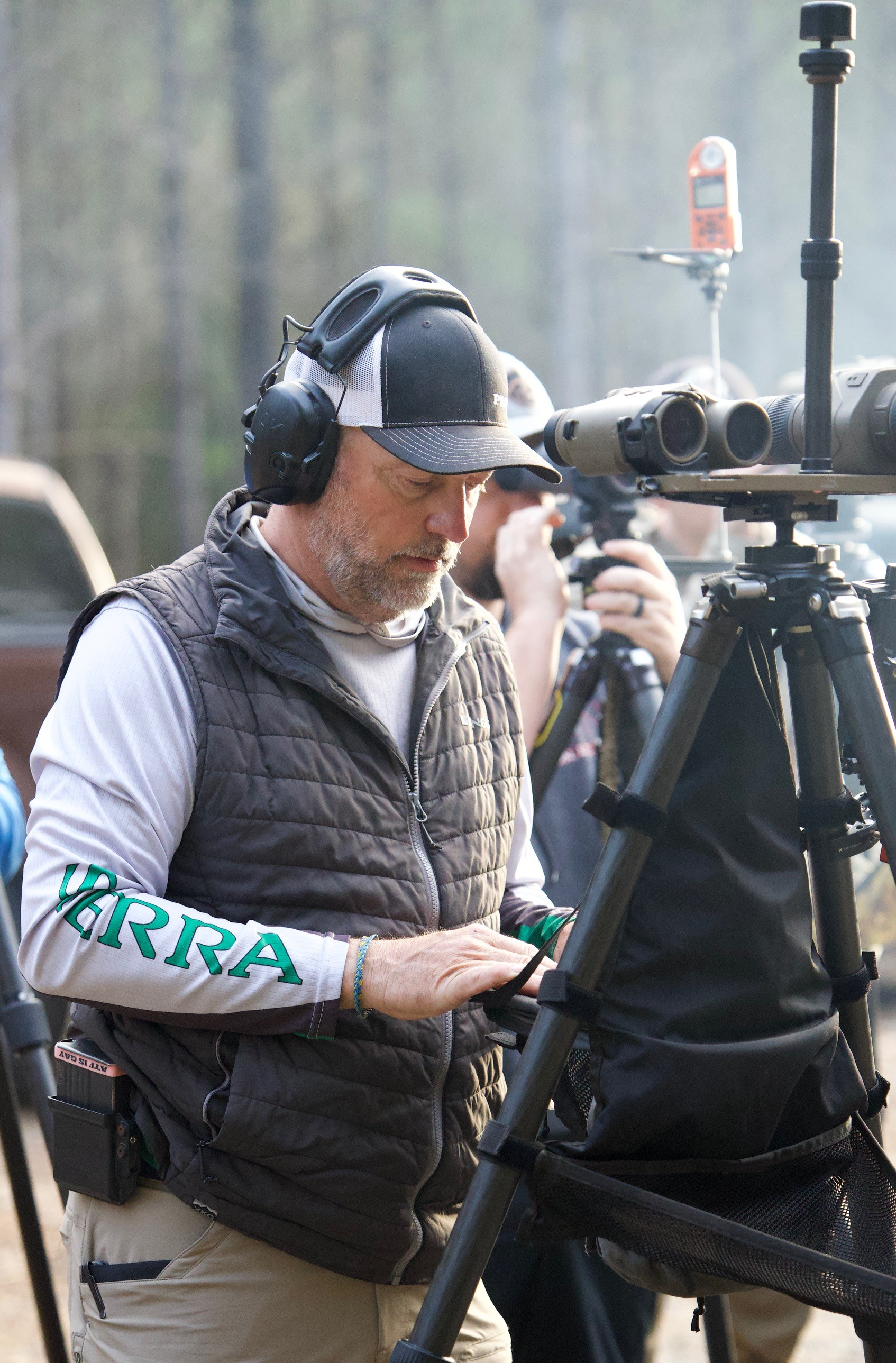
There was a time when I really had no idea what reading wind for long-range shooting actually meant. Yeah, I’d read about wind drift. I knew a lot of the theories. I knew that a wind closer to me had more effect on the bullet than a wind way out there, and I knew when it was blowing hard it was gonna shift my point of impact. And that was about all I really knew. I had no idea how to dope it, or even how to address it in any meaningful way. I didn’t really ever shoot far enough then to matter anyway, so this was all kind of the theoretical soup skipping around in my brain without any concept of real usability.
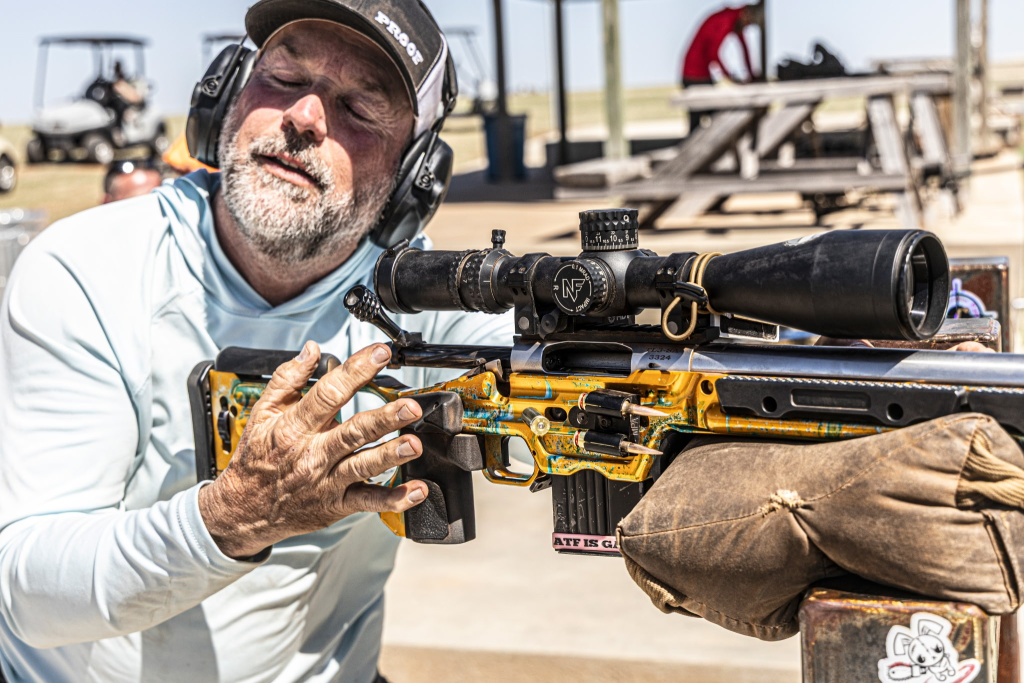
That began to change when I finally got my first opportunities to dip my foot in the long-range pool. I started off shooting with my friend Michael Baccellieri at the Leupold Optics Academy. That was when I started to see real wind effects. I started to get the idea that if I sent a bullet downrange with the wind blowing from left to right, I would have to push the muzzle into the wind to account for it. Buck was also teaching us how we were supposed to build wind columns in our Kestrels. He’d talk about putting something like a 5-mph wind in Wind 1 and a 10-mph wind in Wind 2, both set at 90 degrees to the shooter, then looking at whether we had a full-value, half-value, quarter-value, or zero-value wind, and using all of that to develop a starting call. The problem was, I didn’t really understand how to do any of it. I understood the individual words he was saying, but I couldn’t turn them into a usable process. They were still these amorphous ideas swimming around in my brain without an island to actually land on and begin resolving themselves into something coherent.
So I came up with my own solution, and it wasn’t exactly sophisticated. I vividly remember shooting there one afternoon with Buck while I was on glass. We used to shoot in spotter/shooter teams, and I was the spotter at that point. Buck was watching me work with the shooter, and he started laughing. He said, “You’re just picking some wind hold out of your ass and seeing what the bullet does on that first shot to get your wind call, aren’t you?” He’d caught me red-handed. That’s exactly what I was doing. I couldn’t reliably take the wind speed, direction and those two columns in the Kestrel and turn them into a first-round wind call, so I’d pick something that seemed reasonable, send the bullet and let the impact tell me how wrong I was. That was my early wind system.
Fast forward to when I started shooting .22 Bullseye Benchrest. I started to see wind pushing those little slow bullets around, and if I was going to keep them in the scoring 10-ring, I had better start doping the wind. I started using my Kestrel to get a wind reading. I started learning how to take an azimuth and use it to pre-guess my wind call. It was rough, and I didn’t have a great mental picture of it at this time. I just kind of did it by the seat of my pants. The beauty is you get 10 sighting shots in Bullseye, so it was kind of arbitrary, because two shots in I’m already making wind adjustments, and by the time I got to scoring shots I generally had a solid wind plan.
Then I started shooting PRS competitions, and suddenly I had to get better at this process real quick. Bullseye had let me get away with not really knowing how to develop a first-round wind call because I had ten sighting shots to figure it out. PRS didn’t give me that luxury. The first bullet counted, and at those early matches, that was probably the hardest part for me. I still didn’t have a system I trusted to take what my Kestrel was telling me about wind speed and direction and turn it into a wind call I was willing to put on that first shot.
So, at first, I became pretty dependent on someone else for a starting point. I’d listen to what shooters ahead of me were holding. I’d ask somebody coming off the stage what their wind call was. If I heard that guys were holding three-tenths, I’d have something I was willing to start with. The problem was that it wasn’t really my wind call. I wasn’t developing it from the information in front of me and then using the other shooters to confirm or question what I’d developed. I was borrowing their answer because I didn’t trust myself to come up with one.
That was really the thing competition forced me to confront. I couldn’t keep depending on somebody else to solve the first bullet for me. Their rifle wasn’t necessarily my rifle; the condition they shot in might not be the condition I was about to shoot in, and sometimes the wind call somebody gave me didn’t make any damn sense compared to what I was seeing. I needed to be able to walk up to a stage, measure the condition, understand the direction, look at what the Kestrel was giving me, and develop a first-round call that I actually trusted. That’s when I started deliberately training for wind.
I wanted to shoot on windy days so I could gain experience developing my own calls and reliably pulling them from my Kestrel. It was an uphill battle, and honestly, I’m still refining my system. I’m always learning more, and I’m far from finished working my way down this rabbit hole. I also watch shooters much better than me do things in the wind that amaze me, so I know there’s still more to come. You just have to be open-minded, listen, watch, and let the ideas soak in, and in time you can start to develop your own system for making good wind calls.
Stop Pretending You Can Feel the Wind
One of the first places I think shooters get themselves into trouble is by believing they can accurately determine wind speed simply by feeling it. You absolutely can get yourself into the neighborhood. I do it all the time. Sometimes I’ll stand there and think, That feels like six miles an hour, put a meter into the wind, and find out I nailed it. That’s a great feeling because for a second you look like some kind of wind magician. The problem is that an hour later you can do essentially the same thing and be three or four miles per hour wrong. In my experience, if you can consistently estimate wind within about two to three miles per hour, you’re doing exceptionally well, and the harder the wind blows, the less confidence I have in making a precise estimate by feel alone.
Three miles per hour doesn’t sound like a huge error until the bullet is far enough away that those three miles per hour actually matter. That’s why I measure wind when the shot requires it. If I’m shooting a PRS match, I’m taking a wind reading. If I’m shooting an NRL Hunter match, I’m taking a wind reading. If I’m hunting and there is a realistic possibility that I may take a longer shot, I’m going to take a wind reading. That doesn’t mean I need to sit in a Texas blind obsessing over the Kestrel when I know virtually every shot I’m likely to get will be somewhere between 100 and 200 yards. The problem doesn’t demand that much resolution. But there is always the possibility in some hunting scenarios where wind can come into play, and it’s better to have a plan than just wing it.
I just ran an example through the Applied Ballistics AB Quantum app to show what that uncertainty can mean in the real world. I have a profile for a 25 Creedmoor shooting a 110-grain Sierra Tipped GameKing, a very good hunting bullet I use fairly often, but not the kind of slippery match-bullet profile we’re accustomed to seeing in competition. I set an arbitrary distance of 500 yards and ran a 90-degree wind at both 3 and 6 mph. At 3 mph, the wind call is 0.4 mil. At 6 mph, it’s 0.8 mil. Think about what that means in the context of what I just said above. If I stand there, feel the wind, and call it 3 mph when it’s actually blowing 6, I’ve made what I consider a completely understandable error in estimating wind by feel—and I’m now 0.4 mil off at 500 yards before I ever pull the trigger. Neither one of those conditions would even register in my brain as particularly windy. That’s why, once the shot is far enough for wind to matter, I want a measurement and a plan rather than an educated guess.
I also don’t trust vegetation to solve wind problems for me either. I’ve looked at grass, trees, or brush and said, “Yep, it’s blowing over there, and that’s the direction it’s going.” That’s useful information, but that’s also about the full extent of what I trust vegetation to tell me. I’m not going to look at a bush 500 yards away and confidently decide it’s blowing seven miles an hour instead of ten because of how hard the leaves are moving. Vegetation can act like a giant wind flag saying, Hey, idiot, the air over here is moving this way. If I need wind speed at my location, I want a device to measure it. If I want to understand what is happening farther downrange, mirage is much more useful to me. And once bullets start traveling through that air, what those bullets actually do becomes more useful still.
The important distinction is not that every shot requires the maximum amount of information I can possibly gather. It doesn’t. What matters is matching the resolution of the information to the problem I’m trying to solve. At 150 yards on a deer, the difference between a five- and an eight-mile-per-hour wind may be essentially meaningless with the cartridge I’m carrying. At 800 yards on a three-tenths-wide piece of steel, that same error can be the entire target.
What Does a Six-Mile-an-Hour Gun Mean?
Before getting into the full process of building a wind plan that I use today, there is a much simpler piece of wind information that becomes incredibly useful in NRL Hunter and hunting: the rifle’s wind number. You’ll sometimes hear shooters call a rifle a five-mile-an-hour gun or a six-mile-an-hour gun. All we’re doing is creating a shorthand for the wind speed at which the rifle’s full-value wind correction roughly corresponds with the range in hundreds of yards.
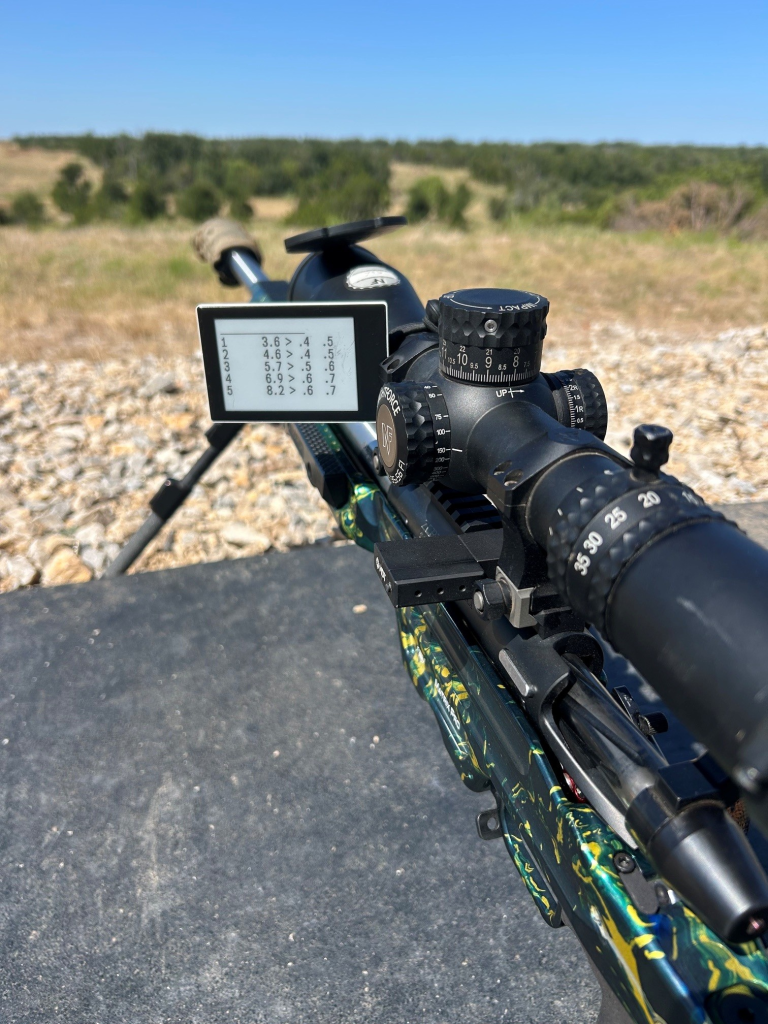
The way I establish that number is simple. I put the actual ballistic information for that rifle and load into a solver, then set the wind to 90 degrees so I’m looking at a full-value crosswind. I might start at three miles per hour and look at the range card. I’m looking for a pattern where 300 yards is roughly 0.3 mil of wind, 400 yards is 0.4, 500 yards is 0.5, 600 yards is 0.6, and so on through the useful portion of that relationship. If the numbers don’t line up, I increase the wind speed in the solver and look again. Maybe four miles per hour gets closer. Maybe five does it. I just keep changing that wind speed until 300 is approximately .3, 400 is .4, and 500 is .5. Whatever wind speed creates that pattern becomes my mile-per-hour number for that rifle.
That relationship isn’t perfect forever. As you stretch farther, it begins to fall apart, and the bullet eventually needs more correction than the simple relationship implies. But that’s not normally where I’m using the shortcut. I generally use wind number to get myself close very quickly at distances where it still works well. If I have a six-mile-an-hour gun and I’m dealing with a six-mile-an-hour full-value wind, then 500 yards gives me an immediate baseline of about 0.5 mil. At 600, I’m around 0.6. If the wind is only three miles per hour, then my basic call is roughly half that. If it’s approaching twelve, I’m starting to think about doubling it.
Again, for example, I used the same 25 Creedmoor profile as in the example above and adjusted the wind speed until the corrections aligned with the yardages. It turns out it’s a 5 mph rifle through 500 yards. At 300 yards, I get 0.3 mil; at 400, I get 0.4; and at 500, I get 0.5. Once I get to 600 yards, the relationship starts to fall apart, and I have to add another tenth, giving me .7 instead of .6. Now I have concrete numbers that are quick and intuitive while I’m in the field.
Direction gets layered onto that, but I don’t usually turn that into a complicated mathematical exercise in the field. I’m not standing there trying to calculate an exact cosine for a 37-degree wind angle, because most of the time the target doesn’t require that level of resolution. I basically cheat the system. If the wind is substantially quartering, I may cut the value. If it’s full value, I use the full call. If the wind speed itself is roughly half the mile-per-hour number of the gun, I halve the baseline. That’s usually enough to get me into the neighborhood I need to be in, especially in hunting or NRL Hunter where the effective target is substantially wider than a small PRS plate.
There is an exception when the wind gets close to 12 o’clock or 6 o’clock. That’s where the direction can become much more important because small changes from one side of straight at you to the other side can interact with spin drift and change what the appropriate horizontal correction really is. I’ll come back to that, because those near-straight conditions are also responsible for my least favorite wind in the world.
Building a Real Wind Plan
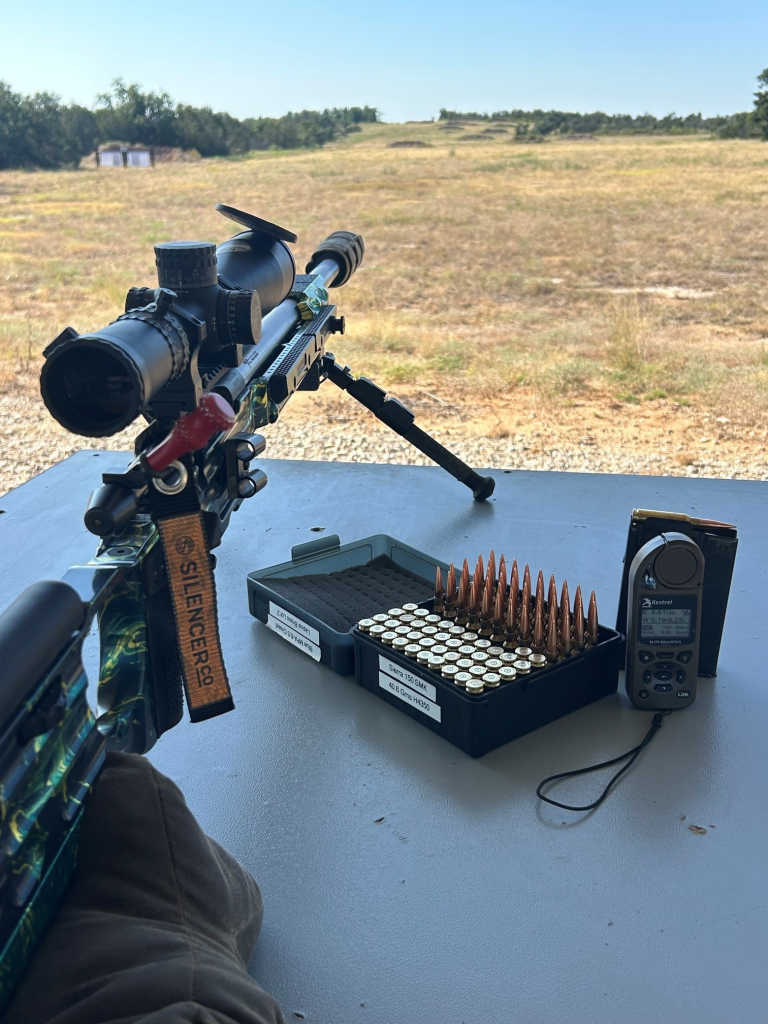
Wind number gives me a quick mental answer, but shooting PRS competitions lets me build something far more detailed because I have the luxury of knowing where the targets are before I shoot them. I also have time to build a plan. I normally load every target distance for an entire match into the Target Card feature of my Kestrel before the match begins. Target Card lets me group yardages by stage and put them in the exact order I’ll shoot them. I do that work ahead of time because I don’t want to arrive at a stage and burn time or mental bandwidth entering data that I could have entered that morning or even better, the night before.
When I get to the stage, I find each target with my binoculars and record its azimuth. Azimuth is simply the direction of fire, but it matters because the wind doesn’t have the same effect on every target, since the air is moving in one general direction. If the stage pans significantly from left to right, a wind that is nearly full value for one target might have far less value than another. One could be a full-value 90-degree target, and the next one almost dead on, with almost no wind value. The Kestrel needs to know which direction I’m actually shooting in order to make that relationship useful.
The way I capture that direction is pretty simple. While I’m looking at the target through the binoculars, I place the Kestrel against the face of the binoculars so the back of the unit is pointed in the same direction I’m looking, then capture the azimuth for that target. I repeat it for every target in the stage. This whole process depends on the Kestrel’s compass being accurate, so I calibrate it regularly. If the device doesn’t actually know which direction it is pointing, everything we do afterward with target azimuth and wind direction becomes a worthless jumble of numbers, no matter how good the other inputs are.
Once the target directions are established, I take what I call a global wind reading. At my little “wind station,” I use an extremely light ribbon mounted on an arrow shaft. The ribbon isn’t there to estimate speed. Its job is to show me wind direction as accurately as possible, even when the air is barely moving. I point the back of the Kestrel directly into the wind, using the ribbon to establish that direction, and use the Capture Wind feature in Target Card. The Kestrel now knows both the direction the wind is coming from and the range of wind speeds I’m measuring. Because I’ve already captured the azimuth of every target, it can calculate how much value the wind has for each target. I generally let the reading run somewhere around 20 to 30 seconds, sometimes longer if I feel the wind is really changing. I don’t want one instantaneous number because wind almost never sits perfectly still. I want to see some of the condition’s rise and fall, so I have at least a small picture of the range it’s operating within, as well as how much the wind is swinging horizontally.
This is where I bring a Calypso into the system. The Calypso continuously measures the wind throughout the day, so instead of only seeing the 10 or 20 seconds I happen to capture with my Kestrel, I can look back at what the wind has been doing over a much longer period. The Calypso can provide a lot more information than I use it for, but what I really care about is its average wind speed over the past several minutes. Let’s say the Kestrel just gave me a short-term range from 10 to 14 miles per hour, but the Calypso says the average has been nine. That tells me the wind I just happened to capture may be sitting a little above the longer-term condition. Before I finalize the wind in the Kestrel, I may move the lower end of that bracket to eight or nine while leaving the high end around 14. Now I’ve built one column around what I think is probably the most representative condition and another around a stronger version I may need if the wind comes up.
Once those pieces are entered, Target Card can relate the wind direction, wind speed, and target azimuth to my ballistic profile for every target on the stage. I now have a Wind 1 and Wind 2 number for each target. Most of the time, I’ll start with Wind 1 because I’ve intentionally built it around the condition I believe is most likely. If it tells me the first target needs 0.3 left, that’s probably what I’m going to hold.
But this is where the way I think about the Kestrel today is very different from how I thought about it a couple of years ago. The Kestrel didn’t just tell me the answer. It gave me the best answer I could build before any bullets had been fired. I have a very well-informed starting point. That’s not the same thing as reality.
Why I Usually Run Two Wind Columns
My shooting partner Mike Martin has recently started using four wind columns rather than the two he used historically, and I have to admit that the more he explains his reasoning, the more sense it makes. His thought is that no matter what the first bullet tells him, one of those four precomputed columns will probably be close to what his actual wind call ends up being. If his initial call was based on his low-wind bracket but the first impact behaves exactly like his third bracket, he doesn’t need to calculate anything new. He can simply jump to the third column and start running it.
That’s a pretty compelling system, especially when I look at what Mike has been doing recently. For a long time we were extremely close competitively. He’d beat me in one match, I’d beat him the next, and we were generally living in about the same neighborhood. Over the last handful of matches, he has taken a jump and has been running much closer to the top while I haven’t been there. Maybe the four-column wind plan is part of that improvement. Maybe it isn’t. But I’m certainly not going to dismiss it when the guy using it has been leaving me in the dust.
The reason I haven’t automatically copied him is mostly the way my mind works once the stage begins. I write down my wind columns, but once I’m actually shooting, I generally don’t look back at them unless I get confused. I’m much more likely to carry the relationship between the targets in my head and modify the entire progression based on what the first bullet tells me. That little mental system came from Morgun King, and it’s one of those seemingly simple things that becomes enormously useful once you understand what it’s doing.
I Don’t Memorize Every Wind Call. I Memorize the Relationship.
Let’s say I have a troop line with five targets, each progressively farther from the last. I could memorize five individual wind holds, but that’s five more absolute numbers I have to keep straight while I’m also remembering the target order, elevation changes, positions, and everything else involved in the stage. Instead, I can make the first target my zero point and remember how much wind I need to add as I move through the troop line.
Maybe the second target needs one-tenth more wind than the first. The third needs another two-tenths, the fourth another one-tenth, and the fifth another three-tenths. The first target is my zero point, so there’s nothing to remember there. For everything after it, the easiest way for me to remember the progression is simply as its own number: 1213. That tells me to add one, then two, then one, then three tenths as I work my way through the troop line. I’m not memorizing the absolute wind call for every target. I’m remembering the change from one target to the next.
That becomes extremely valuable when the first bullet tells me my original wind plan was wrong. Let’s say my original first-target hold was 0.3 left, but I send the shot and realize the actual condition requires 0.5. I don’t need to rebuild the entire stage. My baseline is now simply 0.5, while all the relationships I memorized are still useful. I add one-tenth for the second target, two more for the third, another one for the fourth, and three more for the fifth. My new wind calls are 0.5, 0.6, 0.8, 0.9, and 1.2 mils. The first bullet changed my starting point, but it didn’t change the relationships between the targets that I’d already worked out.
That’s one reason I haven’t felt like I absolutely need Mike’s four written columns. His system gives him several complete wind solutions he can jump between. Mine gives me a way to generate a new column mentally once I have a good real-world starting point. Neither one has to be universally correct. They are different ways of managing information, and the useful system is the one you can actually execute while the clock is running.
This is also one of those places where you have to understand how your own brain works, because Mike and I manage information very differently. Mike is constantly referring back to his dope card while he’s shooting. He also uses color-coding on his turret with dry-erase tape to create visual references for his elevation settings, reducing the amount of information he has to hold in his head. That’s a system that works extremely well for him. I’m almost the opposite. Once the stage starts, I rarely look at my dope card unless I get lost. I may glance at it for elevation changes, but I often memorize those too. For me, the card is more of a safety net than something I expect to actively use.
Neither approach is better simply because one shooter can memorize more or another can build a better visual system. The whole point is reducing cognitive load. Mike moves information out of his head and puts it somewhere he can see it. I tend to reduce the information into relationships that are simple enough for me to carry in my head. We’re solving the same problem in completely different ways.
The First Bullet Is a Wind Meter
Before I fire the first round, everything I’ve done is a prediction. It may be a very sophisticated prediction, but that’s still what it is. I’ve measured the wind. I’ve looked at the average condition. I’ve captured direction. I’ve established the target’s azimuth. I’ve run the ballistic model. I’ve watched mirage. I’ve looked at terrain. If other shooters have gone ahead of me, I’ve watched their bullets. I’ve done everything I can to develop an intelligent expectation about what my bullet should do. Then I pull the trigger and something fundamentally changes. The bullet just traveled through the exact atmosphere I’m trying to understand. Now I have physical evidence.
That evidence can come from where the bullet lands on the plate, how the plate moves, a splash in the dirt, trace, or some combination of signs. Whatever form it takes, I now know something I did not know before firing the shot. If my Kestrel told me the correct wind call should be 0.3, but that first bullet clearly shows I needed something closer to 0.5, I’m no longer interested in defending 0.3 because it came from a computer. The bullet has just experienced the actual system. The bullet wins.
There is a caveat to this, and it’s an enormous one. The bullet only becomes good wind information if I actually executed the shot properly. If I slapped the trigger, wasn’t square behind the rifle, or watched the reticle bobble when the shot broke, the bullet may be giving me an extremely accurate measurement of my own mistake rather than the atmosphere. But if I know the shot was clean, what the bullet did matters more to me than what I predicted it would do.
That may be the biggest philosophical change competition has made in how I think about wind. Years ago, I believed the ballistic solution told me what to do. Today, I think the ballistic solution tells me where to begin. Reality gets the final vote.
Measure the Impact
A hit isn’t merely a hit. Where the bullet lands on the plate tells me whether the wind call was actually correct, and if I’m paying attention, every impact gives me a chance to refine the solution. Let’s say I’m shooting at a target that’s 0.4 mil wide, and my plan for the first target is 0.3 mil left. I send the bullet and hit the right side of the plate, which in this example is the downwind side. I scored the impact, but I also know that my wind call wasn’t really correct.
That doesn’t mean I’m going to stop and measure every bullet that isn’t perfectly centered. If I can clearly see that I’m just a little downwind of where I wanted to be, I already have enough information. I might simply add a tenth to my wind call and keep shooting. There’s no reason to spend five seconds measuring something my brain has already resolved well enough to make the next decision.
Measurement becomes much more valuable when the bullet misses, and I can see the impact, but I can’t confidently tell how far off the plate it was. Now estimating the correction doesn’t make much sense. If I have the time, I’ll swing the reticle over, put it on the impact, and measure back to where I wanted the bullet to land. Maybe I discover I was four-tenths downwind. Now I have an actual correction rather than looking at the splash and thinking, Well, that looked like maybe two or three tenths. I can put those four-tenths into the next shot and carry what I just learned forward through the rest of the stage.
If that measurement costs me five or seven seconds, I’m often willing to spend them. There’s a natural tendency under a match clock to feel like any time you’re not shooting is wasted time. I don’t think that’s true. If I spend five seconds obtaining information that keeps the next three bullets on steel, those five seconds were probably worth far more than rushing into another shot while still using a wind call I already know is wrong.
The more you do this, the better you become at resolving what you’re seeing without needing to measure everything. You become familiar enough with target sizes and your reticle that many corrections become obvious. If I’m a little downwind on the plate, I don’t need to measure that. I can see it and make the correction. But when the bullet is off the plate, and I’m not confident how far it missed, I’ll measure it if I can. The target and the splash are sitting there giving me data. It seems silly not to use it.
Was That Wind—or Did I Screw Up?
Interpreting that feedback requires some honesty, because not every unexpected bullet is evidence that the wind changed. Sometimes you just made a bad shot.
If you’ve been shooting long enough and you’re willing to be honest with yourself, most of the time you know. Were you square behind the rifle? Did you put some strange pressure into the stock? Did you rush the trigger? Did you slap it? Did you see the reticle dip or move as the shot broke? Did your position feel wrong? I don’t necessarily know the exact mechanical reason for every bad shot I fire, but I usually know whether the shot felt clean enough to trust the bullet’s wind information.
I’ve stood behind other shooters on glass and heard them come off a miss saying, “The wind switched on me.” Sometimes the wind absolutely did. Other times I’m thinking, No, it didn’t. Everything stayed stable. You screwed that one up. I’m not going to tell the guy that unless he asks me, but I’m certainly thinking it.
The thing I try hard to avoid is becoming that guy myself. If I know the shot was me, I don’t change a good wind call because of bad shooting. I fix what I did and take the same wind call into the next round. If I know the shot was clean, then I believe what it told me. Feedback only accelerates learning if you’re honest about what produced it.
There are also times when the stage is moving so quickly that I intentionally stop gathering as much information. If I’ve got a 90-second stage with multiple movements and I’m shooting one target repeatedly from several positions, I may watch that first round very carefully. If it’s reasonably centered and the wind appears stable, I may quit trying to analyze every single impact and simply shoot the stage. Build the position, breathe, make a good shot, move, do it again. At that point I’m accepting some uncertainty because the time constraint has changed the value of the information. I also find myself hoping the wind doesn’t change halfway through the stage.
Again, the required resolution changes with the problem.
When You Miss and See Nothing
The worst wind miss isn’t necessarily the one that goes way off the plate. It’s the one that tells you absolutely nothing.
Maybe the target is skylined, and there is nothing behind it to show you where the bullet went. Maybe the dirt is wet enough that it doesn’t throw a dust cloud. Maybe there are weeds behind the target that simply swallow the impact. Maybe recoil knocked you far enough out of the optic that you never saw anything. There are all kinds of reasons you can fire a shot, know you missed, and receive essentially zero useful feedback from it. That’s where a little rule Morgun King passed along has become incredibly useful to me. He calls it the 90% rule.
After watching thousands of rounds go downrange, one thing becomes pretty obvious: most wind misses happen on the downwind side of the target. That’s not an absolute law, and we’ll get into the exceptions in a minute, but it happens often enough that it’s a valuable assumption when you have no other information. If the wind is blowing left to right and I miss without seeing anything, the highest-probability explanation is that I got blown off the right side.
The 90% rule tells me to use approximately 90% of the target’s angular width as the magnitude of my upwind correction. If I’m shooting a 0.6-mil-wide plate, 90% of that is roughly .5 mil. So if my original hold was 0.3 and I see nothing after the shot, I don’t timidly add one tenth and hope for the best. Depending on the situation, I may add around 0.5 mil to the next call. That sounds like a giant correction because it is, but it’s a correction designed to put the next bullet back on the plate.
The most common mistake I see after a complete wind miss is not moving far enough. People see nothing, assume they missed downwind, add a tenth or two, and see nothing again. If the first bullet was already completely outside the target, why would we assume a tiny move will suddenly put the next one in the center? The purpose of the 90% correction isn’t to magically predict exactly where the first miss went. The purpose is to get the next bullet back onto steel so you can recover information. If it lands strong on the upwind side, that’s fine. Now you know where you are again, and you can start narrowing the call.
That little distinction—making a correction large enough to get information back—is something I think takes people a surprisingly long time to learn. It took me a very long time to learn. It’s easy to think that you can’t have been that wrong in your initial prediction, but wind has a funny way of doing some unexpected things. Large corrections help you diagnose and fix that uncertainty much quicker.
Yes, You Can Miss Upwind
Before anyone turns the 90% rule into some kind of ballistic law, everybody misses upwind sometimes. I’ve done it plenty. One of the easiest ways to do it is to overcall a light wind when the direction is close to 12 or 6 o’clock, especially when that wind is interacting with spin drift.
I had exactly that happen recently while I was training. I had a light right-to-left condition coming from around one o’clock. It was only three or four miles per hour, but it felt a little stronger and a little closer to a 90-degree wind than it apparently was. I decided I needed to hold some right wind, sent the bullet, and missed right off the upwind side of the plate.
What I had actually done was overcorrect for a wind that was doing little more than canceling the bullet’s normal rightward spin drift. The right answer was essentially to aim straight at the middle of the target.
That’s one of the reasons I pay particular attention to winds near 12 or 6 o’clock. When the wind is coming more directly from the side, its effect is easier for me to visualize. Near 12 or 6, things get less intuitive. A relatively small change in direction can change how much horizontal wind value I’m actually dealing with, and in a light condition that wind may be doing little more than offsetting the spin drift that’s already moving the bullet the other direction. That’s exactly how I talked myself into holding right, even though the better answer was simply to hold center.
Spin Drift Is Sitting There Whether You Think About It or Not
With the right-hand twist rates most of us are shooting, the bullet develops a rightward drift during flight. How much that matters depends on the bullet, velocity, distance, and the rest of the system, but by the time the distances get long enough, it’s part of the horizontal picture whether I consciously think about it or not.
Now add a right-to-left wind. It’s tempting to think that because the wind is blowing from the right, I automatically need to hold right, but that’s not necessarily true. A light right-to-left wind may spend a surprising amount of the bullet’s flight simply canceling the rightward spin drift that’s already there. With some of the rifles I shoot, something like a one- to three-mile-per-hour full-value wind may leave me with essentially no horizontal hold through a substantial portion of the distances I’m shooting. Eventually the wind wins, and I need to start holding right, but that may not happen until 400, 500, 600 yards, or wherever those two effects stop roughly balancing for that particular ballistic system.
Often, when I’m in a situation like this, I’ll measure the first target’s width. Let’s say I have a light right-to-left wind, and the solver says I need to hold 0.2 right, but my gut tells me it might actually be straight up. If that first target is 0.6 mil wide, I have enough room to send the first bullet straight up and pay very close attention to where it lands. Instead of trying to solve an uncertain wind condition perfectly before I shoot, I’m using the width of the target to give myself some margin and letting that first bullet tell me what’s really happening.
This is also one of the situations where I occasionally look at what the Kestrel is giving me and think, No freaking way that’s what I’m holding. That doesn’t happen often, and it doesn’t mean I distrust the Kestrel as a whole. I rely on the thing constantly. But there are situations where experience with real bullets makes me question whether the number on the screen reflects what I actually want to do.
When that happens, I don’t automatically decide my gut is smarter than the computer. Sometimes I go back and verify the whole system. Did I capture wind direction correctly? Is the target azimuth right? Is the compass calibrated? Did I accidentally enter something wrong? A Kestrel can produce a perfectly logical answer from bad information. Before I blame the output, I want to make sure I didn’t corrupt the inputs.
What experience eventually gives you is not permission to ignore the solver. It gives you enough understanding to recognize when an answer deserves another look.
Wind Can Affect More Than Left and Right
Another thing I didn’t understand at all when I first started shooting farther is that wind doesn’t fit neatly into a horizontal box while elevation sits in a separate vertical box. There are other effects in play, including aerodynamic jump, but wind itself can also have a vertical component. Terrain can force air upward or downward, and if the bullet travels through that moving air, it can affect where the bullet lands vertically.
Think about shooting from the bottom of a valley toward a target farther up a slope with the wind generally moving from behind you toward that rising terrain. As the air encounters the hillside, some of it can be forced upward. Now the bullet isn’t simply dealing with a headwind or tailwind. It’s traveling through an air mass that may also have an upward component. The opposite can happen with descending air. How much that ultimately moves the bullet depends on the strength and location of that vertical airflow and how long the bullet is exposed to it.
Aerodynamic jump is a different mechanism. A horizontal crosswind interacting with a spin-stabilized bullet can create a vertical deflection even though the wind itself isn’t moving vertically. I’m not going into the mechanics in depth here because that’s beyond what we need for this article. The important point is simply that wind can show up in the vertical solution for more than one reason.
The useful point for this article is that the bullet experiences one atmosphere. We separate elevation, wind, spin drift, and the other effects in our heads because it makes the system easier to understand and manage. The bullet isn’t interested in our organizational system. Everything is happening together.
That matters because the better you get, the less comfortable you become assuming every unexpected vertical impact was elevation and every unexpected horizontal impact was simply crosswind. Sometimes the system is more complicated than the categories we’re using to describe it.
Mirage Is Different
I said earlier that I don’t trust vegetation for much beyond broad directional information. Mirage is completely different. Mirage is one of the most useful windows I have into what the air is doing downrange, and it’s also an area where I’m very aware that my own ability hasn’t caught up to where I want it to be.
If I’m standing behind my binoculars watching somebody else shoot, I can see mirage very well. I can recognize that it’s moving right to left, watch it flatten as the wind gets stronger, or see it change direction when the conditions switch. The problem is doing that while I’m the shooter and simultaneously processing everything else involved in a PRS stage.
When I’m behind the rifle, my brain is full. I need to remember the target sequence. I need the right subtension for my next wind hold. I have to find the correct plate. I need to build the position and make it stable. I’m thinking about the wind progression I memorized. I’m trying to keep the rifle calm through recoil and execute a good, slow trigger press rather than smacking the trigger because the clock is running. Then, after the bullet leaves, I’m trying to see where it hits and interpret what that means before moving to the next target. Mirage is sitting in the optic the entire time, but sometimes I simply don’t have enough conscious bandwidth left to look at it.
If I deliberately remind myself to Look at the mirage before I break the shot, I can do it. What I can’t reliably do yet is have that awareness operating automatically in the background while I’m doing everything else.
I’ve watched Morgun King do that at a level that used to look like black magic to me. I once watched him shoot a stage where the wind changed directions multiple times during something like 105 seconds. He started with one call, recognized that the wind had switched, changed the call, then watched it switch back and changed again. He cleaned the stage. More impressively to me, his impacts remained pretty damn centered while he did it. That’s not magic. He’s simply resolving more information while he’s shooting than I currently can.
That distinction matters to me because it changes what getting better looks like. I don’t necessarily need another piece of equipment or another formula. Some of the information I want is already right there in the optic. I just need enough experience and available processing capacity to recognize it and use it while everything else is happening.
Trace: Information I Know Is There but Don’t Reliably Use Yet
Trace is another layer of information that I’m not very good at using from behind my own rifle. I know shooters who place tremendous value on it. Brandon Hembree has told me he sees trace essentially every shot. His advice to me was that I need to relax my eye and let the trace appear rather than actively trying to hunt for it.
I believe him, and I want to be able to do it. The problem is that right now, when I consciously start looking for trace, I sometimes feel like I’m sacrificing information I’m already better at processing. I’m trying to see where the bullet impacted, how the plate moved, whether the splash was left or right, what the mirage is doing, and whether the condition changed. If I use too much of my attention trying to catch the bullet in flight, I may miss something I currently find more useful after it arrives. It’s something I’m training for, and when I do relax my eye, I see trace some of the time, but it’s far from happening seamlessly.
That doesn’t mean trace isn’t valuable. Quite the opposite. A shooter who can reliably see it may know the bullet will miss before it ever reaches the target. More importantly, on a sky-lined target, the shooter may instantly know where a miss went because he watched the bullet’s flight pass the target. That’s an incredible stream of information, especially as the time of flight increases. I just don’t have enough bandwidth to use it consistently yet.
That may change. A lot of things that were difficult for me a year ago are much clearer now. As more parts of the process become automatic, I expect some of that mental capacity to become available for another layer. Maybe trace eventually becomes one of those things I can see without consciously trying to.
Where Does the Wind Actually Matter?
One of the deceptively complicated questions in wind is where along the bullet’s path the wind matters most. The easy thing about the wind at the shooter is that it’s measurable. The Kestrel is sitting beside me. I can put it directly into the wind and get a very good reading of exactly what’s happening where I am. Unfortunately, the bullet leaves.
It may spend the first couple hundred yards traveling through relatively protected air. Maybe there are trees on both sides of the firing point. Maybe I’m shooting out of a little depression. Then the bullet crosses an open valley where the air is behaving in a completely different way. After that, it reaches a target on the far side of a ridge, where conditions may have changed again. A perfectly accurate measurement at my position does not guarantee that the bullet experiences that same wind for its entire flight.
The easiest way I know to picture this is to imagine giving the bullet a little push to the right. If I give it that push just after it leaves the muzzle, the bullet now has hundreds of yards left to keep traveling in that new direction. Give it the exact same push right before it reaches the target, and there simply isn’t as much distance left for that change to show up on the target. That’s why the same amount of wind generally matters more closer to the shooter than it does closer to the target.
But here’s the important part: the wind usually isn’t the same everywhere. The air 600 yards away might be blowing twice as hard, coming from a different direction, or being deflected by the terrain. A weaker wind close to me may have more influence mile-for-mile, but a much stronger wind farther away can still move the bullet more. The bullet doesn’t care which part of the wind I measured. It responds to all of it.
There is a target line at Gravestone that has repeatedly taught me that lesson. It starts around 600 yards and runs out through 1,000 with more targets extending beyond that. The first portion of the range is somewhat protected. There are trees around parts of it and a little fold in the terrain. My Kestrel-derived wind call is usually pretty darn good at 600 and 700 yards. Sometimes it’s still reasonably close at 800. Then I get to 900 and 1,000, and the Kestrel appears to lie. I may have built a plan around an eight-mile-an-hour wind, but those farther targets behave like the bullet is seeing ten or twelve. If you’ve never shot that line before, it can catch you badly off guard. If you have shot it, you start to expect that farther targets will require a substantially larger call.
What precisely causes that difference on a particular day is harder to know. Maybe the bullet is entering a more exposed wind field. Maybe the terrain is channeling air. Maybe the direction shifts. Maybe several things are happening at once. I don’t need to pretend I know the exact atmospheric mechanism to recognize the practical result.
That’s another place where the bullet outranks the instrument. The Kestrel accurately told me what the wind was doing at my position. The bullet accurately told me that what was happening farther downrange was different.
Both pieces of information can be true.
Terrain: I Got No Freaking Clue
If there is one thing complicated terrain does for me, it lowers my confidence. I think that’s probably the right response. If I see a fold between me and the target, I can reasonably suspect that wind may funnel through that feature. If the general wind is left to right and the fold runs in a direction that could channel it the same direction, maybe the bullet is going to experience more wind there than I measured at the muzzle. If I’m shooting up a hill, I may be alert to the possibility of rising air. If I’m shooting down into broken country, I’m expecting something less predictable than I would see on a flat square range.
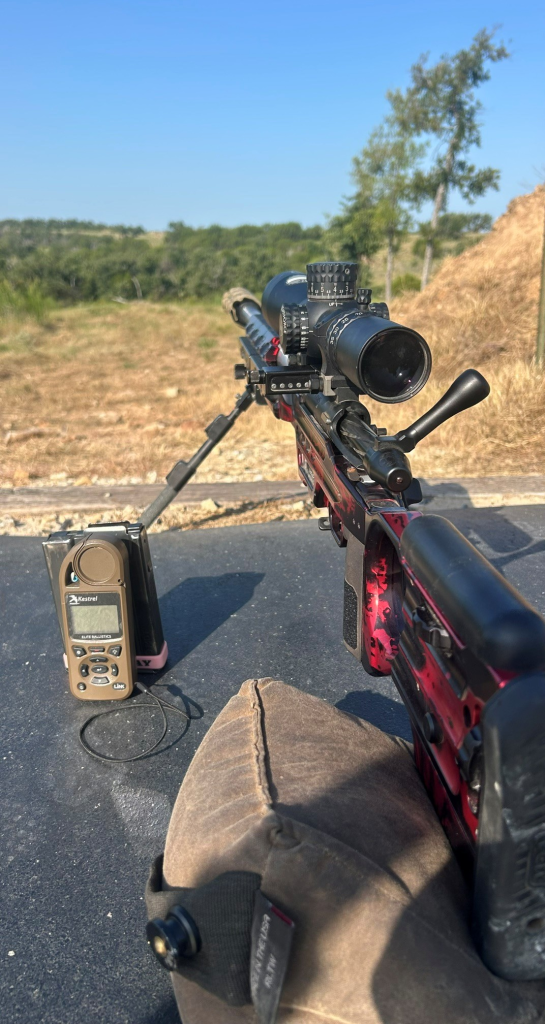
What I do not do is turn any of those suspicions into some precise correction before I have evidence. I don’t look at a canyon and decide, “That’s worth three-tenths.” I don’t have enough experience shooting broken terrain to make that claim, and I think pretending I do would be much worse than admitting uncertainty. There are military snipers and other shooters who have spent enormous amounts of time in mountainous environments and are probably very good at recognizing what particular terrain features are likely to do. The only way I can imagine getting genuinely good at that is to spend an enormous number of rounds shooting those features, then compare what you predicted with what actually happened.
So terrain changes my level of suspicion more than it changes my starting call. I’m still going to begin with the best measured wind solution I can build. Then I pay very close attention to the evidence.
PRS is wonderful for that because I don’t have to shoot first most of the time. If eight shooters go before me, I have eight opportunities to watch bullets travel through the exact same terrain I’m about to shoot through. If every one of those shooters suddenly gets pushed farther downwind on the same distant target, I don’t really care whether I’ve perfectly diagnosed the meteorology behind it. I may not know why it’s happening, but I know it is, and that’s enough information to change my plan.
Don’t Borrow Somebody Else’s Wind Call
Watching those other shooters is incredibly valuable, but there’s a trap built into it. It is very tempting to use somebody else’s wind call as your own. PRS makes that even more tempting because so many of us are shooting very similar systems. I shoot a Dasher with a 105-grain Sierra MatchKing, and a giant portion of the field may be shooting Dashers with 105-class bullets at very similar velocities. Our wind solutions are going to be close enough that I’m absolutely interested in what another good shooter just held.
I’m not shy about asking either. A guy comes off a stage after shooting a nine, or cleaning it and I may ask, “Was that still a three tenths left hold?” Maybe he says yes. Maybe he says, “No, man. I was at five.” That information is useful. It’s also dangerous.
I’ve had enough experiences where my original measured plan said 0.3, another shooter told me 0.5, I abandoned my own plan and then discovered I should have stayed close to 0.3. Maybe the wind was stronger when he shot. Maybe his rifle has a slight cant issue. Maybe he broke a bad shot and built a correction around it. Maybe his bullet is behaving a little differently. Maybe his interpretation of the impact wasn’t the same as mine.
The point is that his answer belongs to his system and the conditions that existed when he fired. I treat another shooter’s call as evidence. I don’t treat it as authority. Sometimes his number will make me hedge slightly. Sometimes it will make me go back and verify my own inputs. Did I capture direction correctly? Is my compass calibration good? Are my wind speeds reasonable? If several good shooters are all telling me something dramatically different from what my plan says, I’m certainly going to investigate why. But I’ve learned to be very cautious about throwing away a wind plan I developed carefully simply because somebody else tells me a different number.
Ask what he held. Don’t automatically let his answer become your wind call.
The Wind I Hate
My absolute least-favorite wind to shoot is a fishtailing condition from either 12 or 6 o’clock.
A reasonably stable full-value crosswind is easier because even if the speed changes, the basic direction of the required correction stays consistent. I may need more or less of it, but at least I’m generally working on the same side of the reticle.
A wind coming almost directly at me or directly from behind me can become a different problem entirely because wind never sits perfectly static. If the average direction is noon, the actual condition may spend part of the time at 11:00. Then it comes to 12. Then it shifts to 1:00.
Those aren’t giant directional changes, but they can produce significant changes in what I need to do relative to the target. At 11:00, the horizontal component of the wind is pushing the bullet in the same direction as its normal rightward spin drift, so I may need a left-hand hold. As the wind moves toward straight noon, that horizontal component gets smaller, and the correction may shrink until I’m mostly dealing with spin drift. Then, as the wind crosses over toward 1:00, everything begins working the other way. Now the wind is pushing against spin drift. It may cancel it entirely, and if the wind has enough horizontal value, eventually I need to cross the center of the reticle and start holding right.
Throw gusts into that, and you can shoot a stage where the effective answer moves from left, toward center, through center, and then right—only to reverse the whole process when the wind fishtails back the other direction. That can all happen in the space of a minute or two.
That’s an incredibly hard condition to shoot well because it’s not enough to build a good wind plan before the stage. You have to keep monitoring the conditions and be willing to adjust your answer while you’re shooting. Experience helps. Mirage helps enormously. Even then, sometimes that wind is simply going to hand you your ass.
PRS Requires Maximum Resolution
A huge amount of what I’m describing here is driven by the targets themselves. PRS targets can be tiny. Two-, three-, and four-tenths-wide targets don’t leave you much room to be wrong. If the plate is only three-tenths wide and my wind error is two-tenths, I can have an otherwise perfect shot and still miss. That forces me to squeeze as much useful information as possible out of the system.
PRS also gives me the environment to do that. I know the target locations and distances ahead of time. I can put them into Target Card. I can capture azimuths. I can build multiple wind columns. I can watch other shooters. I can see where their bullets land. I can measure my own impacts and misses. The rifle is purpose-built to let me stay in the optic and gather as much information as possible.
When the target is that small, tenths matter. NRL Hunter changes that equation dramatically.
NRL Hunter Lets the Plate Soak Up Wind
NRL Hunter targets are generally much wider than the small PRS targets I’m accustomed to shooting. In the matches I’ve shot, it’s not unusual to have .8 mil, 1 mil, or even 1.2 mil of horizontal plate to work with. Compared with a three-to five-tenths wide PRS plate, that’s huge. The larger targets give you a much bigger error budget, which means you don’t always need the same level of resolution in the wind call.
I’ve shot NRL Hunter targets where I knew the wind direction but didn’t have what I would consider a very sophisticated wind solution. I could look at the plate and realize that if I simply favored the upwind side, I had an enormous amount of target available in the direction the wind was likely to move the bullet. There was almost no reasonable version of the current condition that would use up all that plate. So I put the reticle on the upwind side and send it. That’s not careless shooting. It’s understanding how much precision the problem actually requires.
You can spend mental bandwidth trying to determine whether the mathematically perfect hold is 0.2 or 0.3 mil, but if the target is 1.2 mils wide, you have to ask yourself whether that additional resolution actually changes the outcome. Most of the time the answer is no.
That’s one of the reasons NRL Hunter has changed how I think about my own wind ability. It forces me to work from substantially less pre-stage information than PRS does, yet the target itself gives me room to operate with a more approximate solution.
Two Fourth-Place Finishes and Wind Calls Pulled Out of My Ass
The last two NRL Hunter matches I shot gave me some interesting data about my own ability. I finished fourth in Factory division in both matches. Overall, I finished 22nd in one and 47th in the other. The overall placement isn’t really the important part. What’s interesting is how I made the wind calls.
I didn’t build formal PRS-style wind plans for those stages. In the crude version of the story, I pulled the wind calls right out of my ass.
Obviously that’s not completely true. There is a lot of accumulated information underneath what feels like an instinctive call. I know the rifle’s mile-per-hour number. I’ve been paying attention to the general condition before I step onto the stage. I know whether the wind is predominantly right to left, left to right, or nearly straight at me. I use mirage much more actively in NRL Hunter than I generally do while I’m shooting a PRS match. I also understand how much horizontal plate I have available, which changes how precise the first call really needs to be.
An NRL Hunter stage gives you four minutes to solve the whole problem. Depending on how the stage is laid out, you may begin 30 or 40 yards away from the observation point. You move up, get your gear situated, find the targets, range them, develop the elevation solution, decide what the wind is doing, build a position, and shoot.
My rangefinding binoculars help enormously because they’re already calibrated to the rifle and give me an elevation solution almost immediately after I range the target. I don’t even bother writing the distances on my armboard. I write the elevation numbers in target order because that’s all I need. The first number is Target 1, the next one is Target 2, and so on.
I generally try to be moving toward the rifle around the two-minute mark. My reasoning is based largely on PRS. Most PRS stages are around two minutes, and in that time I’m accustomed to firing ten or twelve shots and potentially moving several times. In NRL Hunter, if I make every first-round impact, I may only need to fire four shots. Even if I miss every first attempt, I’m only shooting eight shots. Two minutes gives me plenty of time to execute the shooting portion of the stage. That means the first half of the stage can be spent solving.
Once I’m behind the rifle, I use wind number as the baseline. If the target is 500 yards and I’m running a five-mile-an-hour gun in something that appears close to a five-mile-an-hour full-value wind, then .5 is naturally sitting in my head. I’ve also taken a few actual wind readings throughout the day, so I have a pretty good idea what the wind speed has been doing. From there I adjust for what I see: direction, mirage, target width, terrain, and then, once I send the first round, the bullet itself. If the wind feels like it’s quartering to me, I just cut the wind call in half. As noted above, if the target is generous width-wise, maybe I just need to hold on the plate into the wind, and it will be close enough.
The fact that this has worked well enough for me to place fourth in Factory twice tells me something. My practical ability to build a useful first-round wind call is better than my hunting brain has historically given me credit for.
That doesn’t necessarily mean my hunting brain is wrong to remain conservative.
When You Miss in NRL Hunter
If I miss an NRL Hunter target, the process is fundamentally the same as PRS. Either I see the miss, or I don’t. If I see it, I usually have enough time to measure it. I swing the reticle onto the splash, measure back to the center of the plate, and now I have a solid correction for the second shot. If I was 0.4 mil downwind, I add 0.4 to the original wind call, and send it again. With a target that’s eight tenths or a mil wide, if I measure correctly, I’m extremely confident the next bullet is going to be on that plate.
If I see nothing, I go back to the same assumption I use in PRS: the most likely wind miss is downwind. Then I look at how much target I have available and make a large enough correction to matter. If the plate is 0.8 mil wide, the full 90% calculation would be roughly 0.7. I may not always move the full 0.7, as circumstances can make me less aggressive, but I’m perfectly willing to add 0.5 to the wind call. If my first shot at a 700-yard target was 0.7 and disappeared, my second one may go at 1.2. I’m not trying to make the second guess elegant. I’m trying to get the bullet onto the target so I can learn where the real wind call lives, and save a point.
Large targets can also be used deliberately as wind-measuring tools. Even in PRS, you’ll sometimes get a .6- or .8-mil-wide target. If I favor the upwind side, send the shot, and it lands three-tenths farther across the plate than where I aimed, perfect. I scored the point and just learned that the condition moved my bullet approximately three-tenths from where I expected it to go.
I actually had this work perfectly in a PRS match last weekend. The wind was right-to-left and extremely variable. It had been a booger to dope all day and had cost everyone points because it was constantly shifting and changing speed. On the last stage, we had bobcat targets at 663 and 617 yards, separated horizontally by a pretty big pan. I knew the wind was right-to-left, and the second target was almost a 1:00 wind, so it was getting close to straight up. But the targets were about 0.8 mil wide. I figured if I stayed in the paint by 0.2 on the first target, I’d probably be golden, and on the second I could favor just right of center. It worked perfectly. I only dropped one shot, and it was due to a poor trigger press rather than wind.
A new shooter may look at a large target and think it’s simply easier. I increasingly look at it and think it gives me an opportunity to safely test the condition.
Then There’s the Animal
The steel games can teach you a tremendous amount about your own capability, but they can also teach the wrong lesson if you confuse hitting steel with making an acceptable shot on an animal.
NRL Hunter has shown me that I can make first-round wind calls at distances that my hunting self would be extremely reluctant to attempt. I may walk onto a blind stage, build a wind call from wind number and mirage, send the bullet, and hit a wide target at 500 or 600 yards. Do that often enough and a part of your brain starts asking, Why the hell am I so conservative when I’m hunting? Obviously I can make this shot. The answer is that the target has changed.
An NRL plate may be a mil wide. An animal’s entire body may appear even larger. Neither one is actually the standard I’m using for the hunting shot. The real target is the portion of that animal where I am willing to place the bullet. Once I define it that way, my acceptable horizontal error gets much smaller. On steel, an impact anywhere on the plate is a success. On an animal, where the bullet lands matters enormously.
That means NRL Hunter can expand my understanding of what I’m mechanically capable of doing without automatically increasing the distances where I’m willing to shoot an animal. In fact, sometimes the increased resolution makes me more conservative because I have a better idea of just how much uncertainty is hiding inside what used to feel like a fairly simple shot.
A Deer at 300 Yards
If you ask me to build a wind call on a deer at 300 yards, my answer is probably less exciting than expected. With the cartridges I normally hunt with and a normal five- or six-mile-per-hour condition, I’ll probably just give myself a 0.1 or 0.2 correction and let her fly. I’m also thinking about direction, of course, because at these distances a light right-to-left wind may effectively be straight up once spin drift is part of the equation.
That’s one of the reasons I’m so comfortable in the 300- to 350-yard neighborhood. The total horizontal uncertainty is generally small enough that I’m confident the bullet will remain within the area I’m willing to hit.
Make the condition stronger, and the wind number becomes more useful. Say I’m shooting a 6.5 Creedmoor that behaves like a five-mile-an-hour gun, and I’m dealing with a ten-mile-an-hour wind from roughly 10:30. At 300 yards, a five-mile-an-hour full-value wind gives me roughly 0.3 mil. Ten miles per hour would roughly double that, but 10:30 isn’t full value, so I reduce the correction. I may end up somewhere around 0.3 to 0.4 mil, and on a deer’s chest, that’s not a radical aiming adjustment. I’m essentially favoring one side of the acceptable impact area. That shot doesn’t make me terribly nervous.
Stretch the distance, and my confidence changes dramatically. At 400 yards, I’m still pretty comfortable under the right conditions. At 500, I start getting far more reluctant because the uncertainty in the wind solution now has enough time and distance to move the bullet substantially farther than I want. That has nothing to do with whether the rifle can shoot 500 yards. The rifle is the easy part. The question is whether I know where the bullet will really land horizontally.
The Elk at 505 Yards
I killed an elk at 505 yards with a 6.5 Creedmoor years ago. The shot worked, and the animal died, but it’s also one of the experiences that makes me more cautious about longer hunting shots today.
The wind seemed like almost nothing. I was shooting across a small canyon, and I knew the elevation solution and had confidence I could make the shot. I fired and killed the elk, but the bullet landed roughly eight inches farther back than I really wanted.
Today I can look back and recognize several things I didn’t understand at the time. Some of that horizontal displacement was likely spin drift. There was also some left-to-right wind somewhere in the bullet path even though it didn’t feel significant where I was. What was the air doing inside that little fold between me and the elk? I don’t know. And I don’t know is the important part.
I successfully hit the animal at 505 yards. That proves the rifle and I were capable of producing a lethal hit. It doesn’t prove I predicted the bullet’s horizontal location with the precision I ideally want on an animal. Those are two very different standards.
Sometimes the Best Wind Call Is Not Shooting
Competition removes one option that hunting always gives me.
In a PRS match, there’s the target. Shoot it.
In NRL Hunter, there’s the target. Find it, range it, build the solution, and shoot it.
Hunting lets me decide I don’t like the problem.
If the wind is ugly, I can wait. If the position sucks, I can move. If the distance creates too much uncertainty, I can try to get closer. If none of those things work, I can let the animal walk away. I do that a lot.
I’ve killed a deer at 424 yards and an elk at 505, so I’m not arguing that an animal becomes magically unhittable once the rangefinder crosses some arbitrary number. I also don’t think there is one universal maximum ethical distance that applies equally to every shooter, rifle, animal, and environmental condition.
What competition has done is give me a much more detailed understanding of what can go wrong inside that distance. At one time I might have looked at a 500-yard shot and thought, I know my dope. The rifle shoots. I can do that. Today I’m much more likely to ask, How well do I actually know the wind? How much uncertainty does the terrain add? How large is the acceptable impact area? What happens if I’m two tenths wrong?
That is a much more useful question. Sometimes becoming more capable makes you more willing to shoot farther. Sometimes it gives you enough information to know why you shouldn’t.
I Don’t Think My Basic Wind System Needs Another Step
If you ask me what I need to add to my current wind process to make it dramatically better, I don’t know that there is a missing procedural step.
I measure the condition. I capture direction. I know my target azimuths. I build wind brackets. I understand the gun’s mile-per-hour number. I look at mirage. I watch what other bullets are doing. I recognize that terrain can make the muzzle measurement incomplete. I send the first shot and evaluate whether I executed it correctly. I use the impact to refine the wind call. If I miss without feedback, I have a system for making an aggressive correction and getting information back. The basic program works. I don’t think the next jump comes from adding another checkbox. I think it comes from seeing more. That’s a much harder thing to train.
Bandwidth
At my first precision rifle match, there were things happening in front of me that I literally didn’t know how to interpret.
I remember watching a shooter hit a steel plate essentially dead center. The bullet came apart against the plate and made that little starburst of debris you see when a bullet impacts cleanly. Somebody called “impact,” and I remember thinking that it didn’t look like an impact to me. I didn’t understand what I had just watched. Today that same visual signature is so obvious that I don’t know how I could possibly interpret it as anything else. My eyes didn’t get better. My brain learned what it was seeing. That’s what I mean when I talk about resolution.
The more time you spend looking at something, the more information begins to emerge from it. At first I learned to recognize an impact. Then I learned to see where on the plate it landed. Then I started understanding what that position on the plate meant for the wind call. Eventually I could estimate some of those corrections without deliberately measuring every impact because I’d seen enough plates and enough bullets that the angular relationship became familiar.
Mirage becomes another stream of information.
Plate movement becomes another.
Dust becomes another.
Maybe trace eventually becomes one.
The problem is that every one of those streams has to share the same mental bandwidth with everything else I’m doing to shoot the rifle. When I started competing, simply getting through the stage consumed almost all of it. Find the target. Build the position. Remember the dope. Get the bag in the right place. Run the bolt. Don’t time out. Don’t completely lose your mind when the buzzer goes off.
As those tasks become automatic, they stop consuming as much conscious thought. That creates room for another layer. I’m already seeing that happen. Things that were difficult for me a year ago are becoming clearer and more automatic. I can see and interpret more on a plate than I could even a few months ago. I can deliberately look at mirage behind the rifle, even though I still have to remind myself to do it. Trace is still sitting farther down the list because I haven’t given it enough attention, and I currently find that looking for it can distract me from information I’m already better at using.
My friend Morgun has been doing this for about a decade. I’ve been doing it seriously for a fraction of that. Brandon tells me he sees trace on essentially every shot. I don’t. That doesn’t mean they’re practicing some kind of sorcery. They simply resolve more of the information that’s already there. That’s the direction I want to keep moving.
The Wind Call Is Never Finished
Years ago, I thought reading wind meant figuring out how hard it was blowing and deciding how far to hold. Today I think that would be just an opening guess.
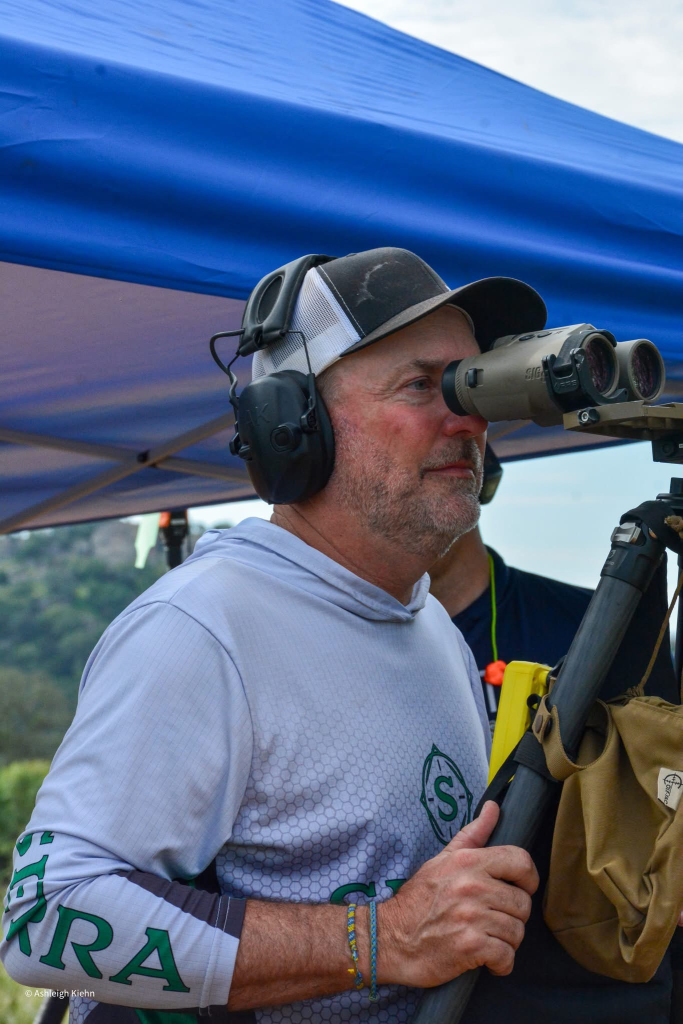
I measure wind because my ability to estimate speed isn’t reliable enough when the shot gets difficult. I establish direction because seven miles per hour doesn’t mean anything useful until I know how that wind relates to the bullet’s path. I use a ballistic solver because intuition alone isn’t good enough. I capture the target azimuths because the same wind can have different values for two targets in different directions. I watch mirage because the wind beside me may not describe the air farther downrange. I pay attention to terrain because the atmosphere isn’t uniform. I build brackets because I know the condition can change.
Then I send the bullet. And once that bullet provides better information than the prediction I started with, I use it.
That is what competition finally taught me about reading wind. The goal isn’t to stand there before the shot and somehow know the perfect answer. I don’t think that’s how wind works, at least not for me. The job is to build the best answer you can from the information available, make the shot, understand what reality just told you, and make the next decision better.
That’s a much different thing than simply knowing a wind call.
And I’m still learning how to do it.