
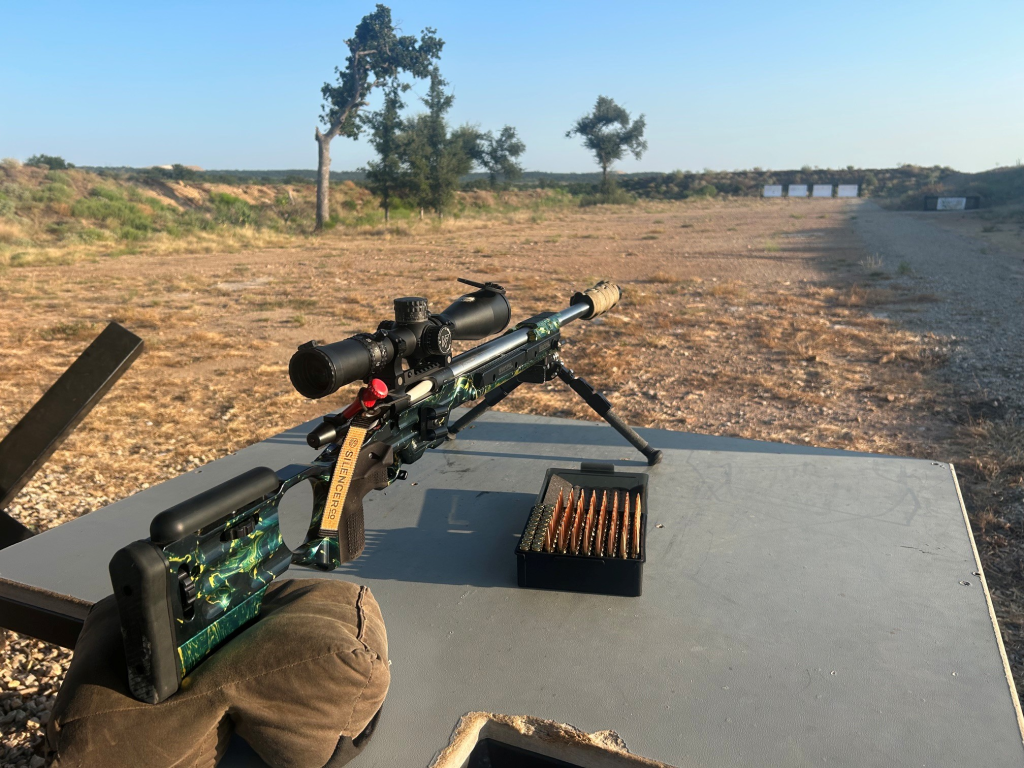
The morning was cool, and that’s important because when Texas starts jumping into those triple digits, you’ve got to get things done before that blistering heat bakes you alive. For that reason, I was at Gravestone, my local long-range shooting range, when the gates opened. I had just built a new competition rifle I needed to vet, and I was super excited about the possibilities.
Proof Research had recently introduced some new barrel technology called PXT, or Proof Exponential Twist. It’s especially intriguing for competitive shooters because it potentially extends barrel life while producing way less rotational torque when firing the rifle. I’d initially been sent a six-millimeter barrel that I had built as a 6 Dasher, but I’d been dying to try a 6.5 Creedmoor.
While I absolutely love the little Dasher round, I’ve found that at distance, especially when the conditions are soupy, I really start to struggle to resolve exactly where I impacted on a plate. Sometimes the small bullet is hard to read when I miss as well. The larger 6.5 bullets make both easier to see, so I’d been wanting to make that switch. In fact, I had effectively made the switch early in 2026, but when the PXT barrels came out and I got my first one in 6mm, it kind of forced my hand into circling back to the 6 Dasher.
So here I was with a brand-new 6.5 PXT barrel from Proof, with the Creedmoor chamber cut by Caleb Pulliam, owner of Vital Precision, and I had lovingly built the rifle in my garage that very morning. Now it was time to vet her.
The first couple of groups were good, but not awe-inspiring. I was seeing some vertical stringing that I didn’t understand, while the horizontal dispersion was slightly over bullet diameter. At first, I attributed it to a brand-new barrel, but by about the 15th round, I knew something wasn’t quite right. At that point, you just have to go back to square one and check everything. I tightened the action screws, and guess what happened? That’s right, she started shooting! Well, that was solved!
So, with a good zero, I headed to Alpha Range at Gravestone, their 1,000-yard known-distance range, to true up my ballistic profile. I built a new profile in the Kestrel Link app on my phone, making sure I had all the correct inputs, including height over bore, and then transferred the profile to my Kestrel. I used the Litz-derived BC from the Applied Ballistics library and sent my first shot at 600 yards. I’d taken a wind reading and the target azimuth when I entered the yardage, and the shot landed darn near center of the target, both vertically and horizontally. Well, hot damn! Looks like this is just meant to work out!
I then dialed 900 yards to check my vertical waterline there. I’ve found that when truing, if I don’t shoot some at 900-1,000 yards, the ballistic profile won’t necessarily be correct. I sent five shots at 900 and was pretty centered up on the target, maybe a half-tenth high, but no big deal. That’s not something you could true out anyway. Everything was looking good.
I then came all the way back to 400 and systematically checked impacts every 100 yards out to 800. I was centered to just slightly high the whole way. Again, looking great. I decided to send my last shot at the smallest target at 350 yards, and it impacted dead center on the tiny plate. Man, it was feeling like it was just going to be my day!
I had one more thing on my agenda, and it was the real reason I was at Gravestone. I needed to know if I could shoot this rifle from a barricade without the recoil affecting me enough that I couldn’t determine where I impacted on the plates. I headed over to Charlie Range, the PRS stage portion of Gravestone, went to the cattle panel, and found a big/small target pair at 360 yards. Perfect. A narrow bar with just my Game Changer bag would be a great test of how well I could see my impacts.
Just a note if you haven’t shot like this before. Spotting shots at closer distances with a cartridge like the 6.5 Creedmoor can actually be harder, especially from a narrow prop. The recoil can knock you off target just enough that it becomes tough to diagnose exactly what happened.
I dialed the dope the Kestrel suggested, lined up the target, checked to make sure my rifle was level, and sent the first shot on its way. I hit the target perfectly center, but even better than that, I watched the impact in my scope—even shooting the heavier 150-grain Sierra SMKs. So awesome. I looked over at my level, and it was still green (that’s dead level for an MDT Send It Level). Wow. It didn’t move any more than my Dasher. I cycled a round, went to the small target, and sent another. I watched that impact too and had less than 1.0 mil of vertical rise in the scope. I was literally giddy at this point. I sent one more for the heck of it, but I already knew.
I was thinking to myself, “There’s nothing else to know. I saw it all!”
Where the 6.5 Creedmoor Entered My Life
Back in 2014, I was working for Leupold and had become pretty good friends with their head trainer at the time, Michael Baccellieri. We’d done some traveling and training together, and even a bit of hunting. Around that same time, Leupold gained access to a property with a dedicated long-range facility, where they built a classroom and other infrastructure to train dealers, writers, and other industry professionals. Michael invited me out so I could start learning to shoot long-range.
I purchased a Masterpiece Arms BA in .300 Win Mag, thinking it would be the perfect rifle/cartridge combination to start learning long-range shooting. It was a great platform, and I learned a ton with it, and it really got me going down this whole long-range rabbit hole.
Not long after getting that rifle, we did a full-on class for some of my dealers. I had four or five dealers come out to LOA (Leupold Optics Academy), where we spent three days working through Michael’s Introduction to Long Range class. We all had a great time and learned an absolute ton, even though we were drinking from a firehose.
At the end of the class, Michael asked if we wanted to shoot a mile before everyone left. Well damn, man, of course we do! So we went up to the one-mile firing line. I brought my .300 Win Mag along with a couple of the new Leupold 6.5 Creedmoor School House rifles. This was one of those times when you experience an epiphany.
The very first thing I noticed was how darn similar the dope was between the two platforms. We were shooting a mile, which is 1,760 yards, and my .300 Win Mag needed about 19-20 mils of elevation for the shot. None of that was surprising, really. What was amazing was that the little dinky 6.5s we had up there, shooting 140-grain Berger Hybrids, needed about 20-21 mils for the same target.
Now hold up for a minute. There was essentially only a one- to two-mil difference between the two systems to engage the same target? The little Creedmoor case used about half the powder, had almost half the recoil, and the bullets were about half the cost of the 190 VLDs I was currently loading. I was absolutely dumbstruck. It was like the heavens opened and the angels were singing. Of course I’m being over the top, but man, I was awestruck.
I had just begun the first dance with a cartridge that I would move away from and circle back to again and again, surprising me a little more each time I revisited it.
The Old Man Steel Matches
It’ll probably seem like I had a lot happening at the same time when you read all of this, and boy, is that true! It seemed like so much learning, experiencing, and coalescing was coming together at once.
This was when I met and began spending a fair amount of time with one of my best friends, Ryell Masood. Good thing, too, because we were both bitten by the same precision-rifle, long-range-shooting bug. I remember one evening when Ryell’s wife, Marcy, joined us for dinner, and before the food came out, she said, “Alright boys, no talking guns and shooting while we’re eating!” We were obsessed, and it was typically all we ever talked about. Heck, it’s about all we still talk about 12 years later!
Around the same time, we found a match that was quietly gaining some ground at COSSA (Central Oregon Shooting Sports Association). It was what we all kind of jokingly called the old-man match, mostly because it was a static match requiring no movement or anything like that. You laid out your shooting mat, and from one position you could shoot the entire match. There was steel set out all over the hillside from 300 to 1,760 yards. The match was usually broken into two pieces. The first part was shooting 1,000 to 1,760 yards, followed by 300 to 1,000 yards later in the morning. We started shooting this match every month when we could, and between that and my time at LOA, my learning accelerated markedly.
Masterpiece Arms had also just released a new rifle platform they called the BA Competition Rifle, and they had this gorgeous blue version I just had to have. I bet you already know what cartridge I ordered one in! That’s right, a 6.5 Creedmoor. This was my first Creedmoor, and the rifle that really helped me coalesce so much of what I was absorbing at the time. That new rifle started trailing me to training sessions, matches, and goofing around out in the desert, and it really solidified how much I loved being part of the long-range community.
Ryell and I also started buying our own steel, so when we couldn’t get to COSSA or LOA, we could go out in the desert and set up our own targets. The Blue Creedmoor went everywhere. I was really starting to love how inherently accurate the little cartridge was, and it never beat me up either. It was comfortable for extended long-range sessions while still delivering a tremendous level of precision.
Could I Hunt With This Thing?
For a while, I had been hunting with a 7mm-08. Reaching way back, I had originally hunted with large cartridges because I was always trying to maximize Point Blank Range. Living out west, that always seemed like a good idea, but one day it occurred to me that I never shot very far, even when there were places where I could have. That was the beginning of my move toward smaller hunting cartridges. I shot them way better and didn’t have to deal with the heavy recoil or incredible muzzle blast. I had made some pretty horrible shots on game using the larger cartridges too.
That’s how I’d landed on the 7mm-08. It was a fantastic little hunting cartridge, and I enjoyed it immensely, but with all the shooting I had recently started doing with the 6.5 Creedmoor, it got me thinking. I mean, if you’re shooting a cartridge year-round out to some pretty extreme distances, wouldn’t it make a lot of sense to hunt with the same cartridge? Especially when you’re becoming so familiar with what it does? When you look at the two cases side by side, they’re not terribly different.
There were some intermediary steps in here, though. While I was shooting the Creedmoor a ton at longer ranges, I was also still a tinkerer at heart. I had a hard time walking through a gun shop, especially Ryell’s shop, without a rifle or two following me home. I think this is about the time I started calling them my children.
On one of those visits, I found a Tikka T3 in 6.5×55 (a cartridge that’s really pretty dang close to a 6.5 Creedmoor ballistically) and started shooting it quite a bit. That rifle was a little laser beam, and I fell in love with how it shot. I developed a load for it built around the 140-grain Nosler Accubond. This was also the first rifle I had a Leupold CDS dial cut for. I was impressed with what this cartridge delivered, especially considering it was a hunting rifle with a hunting bullet instead of the high-speed, low-drag bullets I was shooting at long range. It held up admirably at longer distances, and I dragged it on many of our outings to either LOA or out to the desert to shoot long range.
That fall, I managed to shoot a blacktail with that rifle at 360-ish yards and was just as impressed by its terminal performance. At this point, it was by far my longest shot on game. I was continuing to prove to myself that maybe horsepower wasn’t all it was rumored to be.
The following year, I drew an antelope tag in Oregon. This was a tag I had been applying for for over 20 years, and I finally drew it. I knew longer shots on antelope were a real possibility, so I needed to be prepared for that eventuality. It just happened that Masterpiece Arms had introduced a version of their BA Chassis rifle called the BA Light. I had ordered one in 6.5 Creedmoor and had been shooting it out in the desert, at some of the matches, and at LOA, so I was really comfortable with it for those longer possibilities.
At the time, I was shooting factory ammo for long-range practice and matches. I’d yet to bridge the gap into loading for precision shooting. I loaded all my own hunting ammo, and I had loaded for my .300 Win Mag long-range rifle, but I hadn’t started down that path with the Creedmoor yet.
One of the most telling things about this hunt was my distrust of changing density altitudes when shooting long range. Learning from Buck, we’d still built military-style dope cards, where we would write down a Kestrel-derived dope card and then go shoot the card, also writing down what the actual dope had been. For this hunt, I wasn’t going to have a way to do that, and I was going to be hunting in a DA that I hadn’t developed a dope card for, so there was some trepidation about how it might work for taking those longer shots.
My friend Jeff Jansens and his wife, Guye, went on this hunt with me. Guye and I had applied as a party, so we both had the tag, and Jeff came along as our unofficial guide. We went down to the desert five days before the hunt so we’d have plenty of time to scout before opening day. I’d stuck a few pieces of steel in the truck so we could verify dope down in the desert. I hadn’t yet learned that if I took an environmental reading with my Kestrel, it would automatically correct my firing solutions. I also hadn’t learned that you can true up those solutions. That’s all refinements I would learn later. It didn’t matter, though, because I was going to physically check them to make sure everything lined up.
I think it was the day before the hunt actually started when we set up the steel plates and moved to a couple of yardages to test. I think the farthest plate we shot was around 500 yards. It was great practice and confidence-inspiring, because now I knew my dope would line up when the time to shoot finally arrived.
I was using Federal Premium 130 Berger Hybrid ammo, and it was amazingly accurate in that rifle. On the fourth or fifth day of the hunt, I finally got my opportunity at a nice buck. We had actually found this antelope a couple of days before the hunt started, and we kept watching him. He was exactly the buck I had imagined when dreaming about this hunt for the last 20 years. The landowner had told us we couldn’t hunt the first couple of days of the season, and he kept telling us to check back in. We kept hunting for Guye and me because you never know what you might find, but I was really holding out, hoping the landowner would grant me access.
The landowner finally gave us permission to hunt, and we went and located the antelope again. We made a stalk on him, and I was able to close the distance to 190 yards. Far from a long shot, but I can’t say I was upset about that. I crawled up to a low berm at the edge of the alfalfa field where he was feeding with his harem, made a good shot, and he traveled less than 50 yards before expiring. I was stoked! This was a 20-year dream come true to finally bag an antelope, and a hell of a nice animal to boot.
One of the nice side notes was that this was my first animal with a cartridge that was slowly earning a lot of my trust. I was also learning that I made better shots with lighter triggers and less recoil. I’ll freely admit I sometimes struggle to make a good trigger pull when I’m hyped up with adrenaline. That’s another area where match shooting excels, because you have to learn to shoot through an elevated heart rate and heavy breathing.
When I Get a Real 6.5 Creedmoor Hunting Rifle!
In true John fashion, that hunt got me thinking… I picked a new hunting rifle in 6.5 Creedmoor. I was at Ryell’s store and spied a new Barrett Fieldcraft 18” 6.5 Creedmoor sitting there. I had begun migrating toward shooting suppressed around this same time, and the Barrett had a nice little taper to a ⅝-24-threaded end cap. Perfect.
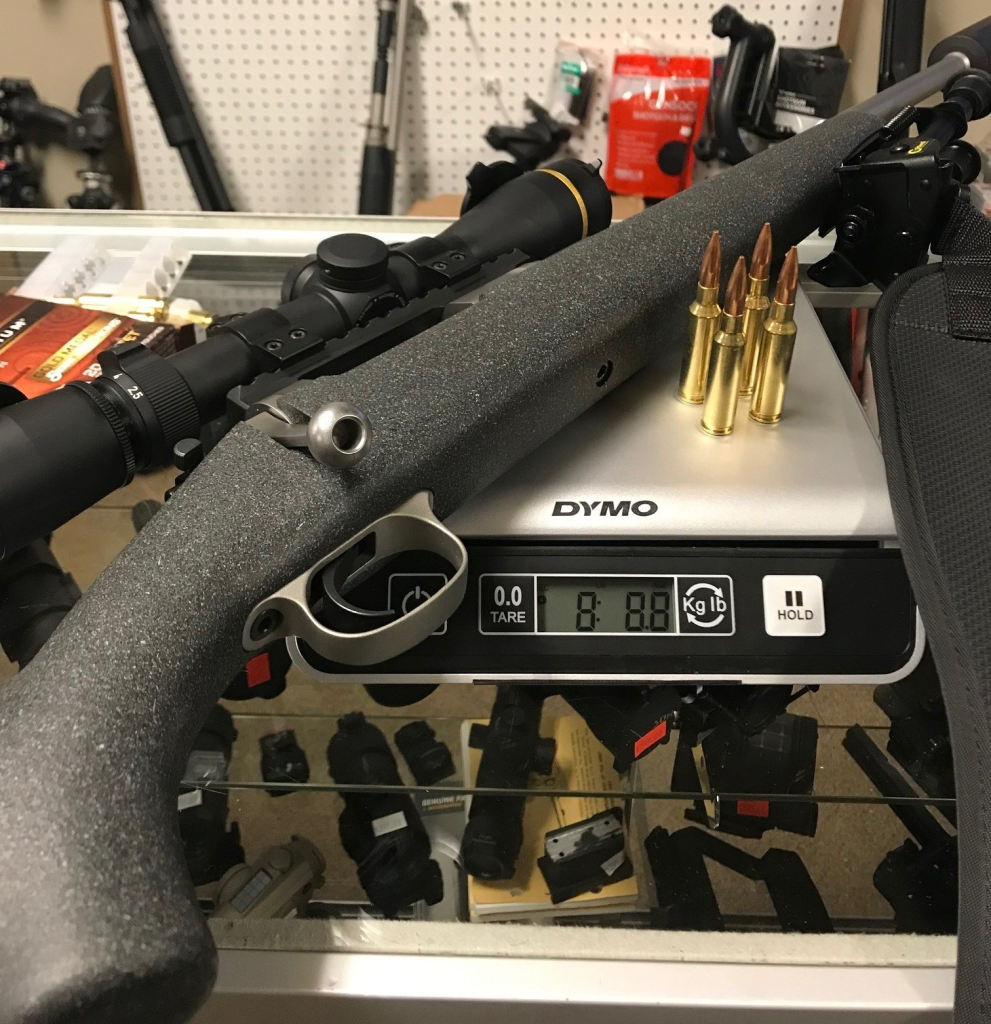
I was never able to make that little Barrett shoot incredibly well, but I could get it to group five shots under MOA, so I started taking it on hunts. I especially liked the way it balanced with a suppressor. Since I was working for Leupold at the time, I had a CDS dial cut for yardage. I had it printed for my pet 6.5 load, using a somewhat stout charge of H4350 pushing a Nosler 130 Accubond at about 2,900 fps. In hindsight, I think the load was probably a little healthy for that Barrett, and that may have been why I never really got it singing, but heck, it was more than accurate enough to hunt with.
I even took it out to the LOA Range and on a couple of our desert steel shooting safaris, where we set up steel in the desert and shot at longer ranges. With the dial cut for my normal atmospherics and the exact speed and BC I had trued it to, I found it plenty accurate out to 500-600 yards, which was so far beyond what I ever thought I’d shoot a hunting cartridge anyway.
My family has always eaten mostly game meat. We do buy chicken, and I can’t help myself and treat us to some nice beef steaks once in a while, but 98% of our red meat diet comes from animals I shoot. At the time, my kids were in their late teens, and we were burning through an elk about every two years, supplemented by a few deer. I was getting low in the freezer, and a good friend of mine, Kent Bebe, had an elk depredation hunt on one of his ranches outside of Milton-Freewater, Oregon. I hadn’t been successful that year with my bow, so in Oregon you’re allowed to trade your unused elk tag for a depredation tag for a small fee.
Going into that hunt, I still kind of believed I needed horsepower for game as large as elk. My ideas about how much I actually needed hadn’t matured to where they are today, so I had a lot of trepidation going into this hunt. That was also spurred by Kent telling me I really needed to be ready to shoot 500-600 yards. Those numbers had me a little worried about what gun I needed to take, but as I mentioned above, I’d been whittling back those large cartridges for a while, and I really didn’t have anything in my safe that accomplished the goal of making a longer-range shot with a bullet I considered acceptable for elk-sized game.
I kept landing back on that little Barrett Fieldcraft… It had a great load developed for it and shot plenty accurately at the distances I expected to shoot, so after a lot of hand-wringing and worry, I just grabbed that rifle and headed over to Eastern Oregon for the hunt.
I’m not sure what Kent really thought of my choice, but he didn’t give me a hard time about it. We managed to find a herd of elk pretty quickly, which is fairly common on these depredation hunts, but they were pushed out of the field we were in when a group of hunters zipped past them on an ATV. We decided to go ahead and get closer to that field since there was a canyon we couldn’t see below it, and with elk, you just never know.
We made our way to the lip of that little canyon and were glassing down there looking for any stragglers when, what do you know, a couple of elk came trotting back into the field on the other side. Holy cow, it was all coming together pretty quickly. Zach Shirley, my good friend, was with me, and he zapped those cows with the rangefinder and told me 505 yards. I dialed 500 on the CDS dial, got prone behind the rifle, and sent the first bullet on its way.
We clearly heard the impact, and the lead cow kind of trotted in a circle, so I sent another round and instantly heard the feedback of another impact. She went all wobbly-kneed at this point but was still on her feet, so I sent one more, followed again by the report of an impact. She collapsed, and I had my elk on the ground.
We made our way over to the elk, and I was pretty pleased that we had put it all together in such short order. From the first shot to her being down for good probably took less than 10-15 seconds. The things that really struck me were how clearly I had heard the impacts, how little distance she’d traveled from the first shot to being down for the count, and how much I saw through the optic. It was definitely an eye-opening experience!
What Did That Elk Change in My Head?
The thing this experience really did was get me thinking. I already do that a lot. I ponder things probably more than I really should, but it’s part of who I am. The biggest thing that occurred to me was that small bullet accomplished a hell of a lot more than I expected it to.
When I cleaned that elk, she was wrecked inside. I didn’t need to take another shot after the first one; I just never quit shooting until they quit wiggling. The second shot had hit her about the last rib and exited the point of her shoulder. That little tiny 130-grain Accubond had penetrated something like 36” of elk. That’s probably the thing that really got me thinking, but it didn’t hurt that her lungs were soup.
These thoughts would absolutely be refined over time and with more animals, but the real takeaway for me was that, if used within sane distances, the 6.5 Creedmoor was absolutely an elk cartridge.
The Proof Research Elevation
Another manufacturer I was working with was Proof Research, and they were building these rifles called Elevations. They still build them too. I had already bought a couple of them, but when my internal guy told me they had a couple of special-edition rifles available in a 20” 6.5 Creedmoor with an olive granite stock that had been built for a contract, I had to have one. I’d been bothering him about wanting a shorter-barreled version of the Elevation for use with a suppressor, but at that time they were all 22” rifles. I’d already found out how amazingly accurate these rifles were, so I just had to add this 6.5 to my arsenal.
This little gun delivered on every front. I still have that rifle, and it will probably never go away. I don’t love the stock like I once did, and I did change it. It’s also had a couple more barrels screwed on it, but it’s still living with me, and I expect it will never leave my stable. It earned its place over the next couple of years.
To start, the accuracy was absolutely phenomenal. It would group five shots with my pet 130 Accubond load into about ⅓ of an inch. It was even what you might call boringly accurate, if you can actually say that with a straight face. This gun literally started going on every single hunt I went on, and when the hunt is important, it’s still generally the first rifle I grab out of my safe.
Probably the hunt that solidified this rifle and cartridge for me was another elk hunt. To be fair, there were quite a few deer interspersed in here, but this elk hunt solidified the choice of both the rifle and the 6.5 Creedmoor as my main squeeze.
My friend Zach Shirley had started guiding depredation elk hunts in the winter, and I was again at the point of needing another elk for the freezer. I took that Elevation with me, and unlike my last depredation tag, this one took some doing. We absolutely struggled to find the elk. We’d see a few moving from one place to another, but we’d yet to find any standing on ground we could hunt. We spent a ton of time going from one piece of property to the next where we had access without finding any animals.
I think it was either the fifth or sixth day of hunting when we were driving into a piece of property, and I spotted two cows up on a ridge above us. They were about 180-190 yards away. I didn’t dally when the opportunity was finally in front of me. I put the reticle behind the shoulder of one of those cows and sent that little Nosler on its way.
They instantly wheeled and started running, and we both lost sight of them, but Zach and I had both heard that wet-pumpkin sound of an impact, so we knew I’d connected. We walked up to where they had started running, and I began looking for a blood trail. I didn’t find one at first, so I started doing widening circles, trying to cut the trail. There was a little bit of snow on the ground, so I thought I’d find something pretty quickly, but I didn’t.
Honestly, I was starting to worry…
After looking for about 20 minutes, I figured I should walk back to exactly where I thought they had originally been standing and see if I could find evidence of the impact.
I walked back to where they were when we originally spotted them, and I almost tripped over the cow I’d shot. She hadn’t gone five feet from impact to being down. Well, holy cow!! When I saw her wheel around and start to run, I just assumed she was going, but in hindsight, I think she wheeled around, took about three or four steps, and went down. Awesome!
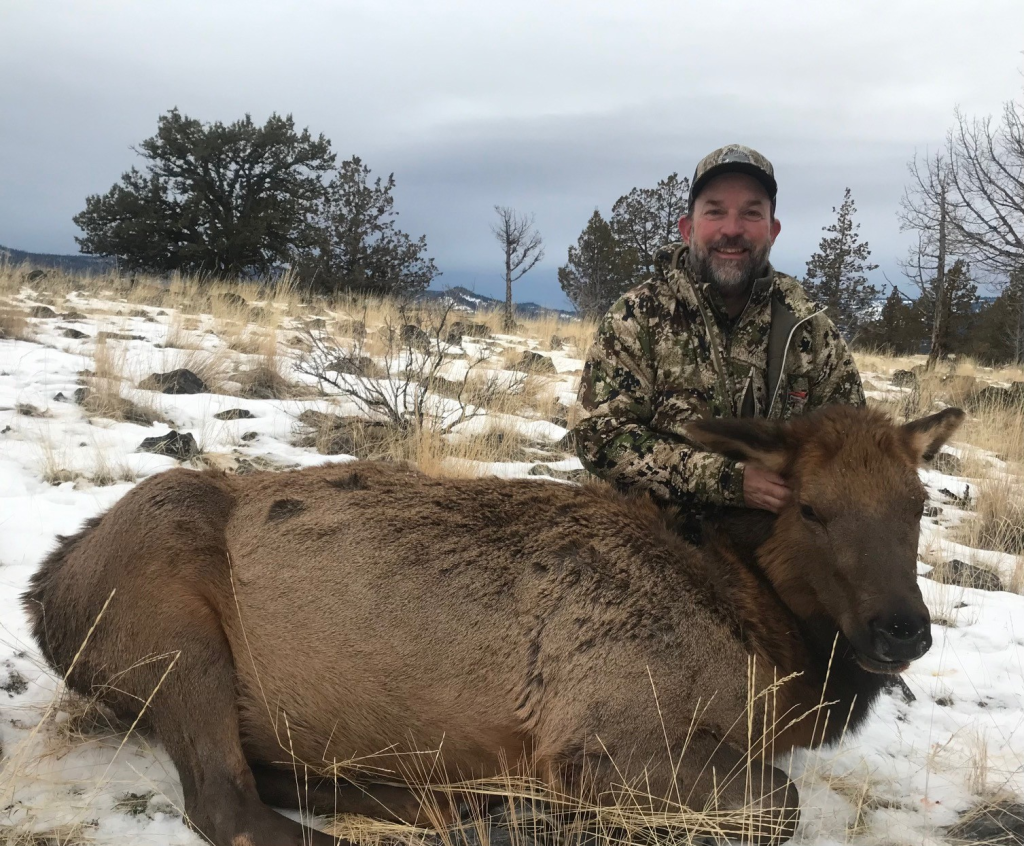
Another data point that the 6.5 Creedmoor was absolutely an elk cartridge, and the whole hunt just cemented that Elevation rifle as my main squeeze. I do really love that little gun…
I have to be true to this story, though; I’ve never been monogamous with this rifle, and I’m still not. As I’ve mentioned, I’m a tinkerer at heart. I love rifles and cartridges, and I’m always intrigued. There are plenty that have kind of come and gone in the interim. I’ve hunted with others and even taken some game, but when it really matters… when there’s something on the line, the Elevation in 6.5 Creedmoor has gone every single time!
Full Circle
For years, I’d heard about Precision Rifle Series competitions. They had always intrigued me, and I loved the idea of getting into the fray, but I honestly had no idea where to even start. That all changed when I moved to Texas. I heard about a monthly PRS match at a rifle club about an hour north of me. I was talking with one of my friends who shot .22 benchrest with a group of guys from a local gun shop and asked him if he’d be interested in trying a PRS match together.
Luckily, he agreed, and we went and shot our first match. Good thing in two regards. First, he’s become one of my best friends, and second, he’s also become my shooting partner, whom I travel all over with to shoot these matches. It’s been pretty wonderful having a good friend to dig into all this with.
This article isn’t really about my match progression, but if you’re interested in reading that story, you can read about it in this article about shooting matches.
Well, after that first match, Mike and I were both hooked. And I don’t just mean hooked. We took the bait hook, line, and sinker. We dove down the rabbit hole in a serious way. For that first match, I had taken a piece of advice I’d heard ahead of time, which was: don’t go buy gear to shoot this sport. Show up with what you have and find out what you need. It’s surprisingly good advice, especially if you shoot at a larger, more prominent club. Most PRS competitors will gladly help you in any way they can, including sharing any gear you might need, which is a true blessing.
While I didn’t have everything I needed to get started, what I did have was a pair of nice Masterpiece Arms competition rifles already built. We started with those, and I chose a 6mm Creedmoor. I’d heard all the rage about the smaller, fast 6mms for PRS, and it kind of made sense. One match in, and I already saw that I needed to learn to spot my own shots, and recoil was going to be one of the things that needed to be controlled for that to happen. I probably could have done that with the 6 Creed right from the start if I had been good at getting square behind the rifle, but that would take a bit of time.
As I progressed and started seeing some of my shots, I felt I was on the right track with the 6mm, but barrel life is anything but great in the 6 Creedmoor. For the first three-quarters of a year, I was just shooting regional matches, but I was still shooting at least two matches a month. At that rate, I was worried about barrel life, which I figured was only going to be about 1,200 usable rounds before I needed a new tube. Add to this the fact that I always want another rifle anyways. I really just can’t help myself sometimes.
I had the opportunity to buy a Proof Research Chassis rifle in 6 Dasher. By this time, I could see the Dasher was one of those ubiquitous answers in the PRS game, and for a damn good reason. It’s exceptionally easy to load for, delivers sparkling accuracy, and the barrel life is pretty darn good too. Now that I’ve been through quite a few Dasher barrels, I can say 2,400-ish rounds is very possible if you don’t abuse your rifle.
PRS also pushed my rifle tinkering into overdrive. I found I wanted control over my entire system, so I invested in the tools to change barrels and really dug into building rifles right in my garage.
This led to further development of my shooting, but even more so, it allowed me to start refining my systems around what worked for me. I really can’t even put into words the rate of learning this all led to. And the Dasher was central to all of it. I shot that little cartridge almost exclusively for the next two years.
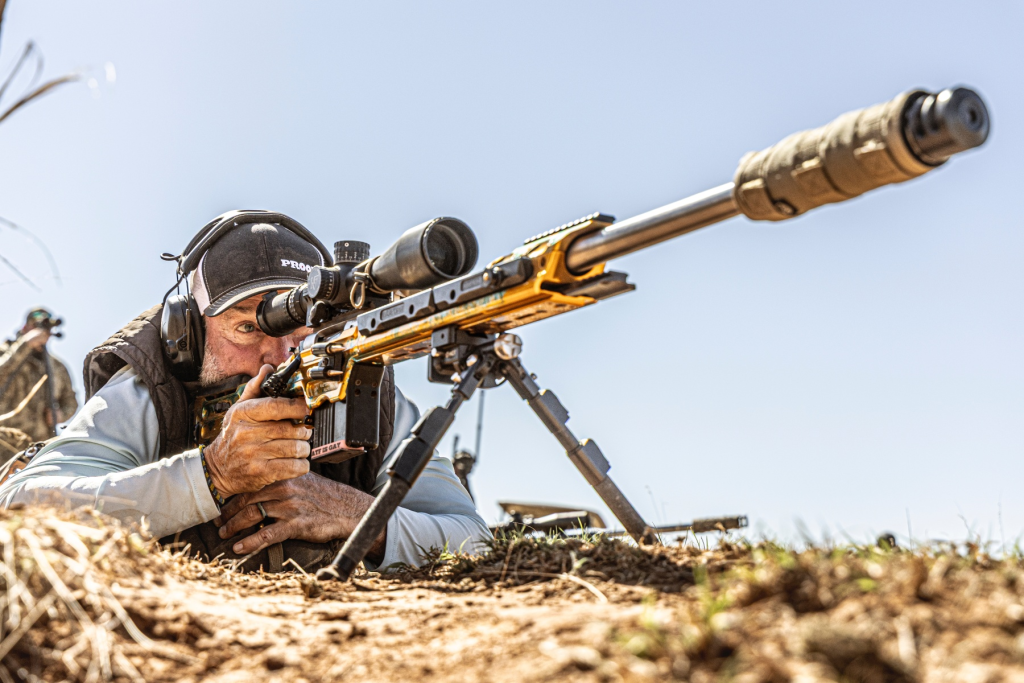
What I learned through all this was how to SEE.
I mean, other things came along for the ride. I learned how to build good positions and how to mitigate recoil. I progressed from being able to spot misses and diagnose where I missed to being able to read plates and know where I impacted. Eventually, that allowed me to see enough to not just hit plates, but actually get centered up.
This is important because the environment is always changing. If you don’t learn how to move your impacts to the center of the target, eventually the wind is going to change and start blowing impacts off an edge. Getting centered gives you room for those environmental changes.
The Dasher was the perfect cartridge for this, and I love it for that. It’s really been one of the best LEARNING tools I’ve ever used. The 20,000 rounds I’ve put through it haven’t hurt either. But eventually I began to see a place where it doesn’t excel: impacts at longer ranges. For me, that’s where the Dasher sometimes just isn’t the right cartridge.
When the Dasher Gets Hard to See
I started to notice that beyond 600 yards, I sometimes struggled to resolve what was happening with the Dasher. Sometimes it was 700 yards, sometimes 800. The environmentals impact that a lot. If it’s a soupy day and the mirage is really cranking, it can even get tough at 600 yards.
As I mentioned above, the goal is to learn to see enough to move your impacts to the center of the plate. It’s a process to get there, because there’s a lot of learning required for your brain to interpret all of that. It took me roughly 20,000 rounds to really start seeing and understanding where the rounds were impacting. I ran drills, both on my own and with friends, specifically to improve at this skill. But it all fell apart a bit for me at those extended ranges.
When I’d get somewhere in that 700-, 800-, 900-yard range or farther, I’d sometimes have absolutely no idea where those bullets were impacting the plate. Misses often showed absolutely nothing. At 800 yards and beyond, the plates often get quite a bit larger, and the small, slower bullet doesn’t have enough energy left to really move them. All of this adds up to a struggle to see exactly what’s happening.
I loved everything about the Dasher except when I started getting out there. Sometimes at those extended ranges I felt it was just a bit lacking.
Enter NRL Hunter
I’d shot a few NRL Hunter matches by this time. Not many, and my first couple of matches were a travesty, but of my own making. I’ll tell that story at some point, because it’s an important lesson for anyone breaking into NRL. But after the first couple of foiled attempts, I shot a couple more matches and found how much I really enjoyed NRL. It brings all the skills of hunting and match shooting under a common umbrella. I’ve found that both sports have really improved my rifle skills, and they’ve also shown me ways to be fast and accurate in so many different hunting scenarios.
The thing is, the Dasher isn’t allowed in NRL. Neither is a heavy rifle.
I know I never addressed weight, but in PRS I generally shoot Open Class, which is truly open. You can make the rifle any weight you’d like; you just have to be able to manipulate it into whatever uncomfortable position the match directors deem necessary, so you have to be able to move with it on the clock. I’ve settled on a rifle that rides between 23 and 24 pounds as about right for me. In NRL, your top weight limit is 16 pounds. That’s quite the dichotomy.
Further, the light division in NRL is 13 pounds for a factory rifle and 12 pounds for Open Light. That’s not just for a bare rifle, but that weight includes the entire system you’re going to compete with. You do get a 10-ounce addition if you’re shooting with a suppressor, but the point is these are relatively light rifles.
Add another fly in the ointment: you have to make what’s called Power Factor. For NRL, that factor is 380,000. That throws the small 6mms out from the get-go because there’s also a velocity cap of 3,275 fps. This combination means there’s no real way to get the 6s competing because you can’t make Power Factor. And it makes sense, because NRL Hunter is trying to remove what people term “gamer guns”—those rifles set up to make spotting and correcting your shots fairly easy.
The 6.5 Creedmoor is the darling of this sport because it easily makes Power Factor with 140-grain-class bullets without having to push them hard pressure-wise. In all of the NRL matches I have shot, that’s exactly the cartridge I chose.
After those two early travesty matches, I took a break from NRL. I mostly did this because I was frustrated, somewhat unfairly, I’ll admit, with the weight limits and the struggle to get a system that made weight and still allowed me to spot my own impacts.
When I finally came back to the sport and shot a couple more matches, I have to be fair: my ability to get square behind a rifle and spot my own impacts had increased exponentially. I finally knew how to do MY job, and that made me enjoy the game so much more. I also knew how to vet a rifle system in a way I didn’t really understand when I tried my first NRL Hunter matches.
When I shot the next couple of matches, I had assembled a factory rifle around a Tikka CTR in 6.5 Creedmoor that weighed in at exactly 13 pounds with all my gear. You couldn’t even think of breathing around that scale, or I’d have been over the weight limit.
I had learned to see, though, and in most positions I could spot my misses and impacts on the plate. I also had a vetted system that I’d spent a decent amount of time on the range learning completely. I had no doubts I could make impacts at distance with it. My zero was solid, I knew the wind numbers, and I knew how to dope it. I trusted this system, and it let me go shoot those matches and truly enjoy the process instead of fighting the rifle, the stage, and myself like I did in those first two matches.
This is also where I started realizing I could see impacts with the 6.5 Creedmoor pretty well, even in a light platform. It circles back to something I said at the beginning of this article. I’m never, ever going to say the 6.5 Creedmoor excels at everything. That would be a bald-faced lie.
What I can tell you is that it does most jobs admirably well, and it’s one of the reasons I keep circling back…
Coming Back to the Creedmoor
Well, shooting those NRL matches with the Tikka was incredibly enjoyable, but I also have to circle back to how much I just love rifles. I can’t help myself, so what do you think John did? I had to build a purpose-driven rifle to shoot NRL, but there was a deeper driver too.
This last year, PRS created a new division that’s really intriguing. They started what’s called Sportsman Division. It kind of goes hand in hand with a new series they’ve also created called PRSuit, which is a modified game that lives as a bridge between PRS and NRL Hunter.
The really interesting part for me is that if you build a 13-pound 6.5 Creedmoor rifle—that’s weight with all your accessories on the gun—you could potentially shoot all three games with the same rifle. That really grabbed my attention because it could potentially become my hunting rifle too.
Isn’t that an interesting concept? Think about it: shoot about 10,000 rounds a year, all season long, at all kinds of distances, with the same rifle and load you’re going to take hunting in the fall. There’s a seamless beauty to that concept, and it really grabbed my imagination right away.
There’s another really elegant solution sitting right here. Sierra introduced a new bullet last year called the MatchKing-X. The concept is the same bullet profile we’re used to shooting matches with, but with an open, non-pointed tip designed to expand reliably. Well, how cool is that? A MatchKing, which I’m already shooting, but one that’s designed for my hunting season too. It’s literally bringing everything full circle.
Now I can shoot any of the series I want with one rifle. I can use the same load, same rifle, same suppressor, same accessories, and compete and hunt with the same rig. How deadly can I really be when the same rifle is being used all year long, then I step into the hunting field and spot a deer at 400-500 yards?
Conceptually, that seems like an unbelievably simple and elegant solution!
Building the Do-All Rifle
Well, the concept is great, but getting a build to hit every metric was going to be a challenge. To really fit the goal, the rifle needed to end up under 13 pounds all set up. That alone is a bigger challenge than you might think. That 13 pounds includes scope, mounts, electronic level, bipod, magazine, and suppressor. Basically, anything you want to use in a match setting except ammo has to fit on the rifle and be weighed at check-in. That’s a taller order than you might expect.
The rifle also needed to hit a 380,000 Power Factor (bullet weight multiplied by velocity) without running extremely hot loads, so a minimum 24” barrel would be required to gain as much free velocity as possible. I don’t want to be on the edge of pressure, where a super-hot day, greenhoused ammo, or rain might push me over, resulting in sticky ejection, popped primers, and/or shortened brass life.
It also had to be somewhat barrel-heavy so the gun balanced well on a bag. I’ve found that a rifle that’s butt-heavy has a tendency to be a little squirrely in the way it shoots, while a barrel-heavy rifle is much easier to consistently shoot well.
I also needed to be able to spot my shots. This is one of the most important parts of the whole build. If the gun wasn’t balanced well enough, or the scope and stock weren’t working together seamlessly, spotting shots could be tough, and that just wouldn’t work. Spotting shots and correcting misses and off-center impacts is a huge part of any of these games.
All of this mental wrangling culminated in a Proof Research Conviction Ti in 6.5 Creedmoor with a 24” carbon PXT barrel. I had to go to the Ti action to drop enough weight to make the limit with all my accessories. I even talked with Proof about having some of the fill taken out of the buttstock to help get me there. We got there too, but just barely.
When the rifle finally showed up, I put everything on it, added the suppressor and other gear, and weighed it on my bathroom scale. Looked like I would make it, so I headed to Gravestone to see how she shot. I had 100 rounds already loaded with Sierra 150 MatchKings.
I had a Pro Level PRS match coming up that very weekend, and I figured if I could get the rifle trued up and shooting, and spot my impacts well enough, this new rifle would be proof of concept that I could truly shoot PRS with a 13-pound rifle.
It shot really well right out of the gate, which is always inspiring because I find they usually shoot even better after they’re broken in. So far, so good. With a good zero and a starting velocity, I went to the Alpha Range at Gravestone, their 1,000-yard known-distance range, with targets set at 50-yard increments from 300 to 1,000 yards. I quickly trued up the rifle and had a ballistic profile I trusted. I checked it from 350 out to 1,000 yards, and everything lined up pretty well.
Okay, how will this do from a barricade?
I headed to the skills stage, which has big/small plates at 400 yards—the perfect testing ground to see whether I could shoot this light rifle and spot my impacts well enough. I tried it, and it worked, but I had to be very fundamentally sound behind the rifle. I quickly saw that any mistakes on my part would make it really hard to spot the impacts.
I had some 142 MatchKings with me as well, so I thought I might as well try them and see if there was any improvement in what I could see. Surprisingly, just dropping eight grains of bullet weight made a substantial difference in how much I could see on the plate. Now, I’ll never try to tell you I could see the impacts anywhere near as well as I can with an Open rifle, but I did have proof of concept that I could see well enough to make this a viable do-it-all PRS Sportsman, PRSuit, NRL Hunter, and hunting rifle.
On the way home from the range, I stopped at the Gravestone office because they have a good scale, so I could make sure I really made weight. Good thing I did, because the rifle weighed almost 13½ pounds.
Well damn…
I was using a Dead Air Nomad 30 suppressor with a Recoil-X brake on the end. Luckily, I had a Nomad-30 Ti at home, so I promptly went home, switched the brake over to it, and went straight back to Gravestone to check the weight. Finally, success. I made weight with everything, but barely. I only had two ounces to spare.
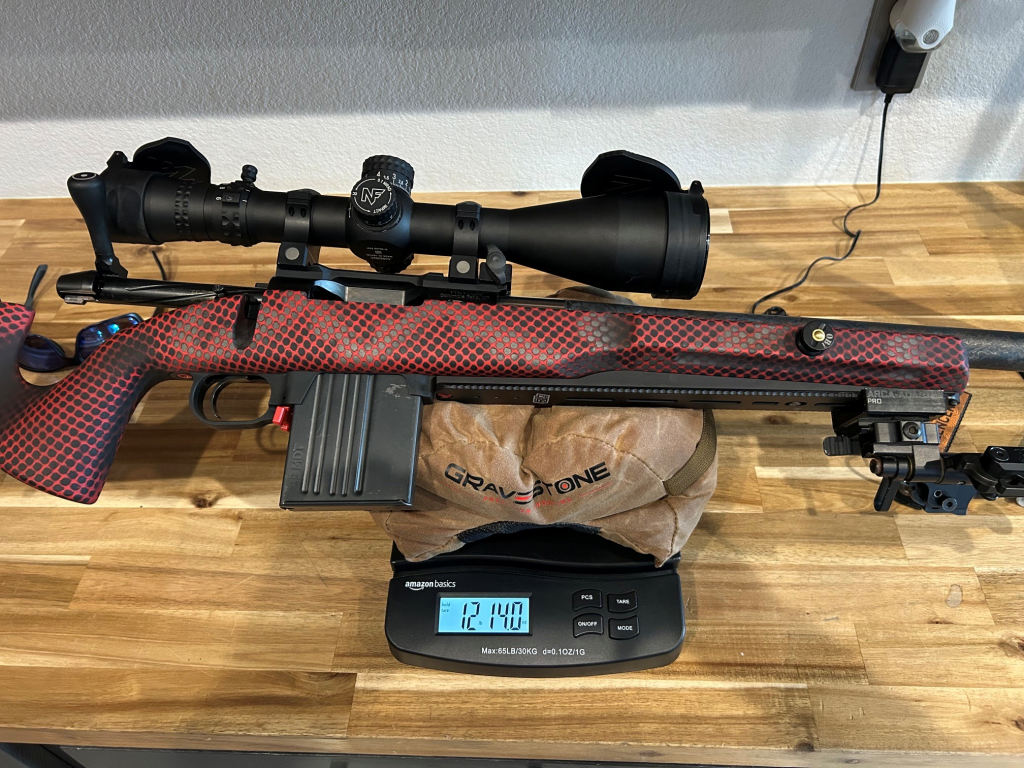
Good enough. I headed to the Twisted Barrel Scorcher match with my new PRS Sportsman rifle in tow. I won’t try to pretend it was a flawless match by any means. The lighter gun requires me to be perfect with my form. I can’t be twisted up behind the rifle when I shoot it, or I won’t see my impacts. But I also learned that if I was square, broke a clean trigger pull, and was deliberate in how I addressed the rifle, I could absolutely see enough to use this rifle across all three sports.
What If I Took the Handcuffs Off?
Well, you have to know that’s exactly where I went next. I’d already messed with the 6.5 Creedmoor in an Open rifle. I knew it could be done, and I knew it was a super viable platform to shoot Open with, but when the PXT barrels from Proof came out, I could only get my hands on one in 6mm, so I’d gone back to the Dasher. Honestly, it’s never super hard to get me to shoot a Dasher anyway, because it’s just a pleasure to shoot and load for.
Finally, though, I got my hands on my first 26” Competition Contour PXT barrel in 6.5. As mentioned at the beginning of the story, I had Caleb Pulliam ream it for a 6.5 Creedmoor and went and proved the system. I told you the story of proofing it at Gravestone, and then I took it to a match.
Here’s where I circle all the way around.
That new open rifle was an absolute pleasure. I saw more than I’ve ever seen at distance, but at the closer ranges, I was never slowed down by the cartridge. I also shot one of the best PRS matches I’ve ever shot. I wouldn’t call this match hard; in fact, I’d probably tell you it was pretty easy. I dropped 25 shots for the weekend, and the majority of those were on two stages where I dropped 13, and those were totally John issues, not gun-related! If I could get those two stages back, I would have had an absolutely amazing match.
Regardless of the problems with John—the system was not the error!—the rifle proved everything I could ever ask.
The Cartridge I Keep Coming Back To
I’m probably never going to be the person who lands on one cartridge and just parks myself there. Rifles are included there too. I’m a tinkerer/tester at heart. I love messing with different cartridges, bullets, and systems. But I also find it incredibly interesting that I keep moving away from the 6.5 Creedmoor, only to somehow end up circling back to the same cartridge.
I’ve said it before in this article: the 6.5 Creedmoor is NOT the best cartridge for everything, and it certainly isn’t. But… and it’s a very BIG BUT. It’s one of those cartridges that does a little bit of everything VERY well. It’s super accurate, forgiving, low-recoil, easy to load for, fantastic ballistically, and it delivers hunting bullets exceptionally well.
No matter how often I move away from it to play or test with some new shiny coin, I just keep landing back at the 6.5 Creedmoor. I surely don’t know if I can give a much better recommendation than that!