
I often get asked what cartridge someone needs to hunt the different game of North America. It’s always an interesting question, because so much has been written about which cartridges you need to be successful. I mean, there was a time when I probably subscribed to the same recommendations. It’s also interesting how time and perspective can change those views. What I probably find most illuminating today, when asked that question, is that I think it’s actually the wrong place to start. I don’t think the hunting cartridge is the place I’d start. I think the right question is: what bullet do I need to hunt the different game of North America?
You’re probably wondering why I’d start with the bullet. That’s a fair question, and it’s really the heart of this article, but I’m going to go a little backward to get us to the answer.
Why Bigger Cartridges Made Sense
Historically, we didn’t have range finders and ballistic calculators to figure out how to shoot animals at longer ranges. We had to rely on range estimation and Kentucky windage. This was especially prominent when hunters went out west. Longer shots often presented themselves, but how could a hunter capitalize on them when they didn’t know the exact range and didn’t have a ballistic calculator to help dial in the target? This is where Point Blank Range came into widespread use, and I think it also fueled the desire for big magnums because it extended the distance a hunter could successfully take an animal.
Point Blank Range is a simple concept, and I think some western hunters still use it. From an ease-of-use standpoint, and because it lets you take a quick shot out to several hundred yards, I still see the allure. It’s simply about sighting the rifle in so the bullet’s trajectory stays within the animal’s vital zone as far downrange as possible. If we assume a mature mule deer has an eight-inch vital zone, for example, we have roughly four inches above and four inches below our point of aim to work with. Instead of sighting the rifle in so the bullet crosses our line of sight at an arbitrary distance like 100 or 200 yards, we choose a zero that takes advantage of that entire eight-inch window. The bullet can rise several inches above our point of aim early in its flight and fall several inches below it farther downrange, but as long as it stays within that eight-inch window, we can hold in the center of the vital zone without knowing the exact range or making an elevation correction.
This was a big part of the allure of the large magnums: if we shot a bullet faster, it would stay in our kill-zone box for a longer distance. We were effectively buying extra yards when we migrated to the larger magnums. When I was a young man, I subscribed to all these arguments in spades! I owned a 7.82 Warbird, one of the biggest thirty cal magnums out there, along with several .300 Ultra Mags.
There was also the draw of the reputed energy on target and how much more power the cartridges had. I mean, just look at a couple of cartridge cases next to each other. How could you look at a .308 and then compare that to a .300 Weatherby and not think the Weatherby cartridge outclassed the .308 in every way?
And with the bullets we had back then, some of those power reasons made sense, too. Bullet construction wasn’t as solid as it is today, and bullets could be more fragile. You just have to look at some of the stories from back then to see that bullets sometimes failed because they couldn’t hold together long enough to penetrate adequately. John Nosler’s story is a perfect example: he had a bullet pancake on a moose’s shoulder, then came home and built the Nosler Partition to solve that exact problem.
For all those reasons, I see why the migration to big magnums happened, but if you actually read carefully through the old literature and listened with a nuanced ear to what some of the old guides said, it became pretty apparent that a lot of hunters didn’t shoot the big magnums well because of the level of recoil they experienced. Hell, I’m a great example. I never did shoot that 7.82 Warbird well. I had a lot of horsepower, but I wasn’t good at being surgical with it either.
What Changed?
You know, everything in life kind of seems to be a slow burn. Things just don’t change on a dime, and I feel like we’re still living in the middle of those changes. There’s still a lot of relevance to everything I just wrote, but there’s been a tremendous amount of change too.
First, rangefinders started appearing. That happened quite a while ago, and at first they were pretty anemic, but they kept getting better and better until today, when you can buy rangefinders for the commercial market that can range targets as far as you really want to shoot. I haven’t yet found the outside limit of my own Sig Kilo 10K’s.
Second, we have ballistic calculators that actually work. Not only great ballistic solvers, but we also have great chronographs that give us the real speed of the bullets we’re sending downrange, which is a huge part of getting a solver to predict accurately.
Third, bullets have become SO MUCH BETTER! I think a lot of that was driven by the large magnums. If you have hunters using large magnums, some animals will be shot at closer ranges, which puts huge stress on a bullet. Manufacturers had to figure out how to make bullets work, and work well under a larger spread of useful velocities.
When you combine all those factors, you end up where we are today. Range isn’t a mystery anymore, and delivering a bullet accurately at those longer ranges isn’t either. You also don’t have to worry so much anymore about whether the projectile you’re hunting with will get the job done when it arrives on target. For those reasons, I really feel we live in the golden age of hunting.
Start With the Bullet
So now I think I’ve laid the groundwork, so I can come back and tell you why I don’t think asking what cartridge I need to hunt out west is the question I want to start with. I actually want to think about what bullet I think I need, and work the whole argument backward.
First, I’m going to determine what I think the shot opportunity windows might look like. Am I going to be shooting a long way, or will the shots mostly be pretty close? As I’ve mentioned before, the West offers lots of opportunities at farther ranges than we normally see on the East Coast of the US. For that reason alone, I’m probably going to pick a bullet that’s useful at longer ranges, and I’m going to want something with a higher ballistic coefficient.
Next, I want to think about what sort of wound channel I’d like the bullet to create. I’m starting with the end in mind. If I know what the wound channel should look like, I’ve narrowed my bullet choices dramatically. For me, I generally like a fairly round wound channel, and especially one that’s a bit larger. For those reasons, I’m probably solidly in the cup-and-core family of bullets, although I’ve used some tipped bonded bullets quite a bit too, and I’ve been very satisfied with their performance.
We should probably dig into the wound channel thoughts a bit. I’ve written an article series about bullet construction and terminal ballistics; it’s a good primer if you’re interested in understanding what different types of bullets actually do inside an animal. I don’t want to derail this article by discussing all the different ways bullets work, but when you’re deciding what bullet to use, knowing what type of wound it creates and how it kills is a key part of choosing one correctly.
So let’s look at the deer hunt I did last year in South Dakota as an example of how I chose the bullet and then the cartridge for that trip. I’ve hunted there before, and hopefully will again soon, so I already knew that a longer shot in open country was a very real possibility. I also know that wind can be a real limiting factor when hunting there. For those reasons, I wanted a bullet that has a higher BC for flatter trajectories, but more importantly, better wind calls.
Deer aren’t really all that hard to kill, and I honestly like a pretty destructive bullet so they don’t travel very far after the shot. I prefer to have a large round wound cavity that really destroys the internal organs and generally has the animal incapacitated within a very short distance. For those reasons, I chose the 134-grain Hornady ELD-M. It’s a bullet with excellent flight characteristics, and I’ve seen good terminal performance from them on past hunts.
I know some of you are already recoiling at the thought of me using a target bullet to hunt, and I understand the initial knee-jerk reaction, but I also have experience with these bullets, so I wasn’t guessing what they would accomplish. I would never be the guy to tell you to arbitrarily shoot a target bullet if you didn’t already have direct experience with it, or knew someone who had. But if you know a target bullet works for what you’re trying to achieve, why wouldn’t you use it just because it says target and not hunting?
Ok, I’ve picked a bullet, but I haven’t picked the caliber or the cartridge yet. Honestly, I’ve only picked the bullet family. I know I’m looking at using a Hornady ELD-M or a Sierra Tipped MatchKing bullet for this hunt. Now I’m going to dig deeper into what heavy-for-caliber bullets are available, along with the distances I think I might have to shoot.
This brings up a nuanced decision we need to make here. All bullets have velocity windows where they work best. Some manufacturers make the velocity windows where bullets upset available, but some do not, and in the case of match bullets, unfortunately you are kind of on your own. With that said, with some internet research you can actually find the velocity windows where these match bullets do upset with a decent degree of certainty. A great resource is Rokslide. They have entire threads arranged by caliber where they talk about all kinds of different bullets and what the impact velocities were, and often even have pictures of wound cavities.
With that example, I want to come back to something I said before. You have to look at these examples with a grain of salt. You weren’t there, and you don’t know the veracity of the person who’s making those statements. But you can also look for patterns, and that’s what I find most helpful. When you see a trend in what works, it’s probably worth paying attention to. I use this system the most when considering match bullets, because it’s one of the easiest ways to see what’s actually been successful in the field.
How Far Does the Bullet Need to Work?
Once I know which impact velocities work for a particular bullet, I start thinking logically about what distance I might need to shoot. The first question is what ranges I’m really capable of shooting at, and I need to answer it honestly. I spend a lot of time reading internet chat boards, and I see a lot of talk about 600-800 yard hunting rifles, but reading through those threads, I don’t get the impression that all those hunters are actually sending a lot of rounds downrange. I shoot thousands of rounds a year at distance, so I’m extremely honest with myself about the yardages I’m truly capable of. I do know I could hit a deer at pretty obscene distances. What I worry about is getting the wind call correct. That truly is the limiting factor. If you have wind uncertainty, then I find taking that shot becomes a lot harder for me. I’m not going to take a shot if I’m not 99% confident I’m going to place the bullet where it needs to go.
For me, the outside distance is actually around 500-600 yards. Again, I know I can hit an animal vertically. I worry about the wind drift, so I’m looking for a bullet that will get to 500-600 yards reliably at the speeds I think the bullet will still upset at. I’ve seen enough data that somewhere around 1800 fps seems to be the lower threshold for ELD-M’s, and I think it might actually be a bit above that currently. If that’s the case, I also want some buffer on that decision. I don’t want a bullet arriving at the target at 1800 fps, because I think I’m introducing some possible variability in how things work, and I don’t ever want to be on the edge. I’m always going to choose a buffer, so I’d like the bullet to arrive at nothing less than about 2000 fps.
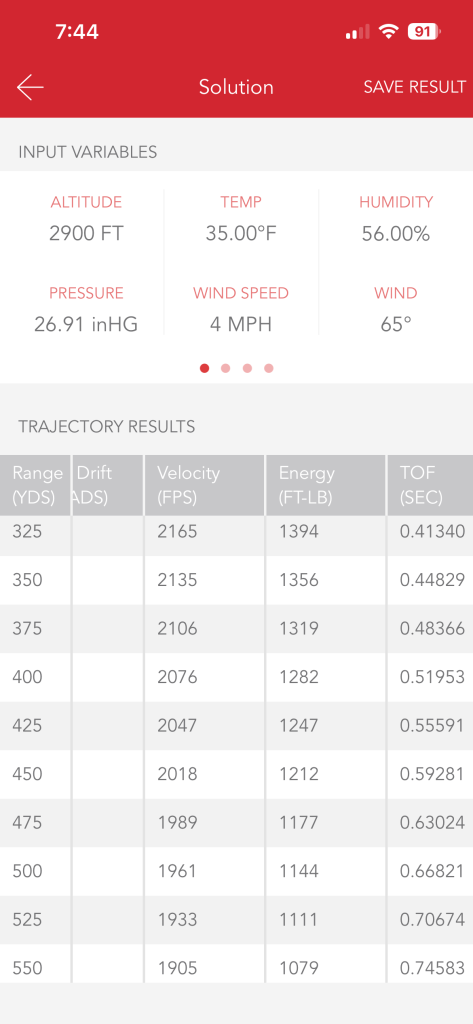
So the next step is to look at ballistics tables, and that’s where the cartridge finally enters the fray. I’ll enter some different cartridges in different calibers and add the bullet family into that equation to see at what distance I drop below my velocity floor. I might compare a 6.5 PRC to a 6.5 Creedmoor, to a 25 Creedmoor, and then maybe a 6 Creedmoor. I’m going to pick the heaviest bullet with the best BC value for each example, and I’m going to plug in real muzzle velocities into those calculations, not a pie-in-the-sky; I hope I can get their velocity. Now I simply look at the ballistics table and find where I drop below my self-imposed 2000 fps. That becomes my floor, and with that I can quickly see which cartridges will perform, and which ones won’t really get me to the distances I’d like to be able to shoot if the opportunity arose.
Recoil Matters More Than Horsepower
I’m also going to consider a couple of other factors during this decision-making process. For me personally, I know that spotting my own shots is a huge part of hunting successfully. I want to see what happens in my scope, so I automatically eliminate a rifle with too much recoil. Second, I also have my own PERSONAL outer limit. That’s probably the most important part of the discussion. As I mentioned above, I’m not even a little bit worried if I can hit a target at longer ranges, and I mean some absurd distances. What I am worried about is wind variability. For that reason, I really don’t like shooting much more than 500 yards, and if I can be under 400 yards, even better. I really do use this framework for myself: if I can’t, with 99% certainty, place the bullet where I expect it to land, I’m probably going to walk away from that shot.
If several of the cartridges I ran through the calculator all deliver the speeds required for the selected bullet to upset reliably, now I just pick the one I most want to hunt with. For me personally, it’s almost always the rifle I can hit my target impact velocities with, with the least recoil possible. I want to make sure I see everything that happens in the scope, and for that reason, recoil reduction is important.
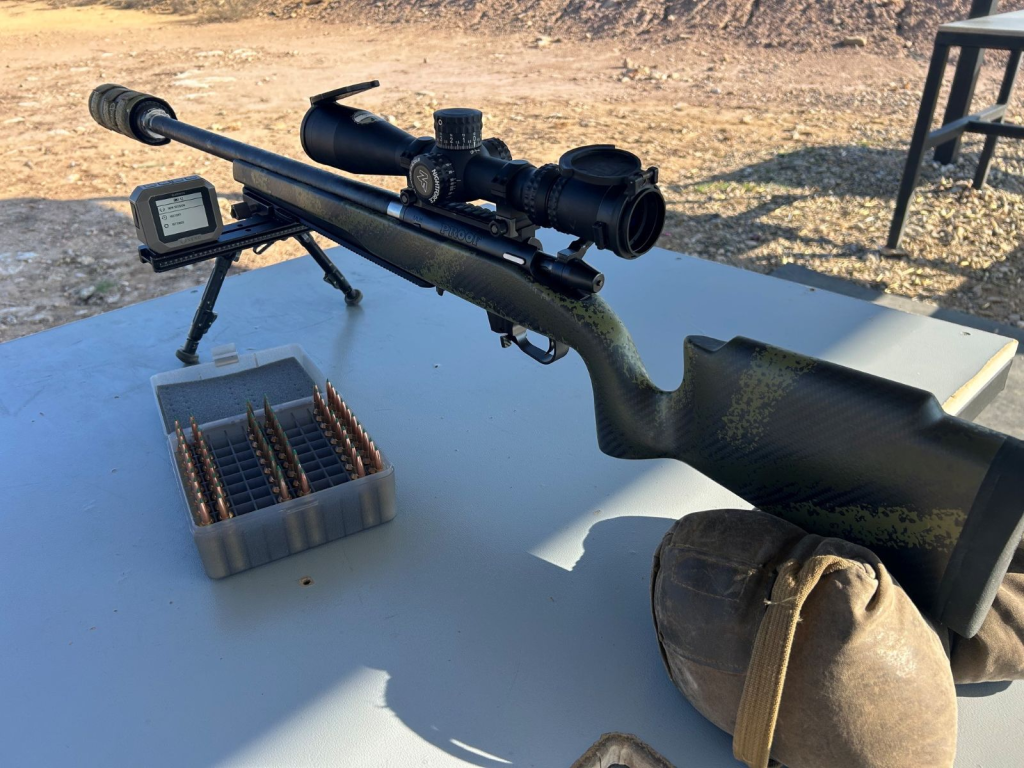
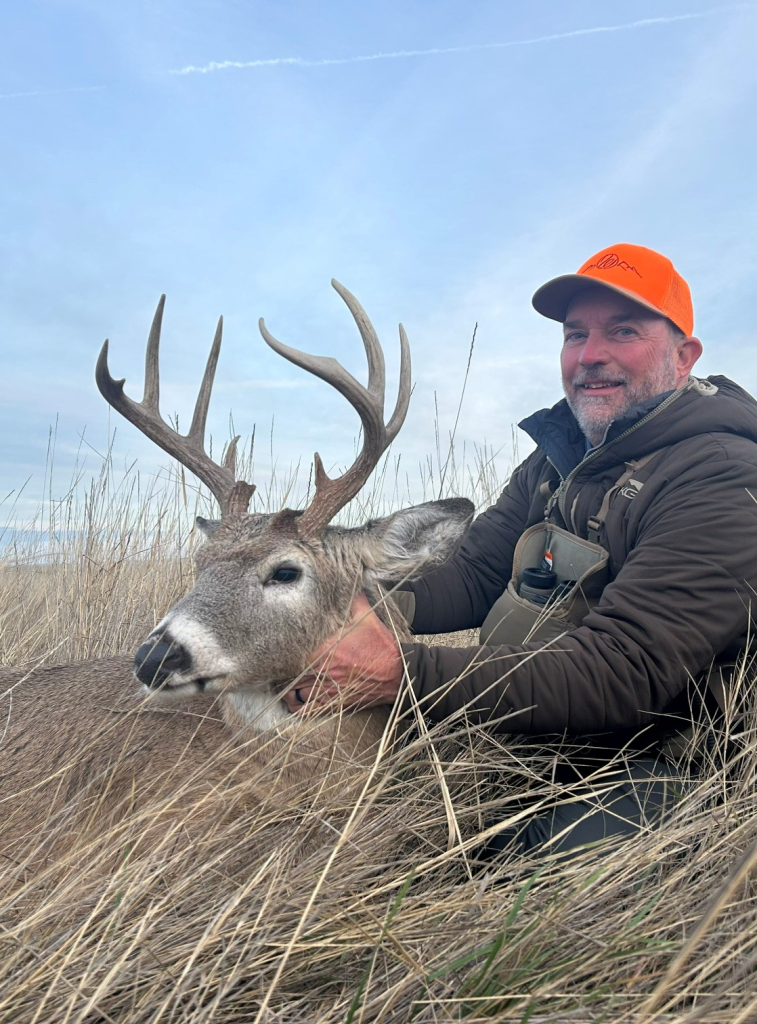
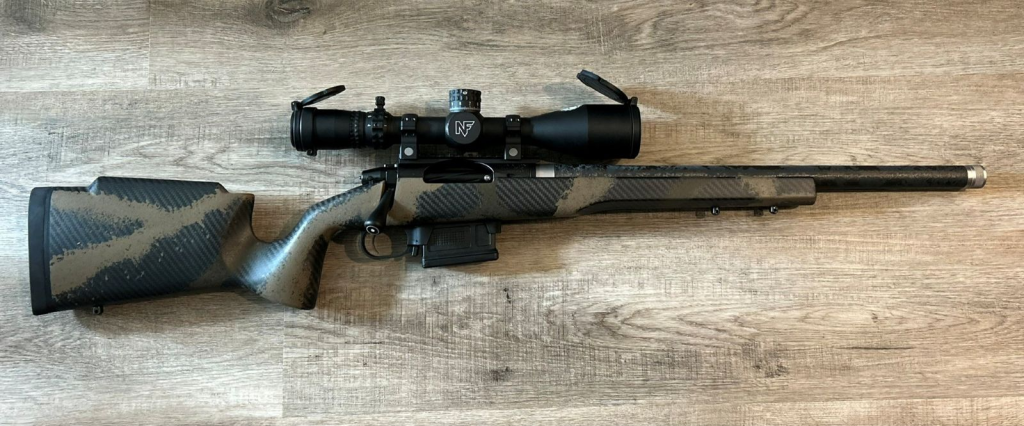
On this particular South Dakota hunt, I ended up with a 25 Creedmoor. I didn’t particularly push my load and was maintaining 2,000 fps out to about 500 yards. Plenty far enough for where I’m comfortable shooting, especially considering the crazy wind you can encounter in SD. With that cartridge, I knew I would easily be able to spot my impacts, and in fact that’s exactly how the hunt played out. We had a decent buck at about 190 yards or so, and I sent my first round and saw the impact just a bit high and farther back than I wanted. I’m sure it was a lethal hit, but I saw the deer start to turn in my scope and already had another round chambered and on its way before he’d even made a full turn. The second shot caught him square in the back of the neck, and he crumpled immediately. The key here is that I saw it all in real time and didn’t need anyone to tell me what happened, and that, for me, is the biggest part of picking an applicable cartridge. I want to see what happens myself.
Honestly, that’s the entire framework I use to select a cartridge, but I should probably add weight to the paragraph above, because for me the recoil reduction and the ability to honestly spot my shots outweigh almost all the other variables. I truly am willing to sacrifice distance for the ability to see what happens in my scope. That’s my real variable; all the other considerations add their own weight.
I know you’ve heard a lot of other ways to select a cartridge, and I’m surely not insinuating they’re wrong, but I think by changing the direction of the selection to choosing the bullet first, and thinking about how you want everything to work, and defining the parameters you need your system to work at, you come to a much more elegant solution.