
Episode Notes
Precision rifle reloading can become as complicated as you want to make it. But how many of those extra steps actually produce better ammunition?
In Episode 1 of the Childs Play Outdoors Podcast, I dig into the reloading process I use today, how it has changed over decades of handloading, and why high-volume precision rifle competition forced me to question many of the things I once considered essential.
We talk about case sizing, neck tension, concentricity and bullet runout, annealing, powder measurement, seating depth, load development, and reloading equipment—but this isn’t a step-by-step guide to loading ammunition. It’s a discussion about figuring out what actually matters.
Some of the techniques I once spent considerable time on have survived that scrutiny. Others haven’t. And there are still things in my own process that I question.
The larger point is simple: don’t add a step just because someone says precision reloaders are supposed to do it. Understand what you’re trying to accomplish, measure the result when you can, change one variable at a time, and decide whether the improvement is meaningful enough to justify the time.
Topics Discussed
- Why reload precision rifle ammunition in the first place?
- Consistency versus unnecessary complexity
- Full-length sizing and shoulder bump
- Neck tension and interference fit
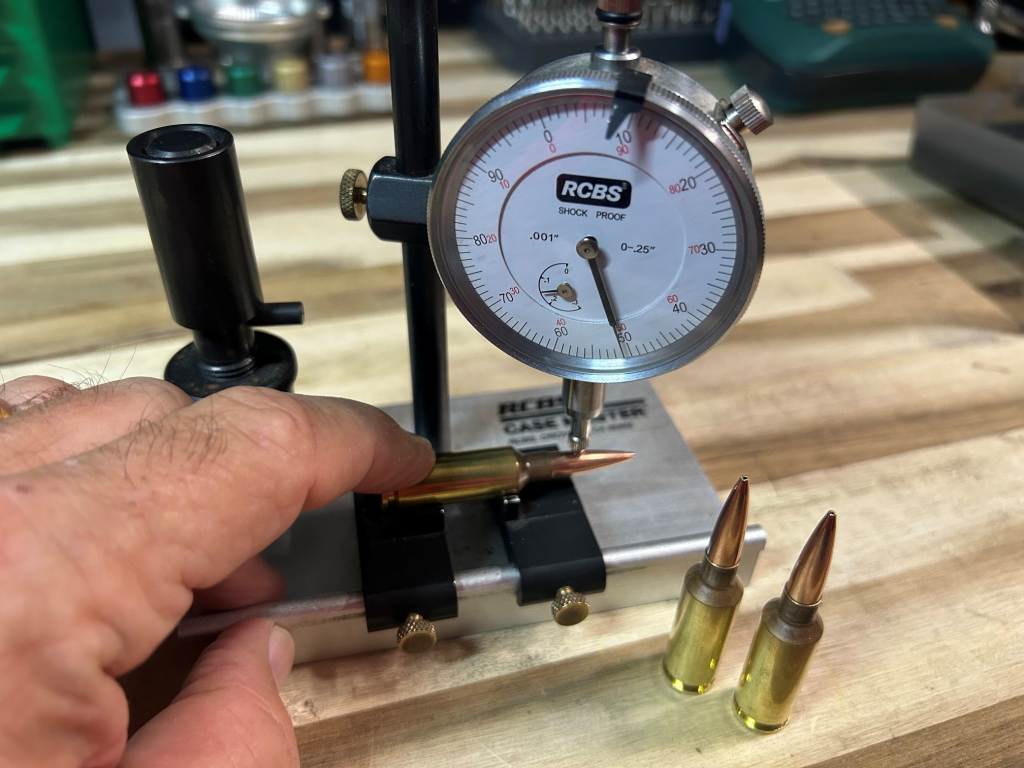
- Concentricity, bullet runout, and where runout comes from
- Traditional expander balls, bushing dies, and mandrels
- Annealing and brass life
- Powder charge consistency
- Seating depth and sample size
- Simplifying load development
- High-volume reloading for PRS competition
- When expensive reloading equipment actually helps
- Eliminating steps that don’t produce measurable results
- Why changing one variable at a time matters
Related Article
Precision Rifle Reloading: What Actually Matters?
The companion article follows the evolution of my reloading process—from learning to reload as a kid, through years of chasing concentricity and accuracy, to developing the faster, streamlined process I use for precision rifle competition today.