
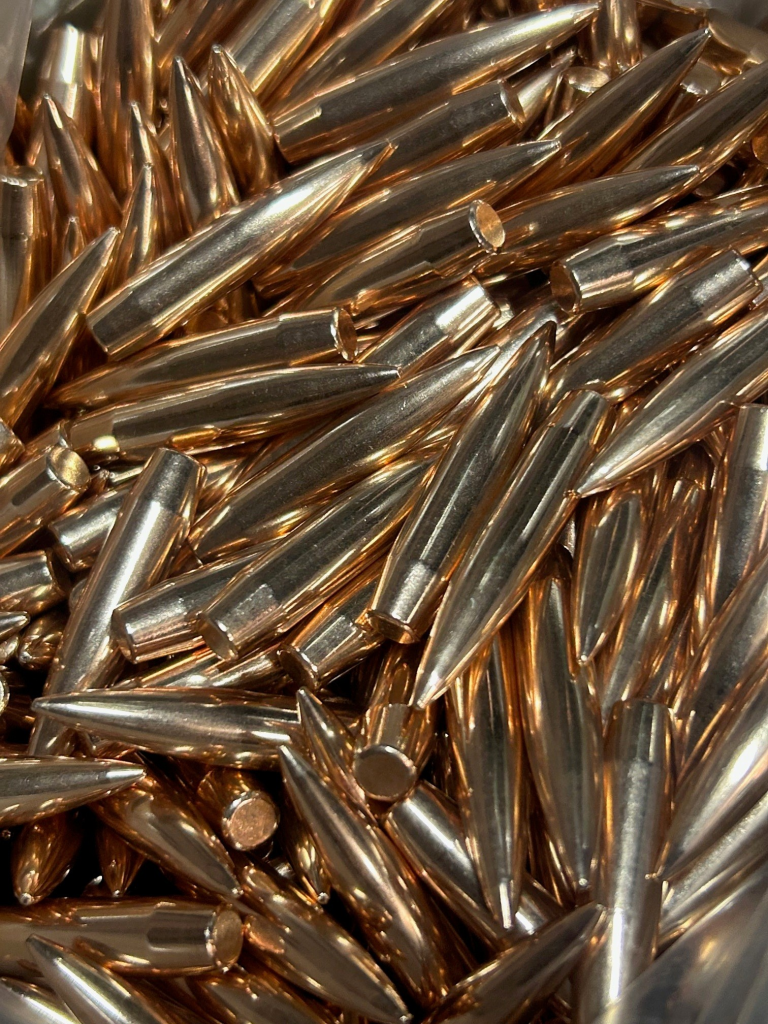
I’m always going to start with the simplest of questions: Why?
I start with that question because it will make the rest of this discussion much clearer. If you have a good idea why you want to reload, then we’re probably marching down the right path. Maybe you want to create more accurate or consistent ammunition, or load a particular bullet that isn’t commercially available. Maybe you simply don’t want to rely on factory ammunition availability. You might shoot competitively and need a large volume of consistent ammunition, or maybe you want to reduce your overall ammunition costs. Finally, reloading might just sound like an interesting hobby.
Any of those could be an excellent reason to reload. I don’t think there is one answer that applies to everybody, though, and I certainly don’t think everyone needs to reload. Like most things involving shooting systems, there are advantages and compromises. The better question is whether those advantages actually matter to you and whether the compromises fit the way you want to spend your time.
What Reloading Can Actually Give You
The biggest benefit to reloading is control. You’re no longer limited to the ammunition an ammo company happens to produce or what somebody happens to have in stock. You can choose the components you want and load cartridges for which there may be very little factory ammunition available. If you shoot an older or less common cartridge, that alone can be a tremendous advantage.
More importantly, you gain control over the process itself. Factory ammunition today can be surprisingly good, and some of it is superbly accurate, but when you reload, you have the opportunity to control variables that were decided for you at the factory. That gives you the ability to produce ammunition specifically for what you’re trying to accomplish.
There needs to be a pretty big qualifier attached to that statement, though. Reloading isn’t a magic bullet—pun somewhat intended. Just because you load your own ammunition doesn’t automatically mean it will be better, more accurate, or more consistent than quality factory ammunition. You still have to use quality components and develop a consistent process. If you do those things well, you can produce ammunition that is a cut above. If you don’t, there is nothing magical about the fact that you assembled it yourself.
That distinction matters because I think people sometimes approach reloading with the idea that buying a press and a set of dies will somehow unlock amazing ammunition. It doesn’t work that way. There is a learning curve involved, and the quality of the finished ammunition ultimately depends on how well you learn and execute the process.
Is Reloading Right for You?
I think this is a great spot to consider whether you actually want to tackle this hobby. The person who is probably best suited to reloading is someone who likes to tinker, likes figuring out how things work, and enjoys solving problems. I’ve described it before as having something of an engineer’s mindset. Maybe that overstates it a little, but especially in the beginning, reloading can feel like one problem-solving mission after another. You’re learning the equipment, learning the process, and figuring out why something isn’t doing what you expected it to do. If that sounds interesting rather than frustrating, you probably have the right mindset for reloading.
There is another side to that personality question that is considerably more important. Reloading requires attention to detail because mistakes can have serious consequences. You can’t simply go through the motions without paying attention to what you’re doing. Once you’ve been loading for a long time, many of the individual operations become repetitive, but you still have to remain engaged with the process. If detailed, repetitive work is something you absolutely hate, that should probably factor into your decision.
The amount you shoot matters too. If you’re loading and shooting only 100 or 200 rounds a year, I’m not sure the investment in time and equipment makes sense unless reloading itself is something you want to pursue as a hobby. More importantly, I’m not sure you’ll do it frequently enough to really learn the process. If months pass between loading sessions, remembering everything you learned the last time can become its own challenge.
On the other hand, if you’re shooting a considerable amount of ammunition, the equation starts changing pretty quickly. As a high-volume competition shooter, I think reloading makes tremendous sense. It gives me access to high-quality, consistent ammunition in the quantity I need, and I’m not held hostage by whether someone happens to have it in stock when I need it.
There are certainly exceptions. Some shooters simply have more money than time, and there is some remarkably good factory and boutique-loaded ammunition available today. If you can buy ammunition that does exactly what you need it to do and would rather spend your time doing something else, that may be the right answer for you. There’s nothing inherently superior about spending hours at a loading bench if you don’t enjoy it and don’t need what reloading gives you.
How Much Time Does Reloading Take?
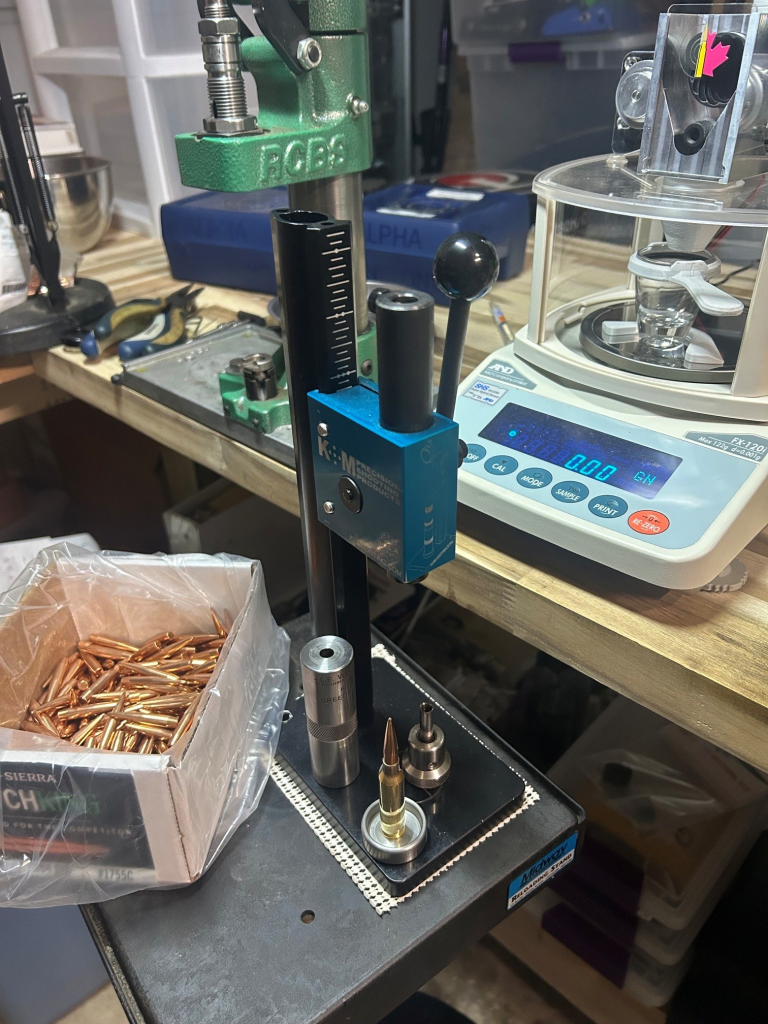
This is one of those questions where the only accurate answer is: it depends.
In the beginning, reloading will take a decent amount of time because you don’t have a process in place yet. You’re simultaneously trying to learn the individual operations and figure out how to put them all together. I wouldn’t be surprised if it initially took someone two or three hours to produce 50 to 100 rounds of ammunition. I don’t think there’s anything wrong with that. In fact, trying to rush the process when you’re learning is exactly the wrong approach.
I recently taught a couple of young guys at one of my stores/accounts how to reload. They watched me load some ammo; I showed them the basics and how ammo was assembled, gave them a shopping list, then went to one of their houses, and we loaded their first 30 rounds together. It was incredibly slow, and that was completely okay. They were learning how to manipulate the cases, use the equipment, keep everything organized, and develop a flow. Those things become second nature eventually, but they aren’t second nature when you begin.
Today I can load 100 rounds in somewhere around an hour and 20 minutes to an hour and 40 minutes, depending on how everything works out. I also don’t really load in 100-round batches anymore. At the volume I load, I generally have hundreds of pieces of brass moving through different stages of the process at any given time. That makes sense for me because I may be trying to produce 300 to 500 rounds in a week. It probably makes absolutely no sense for someone loading a couple hundred rounds a year.
Speed comes with time, equipment, and repetition. More importantly, you eventually learn which parts of the process matter to the ammunition you’re trying to produce. But there is still a time commitment, and I think you need to be realistic about whether you want to make that commitment. At times, even I consider reloading a chore. If every trip to the range is going to be preceded by thinking, “Damn, now I have to go load ammunition,” factory ammunition may still be the better answer for you.
How Much Space Do You Need?
Surprisingly little.
I first learned to reload with my dad, who had part of a workbench in the garage set up for it. Later, when my wife and I lived in an apartment, I had a small portable reloading stand with my press attached to it. I pulled it out of a closet, set it up in the kitchen, and arranged my tools around it. It was messy, but it worked, and I loaded that way for years.
When I started working from home, part of an L-shaped office desk became my reloading area. Eventually I added a portable bench that allowed me to swap different tools on and off it. That setup occupied a surprisingly small portion of my office and worked perfectly well for a long time.
Today I have a dedicated reloading bench in a separate garage bay, with room for multiple presses and the other equipment I use. It’s wonderful, but I’m also loading hundreds of rounds a week. At that volume, dedicated space is incredibly convenient. It absolutely isn’t required to start reloading. You can get by with a surprisingly small footprint.
How Much Does It Cost to Get Started?
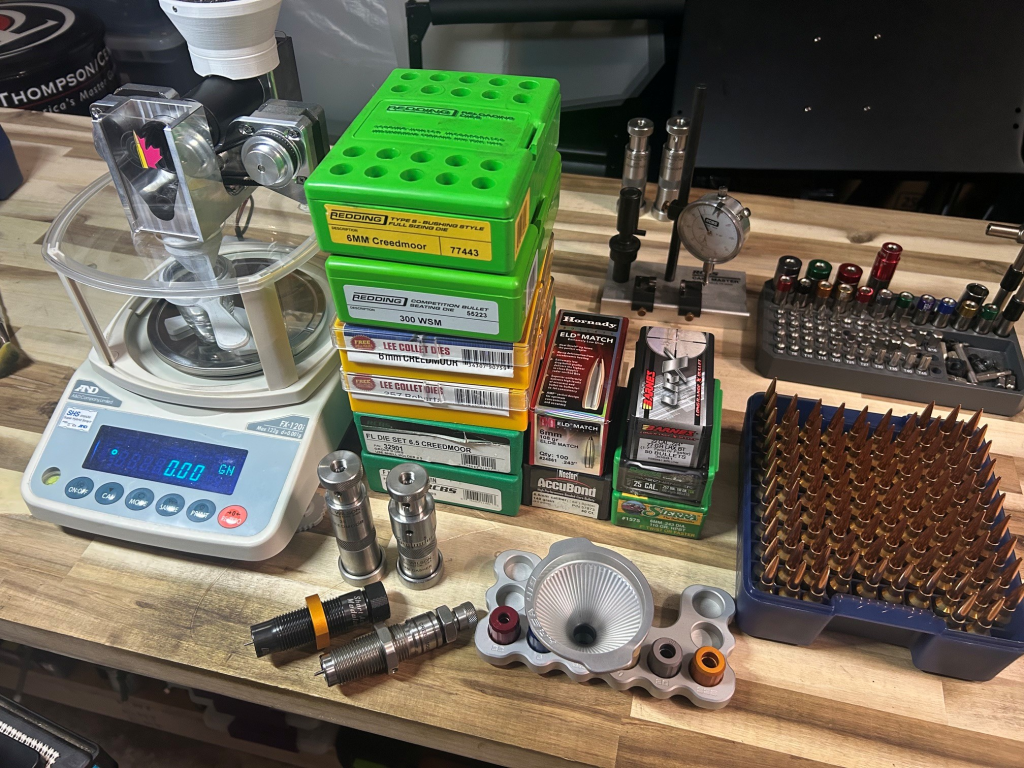
You can get into reloading surprisingly economically if that’s how you want to approach it. A basic setup can probably be put together for a few hundred dollars before you start adding the cartridge-specific equipment you’ll need. There are simple kits available that include a press, powder measure, scale, and many of the basic tools necessary to get started.
The downside is that a lot of people eventually upgrade parts of that equipment. There’s something to be said for the whole “buy once, cry once” philosophy, but I think you have to qualify that against whether you even know you’re going to enjoy reloading. If you’re just dipping your foot in the pool to see whether this is something you want to continue doing, I’d be pretty hesitant to spend thousands of dollars on equipment from the beginning.
You also don’t need expensive equipment to produce good ammunition. I loaded with a precision balance-beam scale for years, producing extremely consistent and accurate ammunition. When I started shooting competitions, I was still manually trickling powder charges on that scale. Eventually, I reached a point where I was simply moving too slowly to produce the amount of ammunition I needed. I was already making very consistent ammunition; I needed to make it faster.
That distinction applies to a lot of reloading equipment. Much of what I’ve spent money on over the years has bought me speed, convenience, and the ability to produce larger quantities of ammunition efficiently. My current powder measure alone costs considerably more than an entire basic reloading setup. That makes sense for the amount of ammunition I load today. It would have made very little sense when I was starting out.
You can absolutely start relatively inexpensively and make very good ammunition. You can also jump straight down the rabbit hole and spend an enormous amount of money. I’d just hope you have a pretty good idea that you’re going to stay with it before you choose the second option.
Can You Actually Save Money Reloading?
Absolutely.
I hear variations of the argument that you don’t really save money by reloading, and I don’t agree. To get some actual numbers, I recently looked up a box of Hornady Precision Hunter loaded with a 143-grain ELD-X and found it for $53.99 per box. I then priced the components to essentially build the same ammunition myself, including brand-new Hornady brass.
Using the prices I found, I could load 20 rounds for approximately $32.20. That’s a savings of $21.79 on the very first loading, even though I’m buying new brass as part of the cost of that ammunition.
But brass is reusable. Once I’ve fired those cases, in my mind I’ve already paid for them. Using the same component costs without purchasing the brass again brings the next 20 rounds down to approximately $17. Compared with the $53.99 box of factory ammunition, that’s a savings of $36.99 per box.
I didn’t shop those prices particularly hard or search all over the internet for special deals. I found the components, plugged the numbers into the example, and used them. Buying components in larger quantities or shopping more carefully can potentially bring the cost down even further.
Of course, that doesn’t account for the equipment sitting on your loading bench. You have to amortize that investment across the ammunition you produce, which is another reason shooting volume matters. If you buy hundreds or thousands of dollars worth of equipment to load 100 rounds a year, it’s going to take a very long time for the economics to work in your favor. The more ammunition you produce, the less that equipment investment represents on a per-round basis.
There’s another argument I hear fairly often: reloading doesn’t really save you money because you’ll just shoot more.
I have a hard time seeing the downside in that.
If reloading reduces the cost of every round and allows you to shoot considerably more ammunition for the same amount of money, I consider that a win. One of the recurring problems I see in shooting is that people simply don’t shoot enough. We form remarkably strong opinions about rifles, ammunition, and complete shooting systems without spending enough time behind them to really understand what they’re doing. Shooting more gives you more experience with your system. If reloading makes it economically easier for you to do that, I’m certainly not going to argue that you’ve somehow defeated the purpose by shooting more.
Availability Matters Too
Cost isn’t the only economic consideration. One of the biggest reasons I reload is simply knowing that I can produce the ammunition I need.
I’ve lived through a number of component and ammunition shortages over the last 30-plus years. I don’t like being held hostage by whether the ammunition I want happens to be sitting on a store shelf. As my shooting volume increased, I began keeping larger quantities of the components I use most frequently so that a temporary shortage doesn’t determine whether I can go shoot.
The quantities I keep on hand would make very little sense for most shooters. I shoot thousands of rounds a year, so my needs are different from someone who loads primarily for hunting. The underlying advantage is the same, though. Once you’ve settled on the components you use and have them available, reloading gives you considerably more control over your ammunition supply.
That can become especially valuable with older or less common cartridges. Factory ammunition may be produced infrequently or offer only a handful of bullet choices. Reloading removes much of that limitation. You aren’t waiting for an ammunition company to decide that your particular combination is worth producing.
So, Should You Reload?
If you’ve made it this far, I don’t think I need to answer that question for you.
Does reloading fit your personality? Do you enjoy tinkering with things and understanding how they work? Are you detail-oriented enough to approach the process carefully? Do you shoot enough to justify the time and investment, or does the process itself sound interesting enough that the economics don’t really matter?
More importantly, what are you trying to accomplish? Maybe you want more accurate or consistent ammunition. Maybe you want to shoot a particular bullet or an older cartridge with limited factory options. Maybe you’re a high-volume shooter who wants control over both the quality and availability of your ammunition. Maybe you’d simply like to spend less money for every round you send downrange and, hopefully, use some of that savings to shoot more.
There are also perfectly good reasons not to reload. If you don’t enjoy detailed, repetitive work, don’t have the time for it, shoot relatively little, and are completely satisfied with the factory ammunition you’re already using, I’m not sure what problem reloading will solve for you.
That’s why I started with the question I did. Why do you want to reload? If you can answer that after understanding what reloading gives you and what it asks from you in return, I think you’ve probably answered the bigger question for yourself.
Continue Learning: Explore more about [Reloading] in the Childs Play Outdoors knowledge base.