
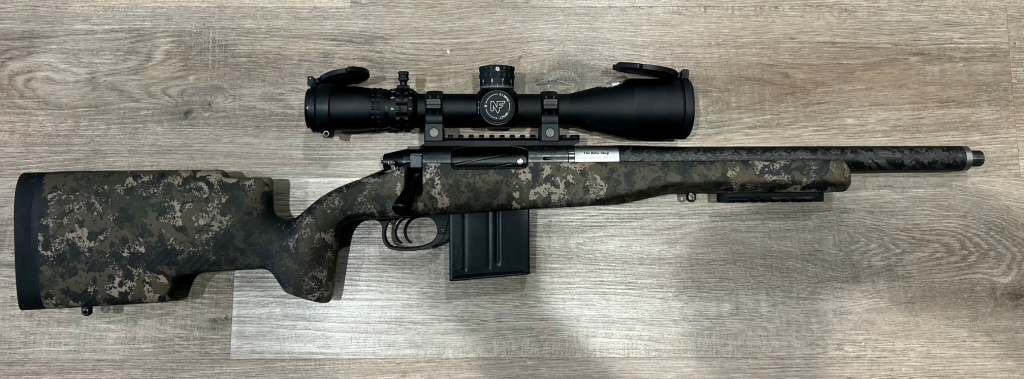
One of the questions I get asked all the time in my job is some version of, “What rifle should I buy?” Sometimes it’s a guy getting ready for a hunt, or somebody who wants to start shooting long range, or maybe thinking they’re interested in trying NRL Hunter. Maybe he already owns three rifles and is trying to decide what the fourth one should be. And for the record, I’m completely in favor of the fourth rifle. Or the tenth.
As a side note, I like rifles. I’ve spent a significant portion of my life buying rifles, putting good optics on them, handloading for them, then going to the range and figuring out how to make them shoot. And then, quite often, sticking them in the safe while I went looking for the next one that interested me. There’s absolutely nothing wrong with that. It’s fun, but more importantly, it started the loop of asking why something either worked or didn’t work.
I had the rifle question “what should I buy” again recently, and it made me realize that my answer today is very different from what it would have been twenty years ago, or even 5 years ago. That answer keeps evolving. Hell, give me another year, and it likely will change again.
A gentleman was asking about a rifle primarily for long-range shooting, but he also wanted to hunt with it, and finally, he wanted it to be super lightweight. That combination immediately made me stop. Not because lightweight rifles aren’t wonderful to carry. They are. But because lightweight rifles can be extremely persnickety to shoot. They magnify everything. Shooter errors, recoil, trouble spotting what happened through your optic. So when asked what he wanted the rifle for, his requirements just naturally seemed at odds with each other.
If the primary job of the rifle is to make difficult shots at longer distances, I think people can actually hurt themselves by chasing weight too aggressively. Things that make a rifle wonderful to carry up a mountain are not necessarily the same things that make it easy to shoot once you get there. I didn’t understand that the same way twenty years ago.
In fact, I’ve gone through a lot of iterations in what I thought a good rifle was over my lifetime. That continues to evolve today, and I don’t expect it to stop. And that’s really the interesting part of this question.
I can tell somebody exactly what rifle I would build for myself today. I can tell them what cartridge I’d chamber it in, what I want it to weigh, where I want it to balance, how I want the scope mounted, and probably twenty other little details. But that doesn’t necessarily mean they should build the same rifle.
There might be a more useful question: Why do I want a rifle configured that way? Because almost none of those preferences came from somebody explaining rifles to me; they came from shooting them.
Light Rifles Are Harder to Shoot
One of the things that really started changing how I looked at rifle weight came from shooting .22s.
For a period of time, I got pretty serious about short-range .22 benchrest shooting. I was shooting Bullseye .22, which is shooting small bullseye targets at 50 and 100 yards, trying to keep all the rounds inside a very small scoring area. It sounds simple until you do it. Then you start discovering how much the tiniest changes in the way you address and hold a rifle matter.
At the time, I had an 18-pound MasterPiece Arms rifle that was extremely accurate. With that much weight, the rifle was pretty forgiving. I still had to do things correctly, but little mistakes in my form, or maybe my trigger press, didn’t show up nearly as dramatically on target.
I started learning about natural point of aim. I started seeing what happened if I manipulated the rear bag to get me onto the bullseye, instead of allowing the rifle to settle there naturally. I could see what happened if I put sideways pressure into the trigger instead of pulling it straight back. I could see when I put torque on the stock with too much cheek or shoulder pressure. By themselves, these were all eye-opening moments.
Then I got a lightweight Proof Research Latitude. I thought that rifle was going to change my world! The first time I got behind that rifle, I was shocked. I could see my heartbeat in the reticle. I would breathe, reach my natural respiratory pause, relax as much as I possibly could—and the reticle would still be moving with every beat of my heart. Same shooter. Same basic task. Very different rifle.
I could add cheek pressure and see it. I could add pressure to the buttstock and see it. Things I could get away with on the heavy rifle became MUCH more obvious on the lightweight rifle. The lighter rifle was simply less forgiving of any input I applied to the system.
Now take that same experience out of a controlled bench rest environment and look at it from a hunting perspective. You’ve just climbed a hill. Your heart is pounding. You’re breathing hard. Maybe the animal is getting nervous. You’re trying to build some improvised position off a rock, a tree limb, a backpack, or whatever is available. And you’ve chosen a five-pound rifle because five pounds felt wonderful when you picked it up at the gun counter. You’ve just made the shooting problem harder than it has to be.
I’m not saying everybody needs a 20-pound hunting rifle. That’s ridiculous. But I am saying the difference between a five-pound rifle and an eight-pound rifle can be night and day when you actually have to shoot the thing. And I’ve personally moved even further than that. For the kind of hunting and shooting I do today, I’m getting pretty comfortable with a complete rifle somewhere around 13 pounds. I know. Somebody just read that and thought I’ve lost my mind. Maybe I have.
If you’re hunting the sheep mountains, there’s a darn good chance you want absolutely nothing to do with a 13-pound rifle. I’ve never hunted sheep, so I don’t know. Maybe I would carry my 13-pound rifle up one of those mountains, come home and say, “Never again!” That’s possible, and maybe even highly likely! But you know what? I’d probably try it once to find out.
I do know, though, when I elk hunt, I’m often walking 10 or 12 miles a day, and I can honestly tell you, I’m taking that 13-pound rifle every single time. Based on the shooting I’ve done, I’ll take a little more rifle weight almost every time because I know what it gives me when I have to make the shot. I’m willing to carry that weight. You might not be. And that’s a completely acceptable answer too. I’m not telling you what you should believe; I’m trying to nudge you in the direction of asking what works for you, but more importantly, WHY does it work for you.
As a side note, when I say 13-pound rifle, I’m talking about the entire system ready to hunt: rifle, mounted optic, bipod, loaded magazine, and sling. I’m not talking about a 13-pound bare rifle. The rifle itself is probably somewhere around 8½ pounds.
How a Rifle Feels Isn’t Necessarily How It Shoots
There’s another trap here. People pick up rifles in gun stores and judge them by how they feel. I understand that completely. I’ve done it my whole life.
One of my favorite rifles when I was younger was a stainless synthetic Remington Model 7. Hell, I still love that little rifle! Back then I thought it was about the pinnacle of rifle design. And yes, that’s probably a way stronger statement than it should be, but I loved everything about it. Short barrel. Lightweight. Lively. You picked it up, and it just wanted to jump to your shoulder. It felt fantastic. But it was butt heavy. And when I actually tried to shoot it, particularly offhand, that wonderful handling characteristic became a liability.
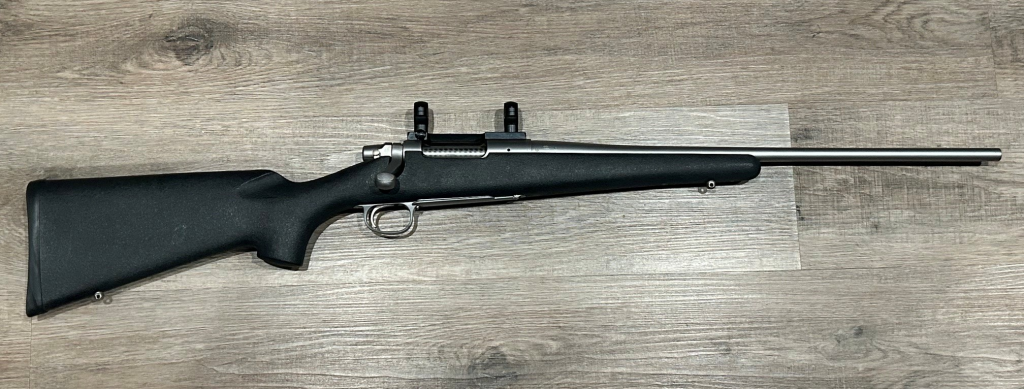
I remember hunting deer in Idaho and having a good buck at roughly 100 yards. I brought the rifle up, and that reticle just swam around on the shoulder. I couldn’t get the reticle to settle down. Finally, I had to sit down and put my elbows on my knees to quiet the reticle down enough to take the shot.
That rifle felt great in my hands, but it just didn’t shoot nearly as well as it felt. Off a bench it shot well enough, and from a solid rest it could be a little hammer. But when I got into the field, it started showing me limitations I never recognized just handling the gun.
That’s an important distinction. Handling characteristics and shooting characteristics are not necessarily the same thing. A rifle that feels lively at the gun counter can become very lively when you’re trying to hold the reticle still, and that’s not a good problem.
Today, I generally want some weight toward the front of the rifle. I want the balance point somewhere a few inches ahead of the magazine well. Shooting PRS matches taught me that. Before I started shooting PRS, I don’t think I really understood rifle balance. I mean, I had a glimmer of what it was, but I didn’t understand the WHY. Today it’s one of the first things I notice. If I put a properly balanced rifle on a bag, it wants to just sit there. More importantly, with a balance point a few inches in front of the mag well, the reticle just goes quiet. That’s what I’m looking for.
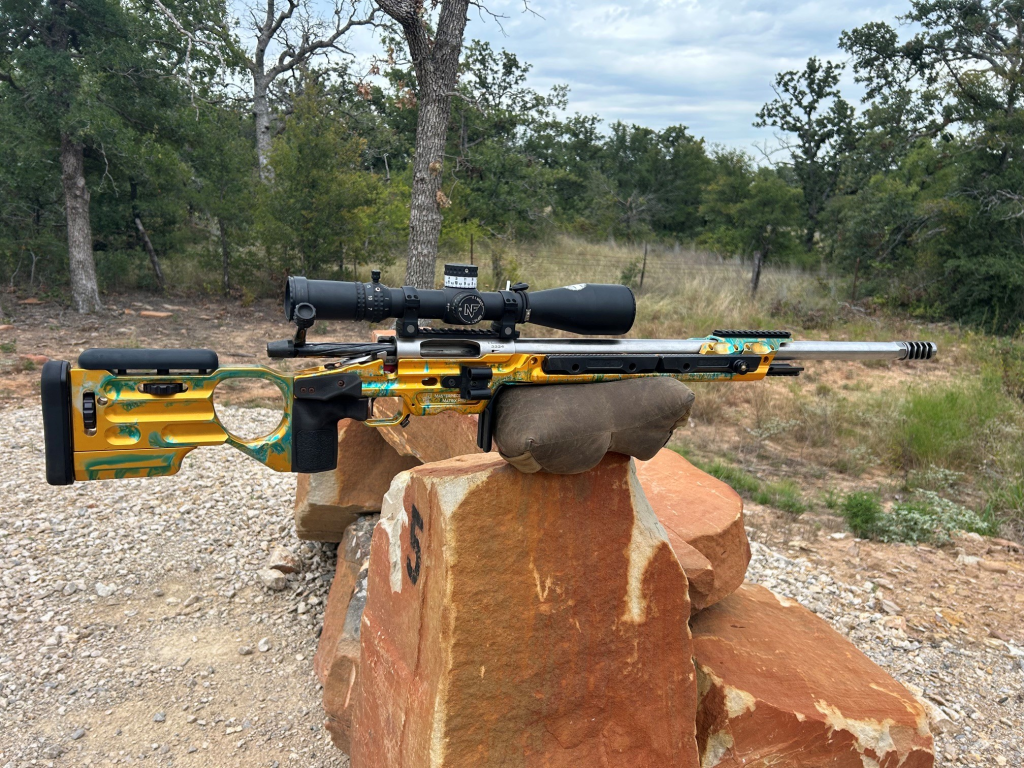
If the rifle is a little barrel heavy, gravity is helping me. The front of the rifle wants to settle. I don’t have to put as much pressure into the rear of the gun to keep the muzzle where I want it. Take a butt-heavy rifle and do the same thing, and I often find myself fighting it. I’m adding rear pressure trying to hold it where I want it, and pretty soon the reticle starts swimming.
Somebody can explain all of that to you. Or even better, you can put the two rifles next to each other, shoot them from the same position, and understand it in about five minutes. That difference matters.
Recoil Changed Everything for Me
I grew up during an era when we had a very different relationship with cartridges. Rangefinders either didn’t exist for us mere mortals, or the ones that did didn’t work that well. Ballistic solvers weren’t sitting in everybody’s pockets, and I doubt they would have been accurate if we could have gotten our hands on one. What we did was estimate range. And human beings are terrible at estimating range. So what did we do? We chased point-blank range.
If I could push a bullet fast enough to extend the distance where I didn’t have to worry very much about trajectory, that was incredibly valuable. That meant bigger cartridges and higher velocity bought us more distance before we had to start making significant elevation corrections. And if we did make an elevation correction, it was done by the seat of our pants. Hold a bit of daylight over the backbone and let her rip. For these reasons, I owned the big stuff. I had a .300 Win Mag, a .300 Ultra Mag, and a 7.82 Warbird. All big .30-caliber magnums. It was a way to game the system and give me a longer point-blank-range when I hunted.
A funny aside here is that I don’t ever remember killing an animal in this time frame with one of those big boomers at longer than 200ish yards. But the theories man… always chasing the theories.
So when I first started learning to shoot long range, I bought a .300 Win Mag in a chassis rifle. That’s what made sense to me at the time. Long range meant I needed horsepower. Those big .30s were what we needed to reach out to those longer distances.
I began this shooting journey with my friend Michael at the Leupold Optics Academy. He’s the one who started me down this path, and I thought I was really onto something with my big boomer. About this same time, Leupold built some 6.5 Creedmoor schoolhouse rifles to replace the .308s that had been the mainstay in the beginning. Shooting those rifles led to another one of those epiphany moments.
One day we were shooting at a mile. I remember that my .300 Win Mag needed somewhere around 19 or 20 mils of elevation for that shot. I looked over at the dope for the 6.5 Creedmoors, and they only needed about 21 mils. That got my attention!
Here was this little cartridge using dramatically less powder, firing a lighter bullet, producing dramatically less recoil and less noise—and at a mile I was within roughly a mil of the elevation correction I needed with the .300 Win Mag. That was a pretty profound moment for me. What exactly was I buying with all that recoil?
There are absolutely things a .300 Win Mag does that a 6.5 Creedmoor cannot do. Bullet mass CAN matter. Impact velocity DOES matter. So I don’t think the two cartridges are ballistic equals, because there are instances and applications where I would choose the bigger cartridge without hesitation. But the idea that I simply needed the bigger cartridge because I was shooting farther? That belief started falling apart. And the less recoil I had, the better I could shoot. And you know what? That matters way more than most people want to admit.
With all things being equal, hand someone two identical rifles: one that recoils a fair amount, like a .300 Win Mag, and another with a mild cartridge like the 6.5 Creedmoor, and I bet you can guess which groups are probably going to be significantly better.
Through all these changes, I thought the advantage was simply that I shot the smaller cartridge better, but it wasn’t long before I realized less recoil was giving me something else I hadn’t even known to look for.
Then I Saw My Own Bullet
Another little piece clicked into place when I started shooting a 6 Creedmoor. It was about this time that Hornady introduced the first factory addition to the Creedmoor family, and I was an early adopter. I was back at the Leupold Academy shooting with my friends Michael and Ryell. We were prone, shooting at longer ranges, and I was pretty square behind the rifle. I sent a shot and, for the first time in my life, watched my own bullet trace through my own scope. I can still remember it. I was like, “Holy shit, look at that!!” I knew the bullet was going to hit the plate before it even got there. I’d never seen anything like it.
That was another data point that started changing the way I thought about recoil, but for an entirely different reason.
Recoil wasn’t simply about comfort anymore. Recoil affected information. If the rifle moves enough that I lose the target during the shot, I lose information about what happened downrange.
That idea became exponentially more important once I started shooting PRS. In PRS, seeing what happens after the gun goes bang is everything. Now the questions become: Impact or no impact? Where did the bullet land on the target, and was I two-tenths left, or did I miss off the right edge? How far off the edge? What correction do I need to engage the next target?
And there’s another piece to this that took me a while to understand. Just seeing it isn’t enough; you also have to process what you saw. Everything happens incredibly fast, and often your brain struggles to resolve what your eyes just witnessed. A bullet hits a plate, and the plate moves, all while the rifle is recoiling, and the whole system is in movement. Add to that the fact that the whole thing can be over before your brain has hardly registered any of it. It’s a skill, and one that has to be fostered.
The more I’ve shot, the more I’ve realized that the shot itself is really only part of the information the rifle gives me. What happens immediately after the shot matters just as much or more. If recoil takes me completely out of the optic, I lose that information. What’s really important is that this also applies directly to hunting, and in a very big way!
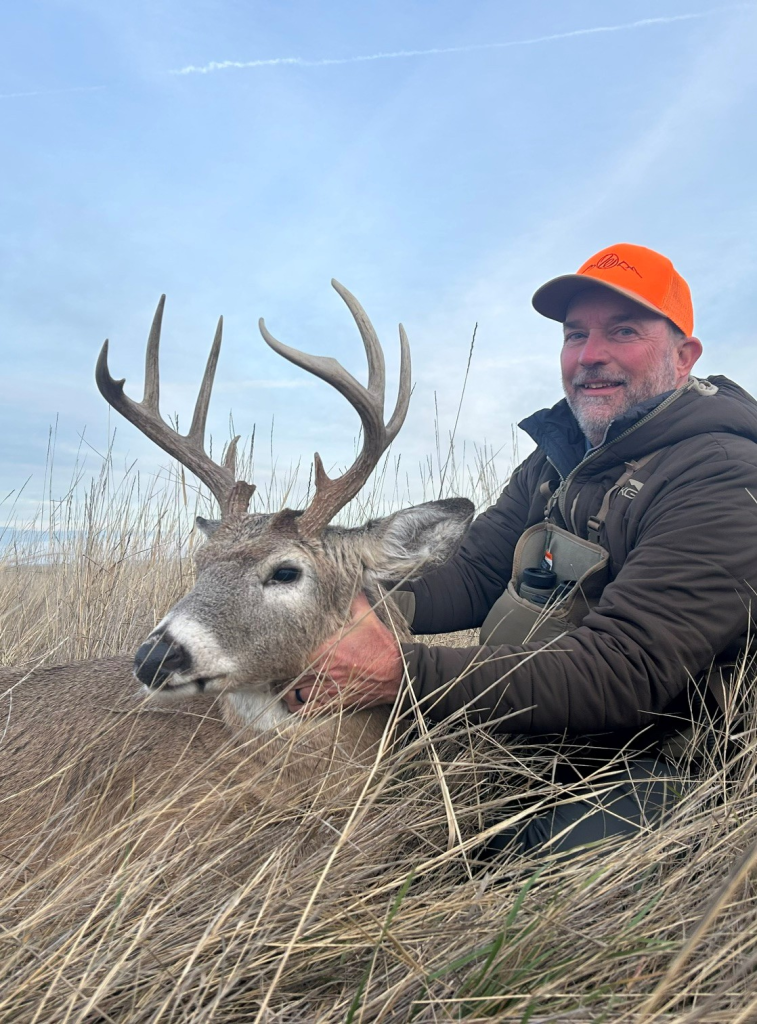
Recently I was on a deer hunt in South Dakota, and I was lucky enough to find a buck I wanted to take. When I broke the first shot, I saw the impact and immediately knew I was a little higher and farther back than I wanted to be. The deer started to turn, but before he had completed the turn, I already had another round in the chamber and put the second bullet into him. From the first shot to the deer being down was probably less than five seconds. I wasn’t guessing about what happened on the first shot. I saw it. That changed what I did next.
Once you start understanding shooting that way, the rifle becomes more than a device for launching a bullet. It becomes an information system. Weight, recoil, balance, position, optics, and even the way you press the trigger all affect how much information you get back after the shot. I want the rifle to put the bullet where I intend, but I also want to stay in the optic and see exactly what happened. The more I can see, the more I can learn from every shot—and the better decision I can make on the next one.
PRS Basically Stood Everything on Its Nose
I’ve worked in the shooting industry for more than 35 years, and I’ve hunted my entire life. I’ve been around rifles and ammunition since I was a kid, and I’ve reloaded forever, so I wasn’t new to rifles when I shot my first PRS match. But I also realize now I didn’t know anywhere near what I thought I did before that first match.
When I shot my first PRS match with my friend Mike Martin, I expected that I’d do reasonably well. I shot horribly. It was extremely humbling.
I didn’t hit a target until the 4th stage, but by the end of the match I was starting to figure a few things out and hit some targets. What I remember most, though, was realizing how much I didn’t know. It was like standing at the edge of this giant abyss, and looking down into this endless rabbit hole of learning. For a brain like mine, that’s freaking candy. I was hooked.
That one afternoon took a lifetime of experience with guns, ammunition, hunting, reloading, and long-range shooting and stood all of it on its nose. It was then that I started shooting a lot. By then I was already shooting more than I ever had before, but PRS put that whole curve into overdrive. And I mean I really shooting. Not just going to the range a few times a month and working out a load for a new rifle or two. It was becoming thousands and thousands of rounds. Matches. Practice. Positional shooting. Dry fire. Different rifles. Different cartridges. Different bags. Different positions. With all this, my beliefs started changing incredibly fast.
There wasn’t one moment where I suddenly realized everything I believed about rifles was wrong. It actually came down to death by a thousand tiny cuts. One little piece of information after another. And each of these little pieces all seemed somehow connected. And that’s probably the biggest difference between the way I think about rifles today and the way I thought about them years ago. I don’t just see pieces. I don’t just see length of pull, or rifle balance, or optics, or anything else. I see a system that’s all interrelated. Everything builds off of and feeds off of everything else in the system.
Now my resolution is higher, and things I used to think mattered a lot sometimes matter less. Things I barely thought about at all have now become incredibly important. And almost all of that came from sending more rounds down range.
Some Things Matter Less Than I Thought
Stock fit is a great example.
People can get incredibly caught up in length of pull, cheek weld, comb height, grip angle, trigger reach, and all the other things we’re supposed to evaluate when we shoulder a rifle. I just don’t care about most of it as much as I used to. I can get behind almost any rifle and make it work. That doesn’t mean fit doesn’t matter. It obviously can. And some of the things that make a rifle feel wonderful in a conventional position can actually make it harder to use in an unconventional one.
I used to believe scopes needed to be mounted as low as possible. I argued about it. Then PRS put me into positions where I literally couldn’t get my eye behind my scope because it was mounted too low. I raised the optic. Problem disappeared.
Same thing happened with length of pull. I found that a shorter length of pull gave me more freedom to get behind the rifle in weird positions.
And that matters when hunting because animals don’t always stand perfectly broadside while you lie prone on a flat shooting mat. Sometimes you’re shooting uphill or downhill. You might be wrapped around a tree, or trying to build a position in a jumble of rocks. Maybe you’re shooting over a fence post. The rifle HAS to work where the shot exists.
The Biggest Problem Might Be That People Don’t Shoot Enough
This is probably the part that’s going to piss some people off, and I sure don’t mean to do that. But honestly, most shooters just aren’t very good. I’m not saying that to insult anybody. I’m saying it because shooting is a skill, and skills require practice. And to be fair, I’m also describing myself just a few years ago. There’s also a weird problem with the way we measure experience.
Ask somebody whether or not they have done much long-range shooting, and they may tell you they have. Then you find out they have only been to the range five or six times and fired a few hundred rounds. While yes, that is experience, it isn’t very much. You simply haven’t had enough repetitions for very many things to start to click. Those little interconnected systems aren’t going to reveal themselves right away.
I’ve watched hunters spend thousands of dollars building rifles for hunts and then barely shoot them. That makes absolutely no sense to me. It also makes me a little sad.
Golfers understand this. Nobody buys a $3,000 set of golf clubs, hits twenty balls once a year, and expects to be a great golfer. If somebody actually wants to become good at golf, they hit balls. They practice putting. They practice chipping. They play. Why should shooting be any different?
And I’m not suggesting everybody needs to go shoot 10,000 rounds a year. That’s where my own obsession has taken me, but it doesn’t have to be yours. If you normally shoot 100 rounds a year, shoot 200. Better yet, shoot 500 if you can. The number isn’t really the point. Just give yourself more opportunities to get behind the rifle, try different things, pay attention to what happens, and ask why. Every one of those repetitions gives you another chance to learn something.
An example. I was on a hunt with a friend where we had a deer at something like 150 or 160 yards. He struggled to find the animal in the optic while getting settled and steady so he could finally break the shot. The deer got a bit spooked and ran over the hill. Luckily, we found the deer again, and he eventually got it done, but the whole process took minutes. A process that really should have only taken seconds.
That’s not an equipment problem. That’s a familiarity problem. When you spend enough time behind a rifle, a huge portion of operating the system disappears from conscious thought. You aren’t thinking: Where’s the safety? Where’s the bolt? How do I get behind this? Where’s the animal in my scope? How do I build this position? Your conscious attention can stay where it belongs—downrange, on the animal, on the wind, on what is actually happening. All of that only comes from repetition.
Buy the Rifle. Then Go Shoot the Damn Thing.
Which brings me back to the guy standing at the gun counter asking what rifle he should buy. I want to be careful here, because I’m absolutely not telling anybody to stop buying rifles. Hell no. Buy rifles. I buy rifles, and maybe way too many of them!!
I spent a whole lot of years where buying a rifle, putting a good optic on it, developing a load, and seeing how well I could make the thing shoot was one of my favorite hobbies. I still enjoy it. There’s something incredibly satisfying about taking a new rifle and figuring it out. Or even a rifle that’s already sitting in my safe.
So if a rifle turns you on for whatever reason, buy it.
What I AM saying is something completely different. Don’t confuse buying the rifle with learning how rifles work for you. If you’re standing at the gun counter trying to determine whether this is the perfect rifle, my answer becomes almost stupidly simple. Just buy a rifle. Seriously. Buy a rifle. Put a good scope on it. Buy some ammunition. And go shoot the damn thing. Don’t spend six months on the internet trying to determine whether the stock geometry is three percent better than another one. Don’t worry about whether somebody on a forum thinks the cartridge is cool, or how they think the rifle feels. Don’t obsess over whether your rifle weighs seven pounds eight ounces or eight pounds two ounces before you’ve fired enough rounds to understand what that actual rifle weight does for you. Pick the one that turns you on and go shoot it!
And shoot it some more. And don’t just shoot twenty rounds off a bench. Shoot prone. Shoot sitting. Then try shooting from a kneeling position. Then spend some time shooting off a bag or a tripod. Shoot off a fence post. Shoot up and downhill. Shoot when you’re tired. Shoot at 100 yards then at 300, and if you have the range and the skill to do it safely, shoot farther. And don’t just send those bullets downrange. Pay attention. That may be the most important part of this entire article. Really think about what just happened when the rifle went off. Could you see your impact? Could you see your miss? Did the reticle settle naturally or were you forcing it onto the target? Did the rifle want to fall backward off the bag? Could you get behind the optic from that weird position? Did recoil knock you completely out of the scope? Was your ballistic solution actually correct? What happened? Why? That’s where the answers are. You’re not just learning to shoot the rifle. You’re learning how to let the rifle teach you lessons from shooting it.
I want to repeat that because I think it matters: you’re learning how to let the system teach you. Pull the trigger, pay attention to what happened, and ask why. Then try to resolve the answer. You’re not just practicing what you already know how to do; you’re using every shot as an opportunity to discover something you don’t know yet.
I Can Tell You What I Like. I Can’t Tell You What You Like.
If you ask me what I want in a hunting rifle today, I have some pretty strong opinions. I don’t want it ultralight. I want enough weight to make it forgiving and allow me to see what happens after the shot. I want it balanced slightly forward. I want a cartridge with manageable recoil. For most of my hunting, that means I’m very comfortable with something like a 6.5 Creedmoor. I want a good optic with useful information in the reticle. These days I strongly prefer mils because that system has become incredibly intuitive to me. I want a detachable magazine. I want a bipod. And I will have a shooting bag with me. Those preferences are pretty deeply ingrained today.
But here’s the important part. Those are my preferences today. They’re the product of my shooting, hunting, competition experience, priorities, and the mistakes I’ve made along the way.
It is quite possible that somebody else with equally valid experience may arrive at a different answer. And their answer could be just as right as my own. Not only that, but I want to hear their answer, because if somebody can show me a better way of doing something, or a new way of looking at a system, I’m interested. Very interested. I have strong opinions, but I’m not married to them. Show me data that says I’m wrong and I’ll argue with you right up until the moment I understand you’re right, and right then I’ll change my mind. I’ve done it over and over again, and I’m sure I will many more times. My views on bullets changed. My views on cartridges changed. My views on recoil changed. My views on optics changed. My views on rifle weight changed. My views on rifle balance changed. My views on scope height changed. My views on cheek weld changed. My views on magazines changed. They’ll probably change again. That’s not a problem. That’s the point.
The Rifle Isn’t the Answer
When somebody asks which rifle they should buy, I think what they’re really asking for is certainty. Tell me which one is right. Tell me which cartridge is right. Tell me what it should weigh. Tell me which stock I need. Tell me what scope to put on it. I can give you my answers to every one of those questions. But I’m not sure that actually helps you as much as you think it does. Because you can borrow my rifle, but you can’t borrow my experience. I wish there were a shortcut to give you that experience, but unfortunately there isn’t. And my experience is the reason my rifle looks the way it does.
That’s the part I think we miss when we obsess over equipment. The rifle I would choose today isn’t the result of finally finding the perfect rifle. It’s the result of shooting enough rifles to understand which compromises matter to me. And there are always compromises. And those are the choices and compromises I would make today. Yesterday was different, and hopefully next year might be different too.
Weight makes a rifle easier to shoot and harder to carry. Less recoil can make it easier to stay in the optic, but it may come with tradeoffs somewhere else. A rifle that balances beautifully on a bag may not feel as lively in your hands. The thing I want may not be the thing you want. There isn’t one correct answer. There are only tradeoffs you understand and tradeoffs you don’t understand yet. And the fastest way I know to start understanding them is to shoot.
So go buy something reasonable. Or unreasonable. Hell, buy the rifle just because you think it’s cool. I’ve done that plenty of times too. Put a good optic on it. Make sure the system works. Buy some ammunition. Then quit worrying about whether you bought the perfect rifle and start paying attention to what happens when you pull the trigger. Ask the question why.
Shoot it enough, and the rifle will start teaching you what your next rifle should be. Maybe you’ll discover you want it heavier. Maybe lighter. Maybe you want less recoil. Maybe you hate the stock. Maybe you want the scope higher. Maybe the cartridge you thought you needed turns out to be completely unnecessary. Maybe you’ll decide the rifle you already own is damn near perfect. Or maybe you’ll decide you need another rifle. I’m certainly not going to argue with that. But eventually, when you walk back into that gun shop, and somebody asks what you’re looking for, you won’t need the guy behind the counter to tell you. You’ll already know.
More importantly, you’ll know why.