
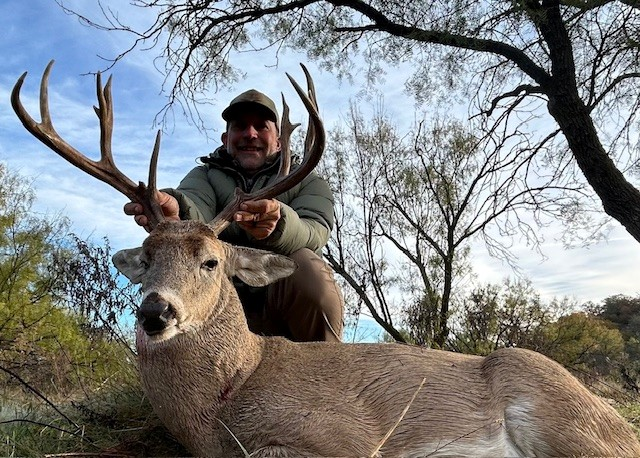
What makes a successful deer hunt? Is it the size of the antlers, the age of the buck, the meat in the freezer, or simply the experience of being in the woods?
In this episode of Childs Play Outdoors, I reflect on how my approach to deer hunting has changed over the years. From chasing blacktails in the Pacific Northwest to watching whitetails on Texas low-fence ranches, I’ve found myself increasingly interested in the animals themselves rather than simply filling a tag.
We explore aging bucks on the hoof, why antler size doesn’t necessarily tell you a deer’s age, the potential of young bucks, and whether selective harvest can really influence genetics on smaller properties.
Along the way, I share stories about several memorable bucks, including a mature seven-point I couldn’t bring myself to shoot, an aggressive old buck named Pitchfork, and a young deer named Snowball whose antler development continues to surprise me.
More than anything, this episode asks a simple question: What are you really looking for when you go deer hunting?
I’d love to hear your perspective.
In This Episode
- What makes a successful hunt? How our expectations and motivations can change with experience.
- Passing young bucks: Why I sometimes let impressive 2½- and 3½-year-old bucks walk, even when there’s no guarantee I’ll see them again.
- Aging deer on the hoof: Looking at body structure, brisket development, shoulders, belly lines, and other physical characteristics instead of relying on antler size.
- The old seven-point: A mature buck that checked nearly every box I was looking for—and why I ultimately passed on him.
- Pitchfork: An aggressive, dominant buck with an unusual rack who challenged my ideas about management deer.
- Snowball: Following a recognizable buck from a yearling spike through three hunting seasons.
- Managing deer on low-fence properties: The practical limitations of attempting to improve antler genetics through selective harvest.
- Doe management: Thoughts on buck-to-doe ratios, population management, and the difficulty of estimating herd composition.
- Enjoying the experience: Why watching deer interact, establish dominance, and go about their lives has become one of my favorite parts of hunting.